Loading...
Done


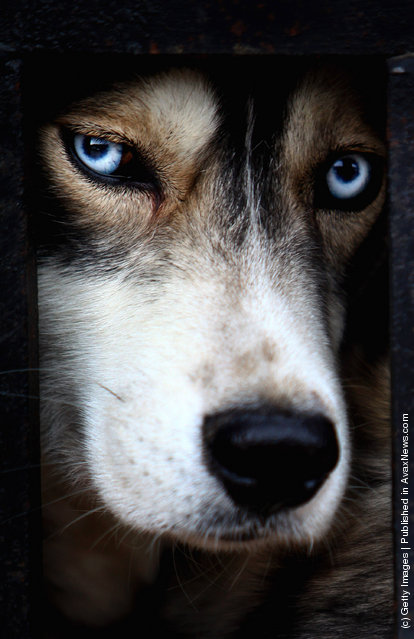
“Husky is a general term for several breeds of dogs used as sled dogs. Huskies were originally used as sled dogs in northern regions but are now also kept as pets. The word “husky” is a corruption of the derogative term “Eskie”, also given to the Esquimaux tribes that came into contact with Europeans who made early expeditions into their lands. The most common huskies are the Siberian Husky and the Alaskan Husky”. – Wikipedia

Photo: A husky looks out from his pen as competitors and teams prepare for the 27th annual Aviemore Husky Sled Dog Rally beside Loch Morlich on January 21, 2010 Aviemore, Scotland. (Photo by Jeff J Mitchell/Getty Images)
Details
21 Jul 2011 14:51:00
Artist's impression of Skylon. (Photo by Reaction Engines Ltd)

“A small British company with a dream of building a re-usable space plane has won an important endorsement from the European Space Agency (ESA) after completing key tests on its novel engine technology. Reaction Engines Ltd believes its Sabre engine, which would operate like a jet engine in the atmosphere and a rocket in space, could displace rockets for space access and transform air travel by bringing any destination on Earth to no more than four hours away”. – Chris Wickham via Reuters. Photo: Artist's impression of Skylon. (Photo by Reaction Engines Ltd)
Details
29 Nov 2012 10:31:00
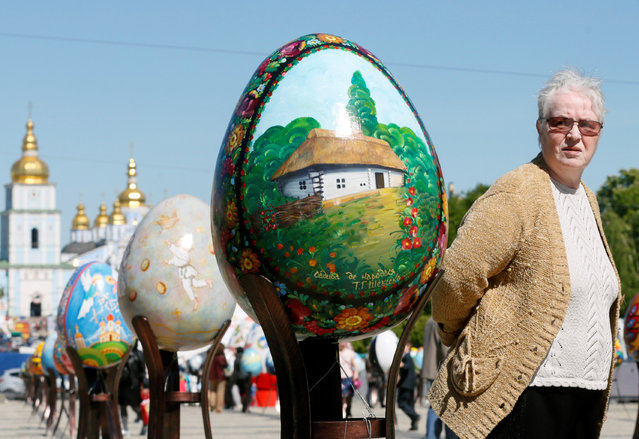
A woman looks at traditional Ukrainian Easter eggs “Pysanka”, installed as part of the upcoming celebrations of Easter, in central Kiev, Ukraine, April 29, 2016. A pysanka is a Ukrainian Easter egg, decorated with traditional Ukrainian folk designs using a wax-resist (batik) method. The word pysanka comes from the verb pysaty, “to write”, as the designs are not painted on, but written with beeswax. Many other eastern European ethnic groups decorate eggs using wax resist for Easter. These include the Belarusians, Bulgarians, Croats, Czechs, Hungarians, Lithuanians, Poles, Romanians, Serbs, Slovaks, Slovenes and Sorbs. (Photo by Valentyn Ogirenko/Reuters)

A woman looks at traditional Ukrainian Easter eggs “Pysanka”, installed as part of the upcoming celebrations of Easter, in central Kiev, Ukraine, April 29, 2016. A pysanka is a Ukrainian Easter egg, decorated with traditional Ukrainian folk designs using a wax-resist (batik) method. The word pysanka comes from the verb pysaty, “to write”, as the designs are not painted on, but written with beeswax. Many other eastern European ethnic groups decorate eggs using wax resist for Easter. These include the Belarusians, Bulgarians, Croats, Czechs, Hungarians, Lithuanians, Poles, Romanians, Serbs, Slovaks, Slovenes and Sorbs. (Photo by Valentyn Ogirenko/Reuters)
Details
30 Apr 2016 09:00:00


In this artist's impression supplied by the ESO (European Southern Observatory) on April 25, 2007, the planetary system around the red dwarf, Gliese 581, is pictured showing what astronomers believe is the most earth like planet found outside our solar system to date. Using the ESO 3.6-m telescope in Chile, astronomers have uncovered the planet which could have water running on its surface. The planet orbits the faint star Gliese 581, which is 20.5 light-years away in the constellation Libra. (Photo by ESO via Getty Images)
Details
12 Apr 2011 11:00:00
UEFA,Euro 2012,Gdansk

Gdańsk is a Polish city on the Baltic coast. The city's professional football club is Lechia Gdansk. Founded in 1945, they play in the Ekstraklasa, Poland's top division. The European Football Championship will take place in Gdansk 2012.

Photo by: Sludgegulper ; Source: Flickr
Details
07 Aug 2011 21:53:00
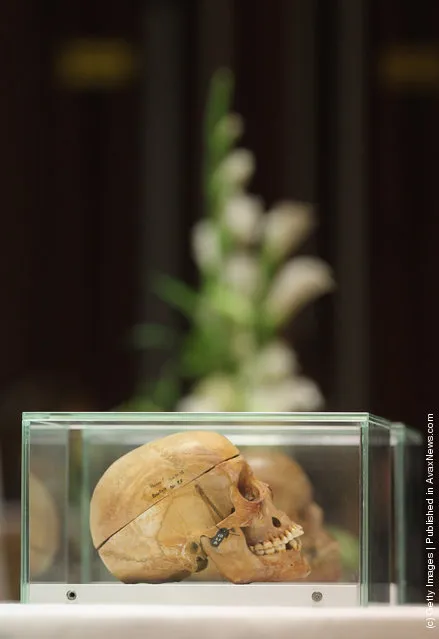
Charite Hospital Returns Herero Skulls To Namibia

Two of 20 skulls to be taken possession of by a delegation from Namibia stand on display at a ceremony at Charite hospital on September 30, 2011 in Berlin, Germany. The skulls are from Herero and Nama tribespeople taken by German colonial forces between 1904 and 1908, when the Germans violently suppressed an uprising in what was then German Southwest Africa, which is today's Namibia, and in the process killed tens of thousand of Herero and Nama. German scientists at the time took the skulls back to Berlin to demonstrate the racial superiority of Europeans over black Africans. Many Namibians demand a formal apology from the German government. (Photo by Sean Gallup/Getty Images)
Details
02 Oct 2011 11:42:00


BERLIN, GERMANY - DECEMBER 04: A guest shows tattooed sign 'unbreakable' at the Berlin Tattoo Convention at Tempelhof Airport on December 4, 2010 in Berlin, Germany. The Tattoo Convention takes place for the 20th time. The organizers expect over the three days over 15,000 visitors. There are artists from Japan, China, Taiwan, USA, Canada, Australia, New Zealand, Tahiti, Samoa, and from all European countries as guests, who come up with the latest technics, designs and color creations. (Photo by Carsten Koall/Getty Images)
Details
15 Nov 2011 13:15:00
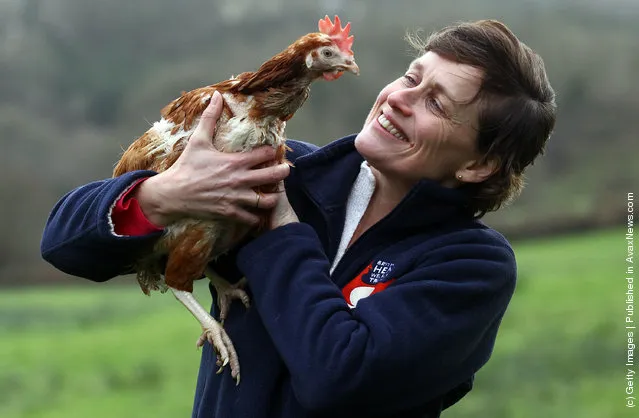
Britain's Last Battery Hen Is Released

Jane Howorth from national charity the British Hen Welfare Trust holds Liberty the last ex-battery hen to be rehomed on December 29, 2011 in Chulmleigh, England. The rehoming of Liberty signifies the end of the small battery hen cage, which has been phased out and replaced by enriched cages in preparation of the European Union directive banning the smaller cages from January 1, 2012. (Photo by Matt Cardy/Getty Images)
Details
30 Dec 2011 11:20:00