Loading...
Done
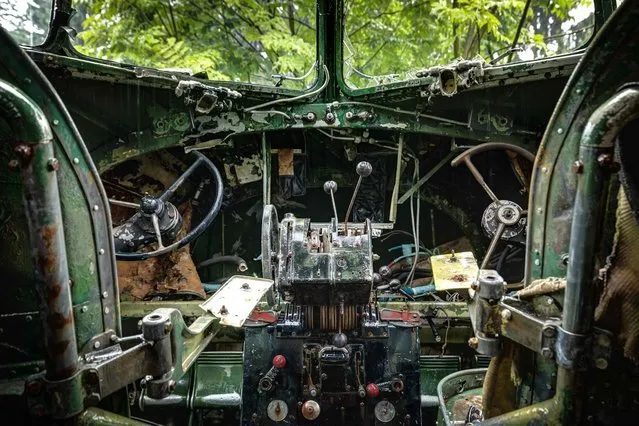
The eerie military base is on the Croatian border with Bosnia-Herzegovina. (Photo by Thomas Windisch/Exclusivepix Media)

Željava Air Base, situated on the border between Croatia and Bosnia and Herzegovina under Plješevica Mountain, near the city of Bihać, Bosnia, was the largest underground airport and military air base in the former Yugoslavia, and one of the largest in Europe. (Photo by Thomas Windisch/Exclusivepix Media)
Details
18 Mar 2017 10:15:00
Najac, France. Travel shortlist. (Photo by Aaron Jenkin/@aaronjenkin)

Shortlisted images in the running to be crowned Photobox Instagram photograph of the year range from furry friends to the Holi festival to the meaning of love. Judges, including the Guardian’s former picture editor Eamonn McCabe, have whittled down 180,000 submissions to unearth a shortlist that celebrates the best of social media. Winners will be announced October 3, 2018. Here: Najac, France. Travel shortlist. (Photo by Aaron Jenkin/@aaronjenkin)
Details
27 Sep 2018 00:05:00
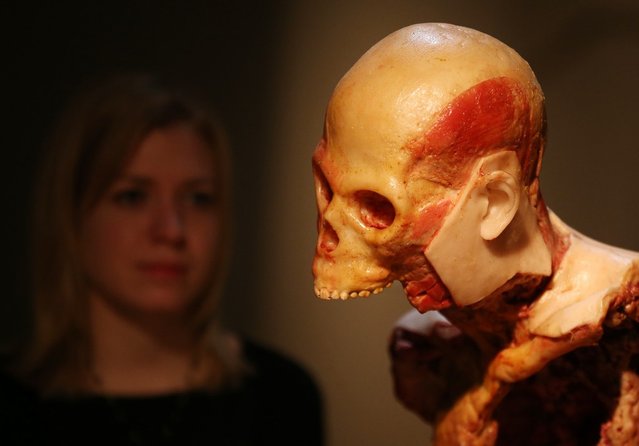
An artwork entitled 'Are you still mad at me ?' by John Isaacs is displayed at the Death: A Self-portrait exhibition at the Wellcome Collection on November 14, 2012 in London, England. The exhibition showcases 300 works from a unique collection by Richard Harris, a former antique print dealer from Chicago, devoted to the iconography of death. The display highlights art works, historical artifacts, anatomical illustrations and ephemera from around the world and opens on November 15, 2012 until February 24, 2013.  (Photo by Peter Macdiarmid)

An artwork entitled “Are you still mad at me?” by John Isaacs is displayed at the Death: A Self-portrait exhibition at the Wellcome Collection on November 14, 2012 in London, England. The exhibition showcases 300 works from a unique collection by Richard Harris, a former antique print dealer from Chicago, devoted to the iconography of death. The display highlights art works, historical artifacts, anatomical illustrations and ephemera from around the world and opens on November 15, 2012 until February 24, 2013. (Photo by Peter Macdiarmid)
Details
15 Nov 2012 09:41:00
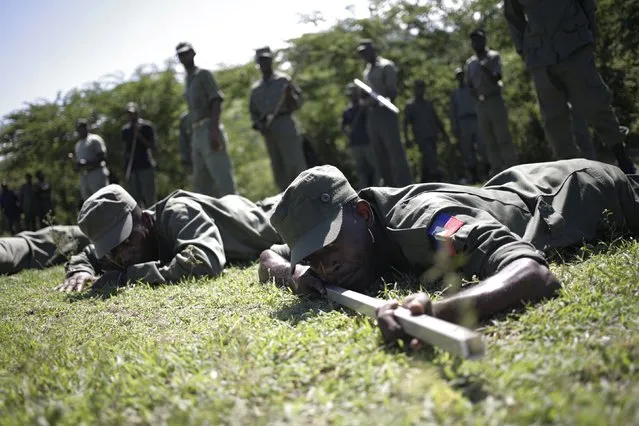
A man holds a metal bar as a weapon during a training day for former soldiers and volunteers train in a makeshift camp in the outskirts of Port-au-Prince, Haiti, October 28, 2015. Haiti disbanded its abusive armed forces two decades ago but uniformed veterans and young recruits are resurfacing to add another destabilising factor to the volatile Caribbean nation already dealing with a political vacuum. (Photo by Andres Martinez Casares/Reuters)

A man holds a metal bar as a weapon during a training day for former soldiers and volunteers train in a makeshift camp in the outskirts of Port-au-Prince, Haiti, October 28, 2015. Haiti disbanded its abusive armed forces two decades ago but uniformed veterans and young recruits are resurfacing to add another destabilising factor to the volatile Caribbean nation already dealing with a political vacuum. (Photo by Andres Martinez Casares/Reuters)
Details
15 Feb 2016 10:05:00
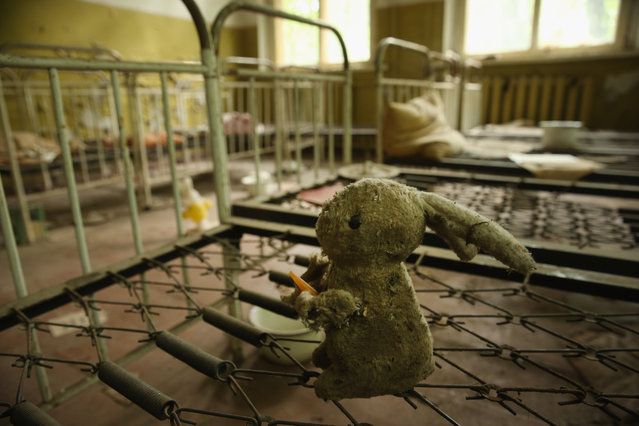
A stuffed rabbit doll sits among children's beds standing in the abandoned kindergarten of Kopachi village located inside the Chernobyl Exclusion Zone on September 29, 2015 near Chornobyl, Ukraine. Kopachi, a village that before 1986 had a population of 1,114, lies only a few kilometers south of the former Chernobyl nuclear power plant, where in 1986 workers inadvertantly caused reactor number four to explode, creating the worst nuclear accident in history. Radiation fallout was so high that authorities bulldozed and buried all of Kopachi's structures except for the kindergarten. (Photo by Sean Gallup/Getty Images)

A stuffed rabbit doll sits among children's beds standing in the abandoned kindergarten of Kopachi village located inside the Chernobyl Exclusion Zone on September 29, 2015 near Chornobyl, Ukraine. Kopachi, a village that before 1986 had a population of 1,114, lies only a few kilometers south of the former Chernobyl nuclear power plant, where in 1986 workers inadvertantly caused reactor number four to explode, creating the worst nuclear accident in history. (Photo by Sean Gallup/Getty Images)
Details
27 Apr 2016 09:28:00
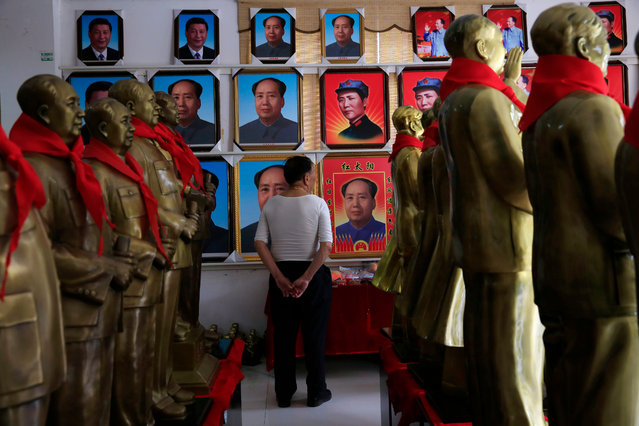
A visitor looks at portraits of Mao Zedong amid his statues on display at a wholesale souvenir store in Shaoshan, Hunan Province in central China, 28 April 2016. Shaoshan is the hometown of former Communist leader Mao Zedong, popularly known as Chairman Mao. Thousands of visitors descend on this small Chinese town burrowed in the hills of Central China's Hunan province to pay homage to the “Great Helmsman” everyday. (Photo by How Hwee Young/EPA)

A visitor looks at portraits of Mao Zedong amid his statues on display at a wholesale souvenir store in Shaoshan, Hunan Province in central China, 28 April 2016. Shaoshan is the hometown of former Communist leader Mao Zedong, popularly known as Chairman Mao. Thousands of visitors descend on this small Chinese town burrowed in the hills of Central China's Hunan province to pay homage to the “Great Helmsman” everyday. It is one of the core sites of the “Red Tourism” industry, where communist party cadres and ordinary Chinese tourists alike seek to relive the experiences and rekindle the spirit of the revolutionaries. (Photo by How Hwee Young/EPA)
Details
08 May 2016 11:19:00
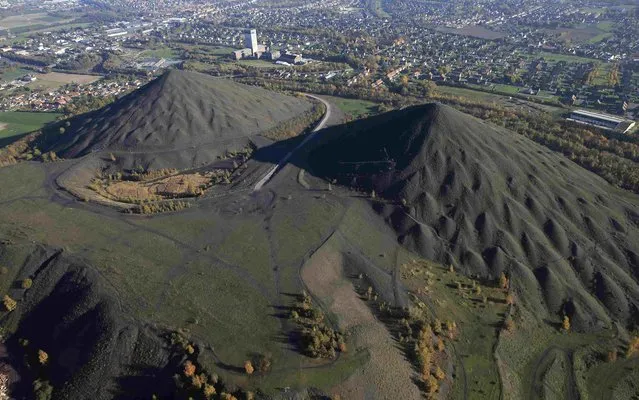
An aerial view shows the 11/19 pit and twin slag heaps at the former coal mine site in Loos-en-Gohelle, northern France, November 1, 2015. Loos-en-Gohelle, a town of 7000 inhabitants in the North of France, marked by the closure of coal mines in 1970, has demonstrated a successful transition from coal to a green economy. (Photo by Pascal Rossignol/Reuters)

An aerial view shows the 11/19 pit and twin slag heaps at the former coal mine site in Loos-en-Gohelle, northern France, November 1, 2015. Loos-en-Gohelle, a town of 7000 inhabitants in the North of France, marked by the closure of coal mines in 1970, has demonstrated a successful transition from coal to a green economy. (Photo by Pascal Rossignol/Reuters)
Details
07 Nov 2015 08:01:00
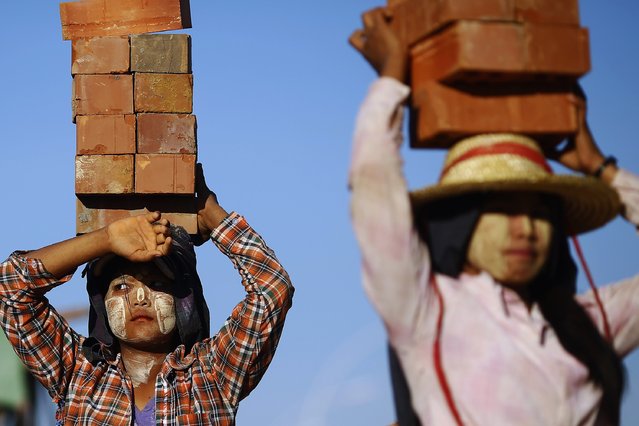
Construction workers carry bricks on their heads near the country's parliament building in Naypyitaw November 11, 2014. Yangon lost its status as Myanmar's capital in 2005, after the former military junta carved a new seat of government from a parched wilderness some 380 km (236 miles) to the north and called it Naypyitaw (“Abode of Kings”). (Photo by Damir Sagolj/Reuters)

Construction workers carry bricks on their heads near the country's parliament building in Naypyitaw November 11, 2014. Yangon lost its status as Myanmar's capital in 2005, after the former military junta carved a new seat of government from a parched wilderness some 380 km (236 miles) to the north and called it Naypyitaw (“Abode of Kings”). (Photo by Damir Sagolj/Reuters)
Details
15 Nov 2014 12:29:00