Loading...
Done
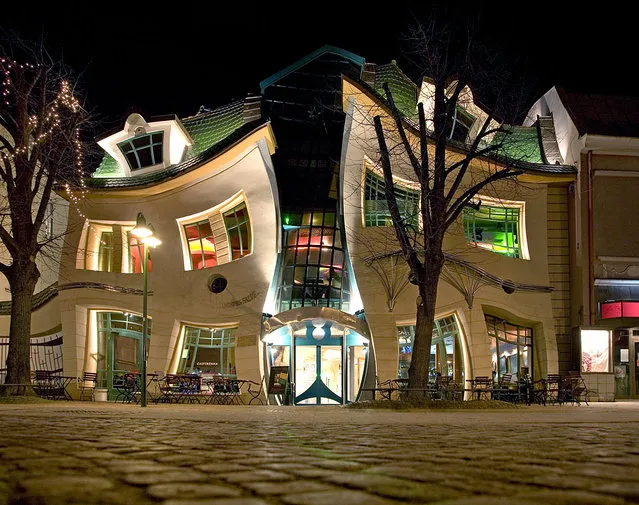
Crooked House


The Krzywy Domek is an irregularly-shaped building in Sopot, Poland. Its name translates in to English as the Crooked House. The Krzywy Domek was built in 2004. It is approximately 4,000 square meters in size and is part of the Rezydent shopping center. It was designed by Szotyńscy & Zaleski who were inspired by the fairytale illustrations and drawings of Jan Marcin Szancer and Per Dahlberg. It can be entered from either Monte Cassino or Morska Streets.
Details
29 Jun 2012 12:00:00
Blue Dragon

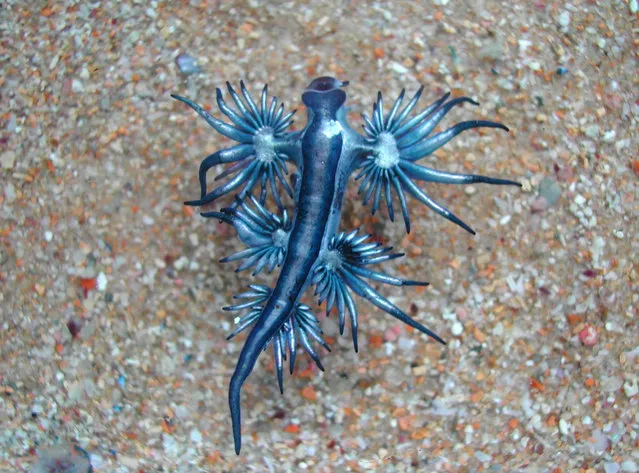
Glaucus atlanticus (common names sea swallow, blue glaucus, blue sea slug and blue ocean slug) is a species of small-sized blue sea slug, a pelagic aeolid nudibranch, a marine gastropod mollusk in the family Glaucidae. This is the only species in the genus Glaucus, but is closely related to Glaucilla marginata, which sometimes is included in Glaucus.
Details
12 Sep 2012 08:21:00
Glass Beach Fort Bragg California

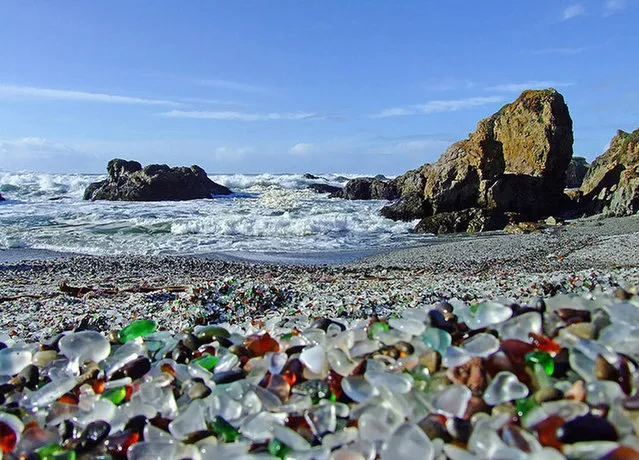
In the early 20th century, Fort Bragg residents threw their household garbage over the cliffs above what is now Glass Beach. They discarded glass, appliances, and even cars. The land was owned at that time by the Union Lumber Company, and locals referred to it as "The Dumps." Sometimes fires were lit to reduce the size of the trash pile.
Details
06 Nov 2012 10:00:00
The Luminous Lantern Parade on June 10, 2016 in Brisbane, Australia. (Photo by Glenn Hunt/Getty Images)

The Luminous Lantern Parade on June 10, 2016 in Brisbane, Australia. The Luminous Lantern Parade was held at Brisbane’s South Bank on Friday, featuring a parade of glowing animals and characters of all shapes and sizes lighting up the night sky. (Photo by Glenn Hunt/Getty Images)
Details
11 Jun 2016 12:26:00
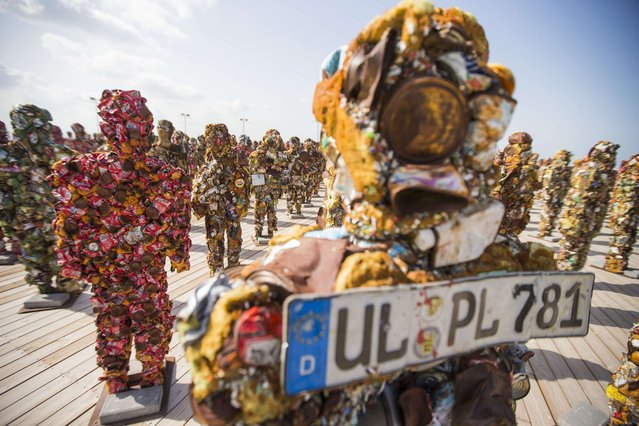
A general view shows sculptures made of waste material titled “Trash People” by German Artist HA Schult (unseen), on April 2, 2014 in Ariel Sharon Park, in the suburbs of Tel Aviv. Hundreds of human-size figures constructed from 20 tons of recycled material, including iron, glass, computer parts, cans and more, will dominate the sky line of Tel-Aviv city and be placed in the park. (Photo by Jack Guez/AFP Photo)

A general view shows sculptures made of waste material titled “Trash People” by German Artist HA Schult (unseen), on April 2, 2014 in Ariel Sharon Park, in the suburbs of Tel Aviv. Hundreds of human-size figures constructed from 20 tons of recycled material, including iron, glass, computer parts, cans and more, will dominate the sky line of Tel-Aviv city and be placed in the park. (Photo by Jack Guez/AFP Photo)
Details
03 Apr 2014 10:53:00
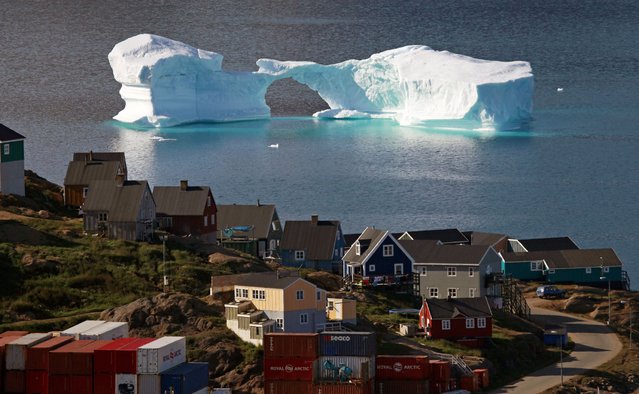
File photo of an iceberg floating near a harbour in the town of Kulusuk, east Greenland August 1, 2009. The United Nations 19th Climate Change Conference (COP19) will take place November 11-22, 2013 in Warsaw. The main goal of the talks with almost almost 200 nations assembled, is to lay the foundation for the new global climate agreement, aiming at further emission reduction, which is to be signed in 2015 in Paris and be launched in 2020. (Photo by Bob Strong/Reuters)

It's taken roughly five months, but a massive iceberg has separated from Antarctica's Pine Island Glacier. According to NASA's Earth Observatory, the estimated size of this iceberg, named B-31, is around 660 square kilometres (33 km long by 20 km wide) – a city-sized block of ice that has slowly migrated away from the continent, and is now floating out to sea. Take a look at some massive icebergs afloat in the oceans. Photo: File photo of an iceberg floating near a harbour in the town of Kulusuk, east Greenland August 1, 2009. (Photo by Bob Strong/Reuters)
Details
27 Apr 2014 07:47:00
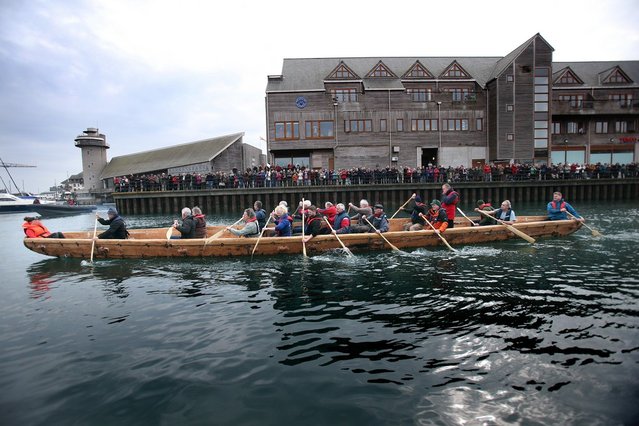
Crew in Britain's first ever full-size reconstructed sea-going Bronze Age boat, paddle out to sea near to the National Maritime Museum as it makes its maiden voyage on March 6, 2013 in Falmouth, England. With a crew of of 18, equipped with Bronze-Age-style wooden paddles, the 15 metre long experimental vessel – a replica of the sort of craft used for long-distance trade between Britain and the continent 4000 years ago – will be used to test prehistoric seafaring methods in a project in collaboration with the University of Exeter and the Falmouth-based National Maritime Museum Cornwall. (Photo by Matt Cardy)

Crew in Britain's first ever full-size reconstructed sea-going Bronze Age boat, paddle out to sea near to the National Maritime Museum as it makes its maiden voyage on March 6, 2013 in Falmouth, England. (Photo by Matt Cardy)
Details
07 Mar 2013 08:48:00
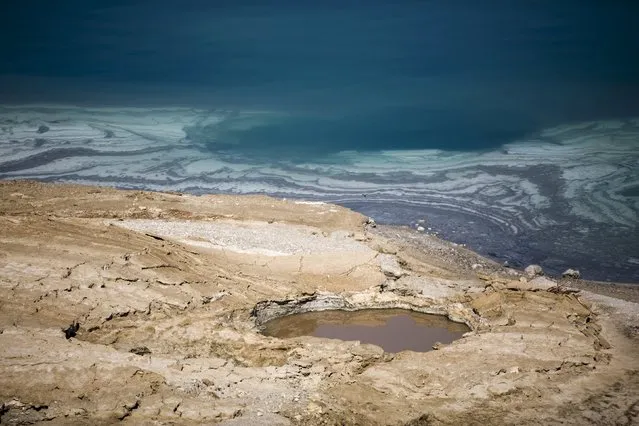
A sinkhole is seen on the shore of the Dead Sea near Kibbutz Ein Gedi, Israel July 27, 2015. The Dead Sea is shrinking, and as its waters vanish at a rate of more than one meter a year, hundreds of sinkholes, some the size of a basketball court, some two storeys deep, are devouring land where the shoreline once stood. (Photo by Amir Cohen/Reuters)

A sinkhole is seen on the shore of the Dead Sea near Kibbutz Ein Gedi, Israel July 27, 2015. The Dead Sea is shrinking, and as its waters vanish at a rate of more than one meter a year, hundreds of sinkholes, some the size of a basketball court, some two storeys deep, are devouring land where the shoreline once stood. (Photo by Amir Cohen/Reuters)
Details
30 Jul 2015 12:06:00