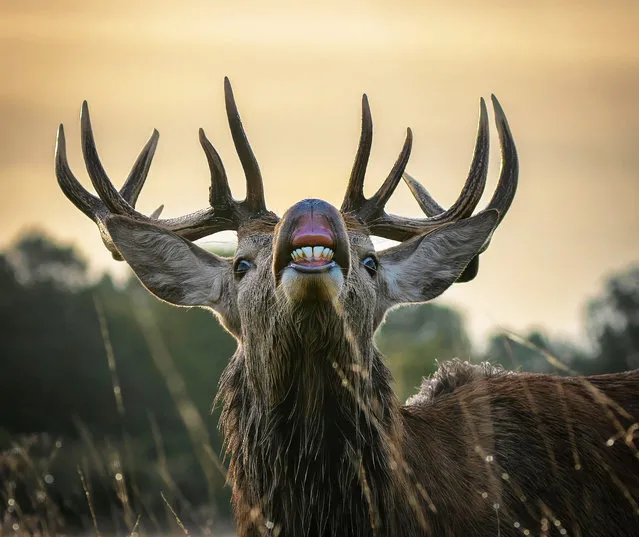
A red deer stag in Bushy Park, southwest London, pulls a comical face for the camera in the second decade of November 2023. (Photo by Andrew Wood/Caters News Agency)
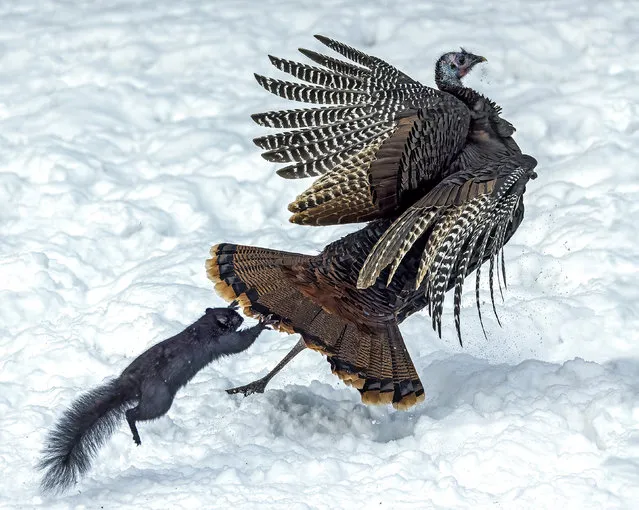
A mischievous squirrel chases a turkey in a garden in Medford, Wisconsin in the second decade of January 2024. The garden’s owner, artist Cheryl Plautz, said the squirrels chase the birds “for fun”. (Photo by Cheryl Plautz/Solent News)
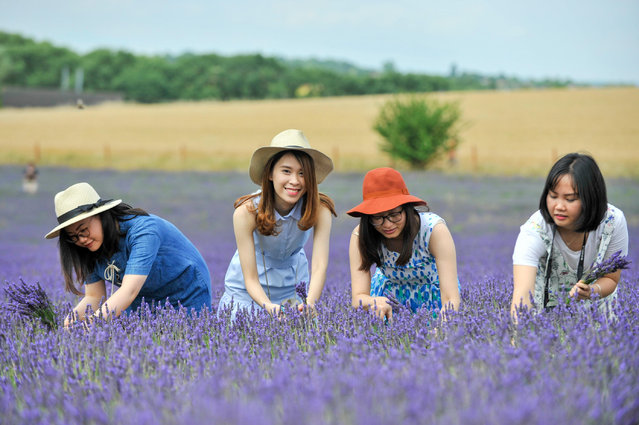
Vietnamese business students at Northampton University (L to R) Anh Nguyen, Phuong Nguyen, Tam Nguyen and Oanh Cao visit Hitchin Lavender farm in Arlesey, UK on July 9, 2017, to view and pick lavender. Currently in full bloom, the lavender attracts visitors from far and wide to this popular family run farm. (Photo by Stephen Chung/Alamy Live News)
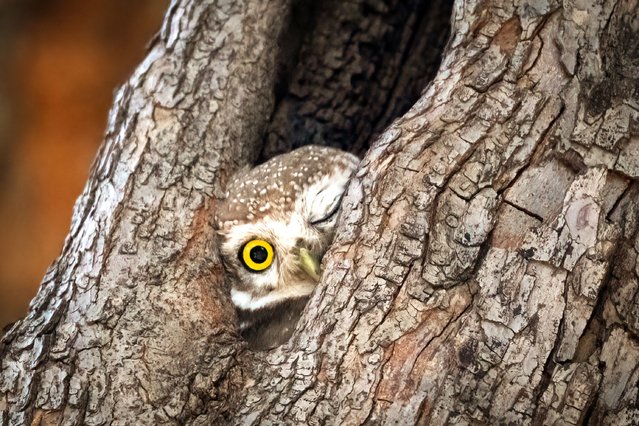
An owl curiously peeks out from a tree hollow. The pictures of the spotted owlet were taken by Anuj Jain in Chandigarh, India in the second decade of November 2025. (Photo by Anuj Jain/Solent News & Photo Agency)
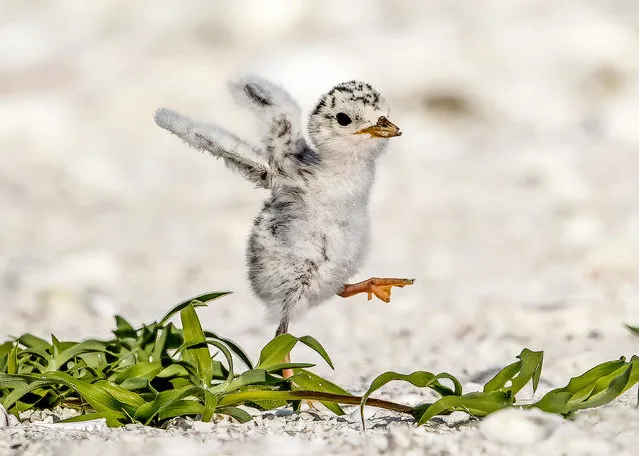
A tern chased away a ghost crab that was threatening its chicks at a beach near Fort Myers, Florida in the last decade of June 2023, before feeding them with freshly caught fish. (Photo by Judy Rogero/Solent News)
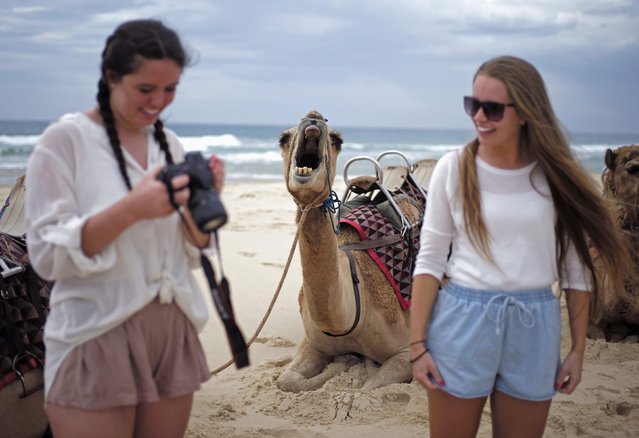
A camel yawns as a tourist checks images on her camera following a ride on a camel safari alongside the Pacific Ocean on Lighthouse Beach, north of Sydney, December 4, 2014. For 25 years camel rides on this beach have given visitors to Australia's holiday coast a rare experience available only in a handful of locations in the country. Australia's long history with the “ships of the desert” goes back to the 1800s when they were imported from Afghanistan and India for use as transportation across Australia's vast deserts before being released into the wild following their replacement by motorised transport. (Photo by Jason Reed/Reuters)
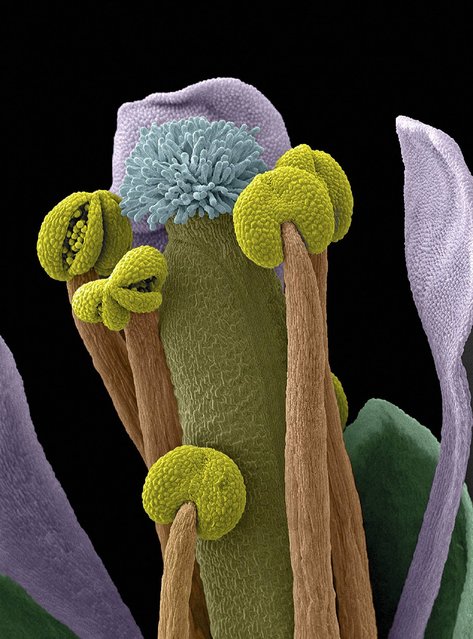
Beautiful, strange and occasionally alarming pictures from the shortlist for this year’s Wellcome image awards – which celebrate the very best in science photography and imaging – from an x-ray of a bat to a micrograph of a kidney stone. The exhibition opens on 12 March at three science centres and the Museum of Science and Industry in Manchester. Photo: Scanning electron micrograph (SEM) of an Arabidopsis thaliana flower, also commonly known as thale cress. Some of the anthers are open, revealing pollen grains ready for dispersal. Arabidopsis was the first plant to have its entire genome sequenced and is widely used as a model organism in molecular and plant biology. Horizontal width of image is 1200 microns. Magnification 100x. (Photo by Stefan Eberhard/Wellcome Images)