Loading...
Done


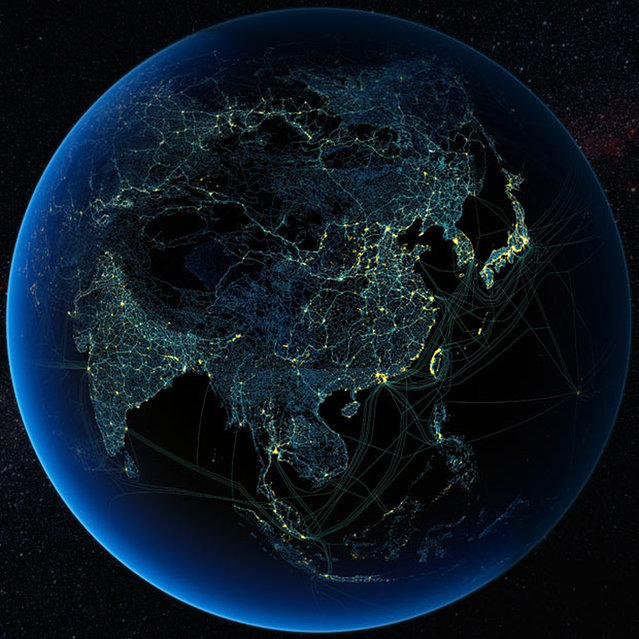
Defined according to wikipedia it is “a recent and informal geologic chronological term that serves to mark the evidence and extent of human activities that have had a significant global impact on the Earth’s ecosystems. The term was coined by ecologist Eugene Stoermer but has been widely popularized by the Nobel Prize-winning atmospheric chemist Paul Crutzen.”

The images here where created by Felix Pharand-Deschenes depicting how various human influences, from road and rail, to internet cables and airlines create significant patterns covering the Earth. What can we learn from these patterns in how they are influencing the environment
Details
19 Aug 2012 10:40:00
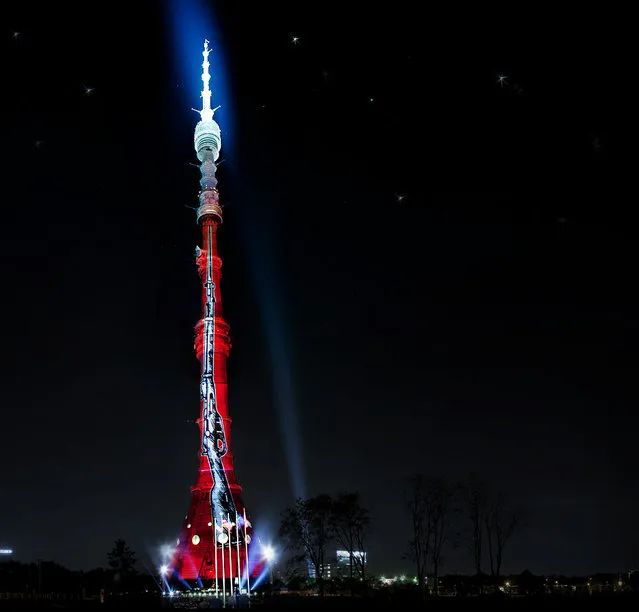
Ostankino Tower celebrating Victory Day

Ostankino Tower is a television and radio tower in Moscow, Russia. Standing 540.1 metres (1,772 ft) tall, Ostankino was designed by Nikolai Nikitin. It is currently the tallest freestanding structure in Europe and sixth tallest in the world. The tower was the first free-standing structure to exceed 500 m (1,600 ft) in height. Ostankino was built to mark the 50th anniversary of the October Revolution. It is named after the Ostankino district of Moscow in which it is located.
Details
06 Nov 2012 09:36:00
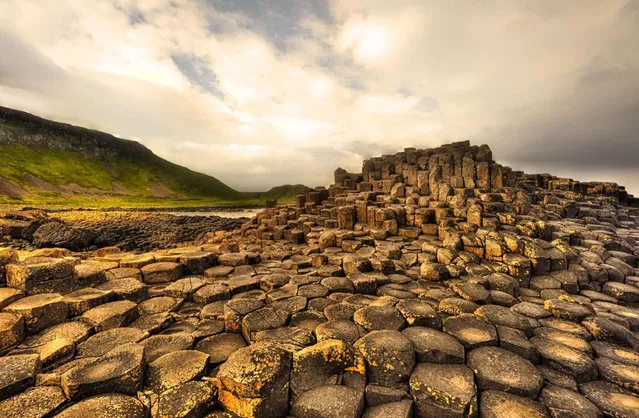
Giant's Causeway

Legend has it that the Irish warrior Fionn mac Cumhaill (Finn McCool) built the causeway to walk to Scotland to fight his Scottish counterpart Benandonner. One version of the legend tells that Fionn fell asleep before he got to Scotland. When he did not arrive, the much larger Benandonner crossed the bridge looking for him. To protect Fionn, his wife Oonagh laid a blanket over him so he could pretend that he was actually their baby son. In a variation, Fionn fled after seeing Benandonner's great bulk, and asked his wife to disguise him as the baby. In both versions, when Benandonner saw the size of the 'infant', he assumed the alleged father, Fionn, must be gigantic indeed. Therefore, Benandonner fled home in terror, ripping up the Causeway in case he was followed by Fionn.
Details
11 May 2015 10:45:00
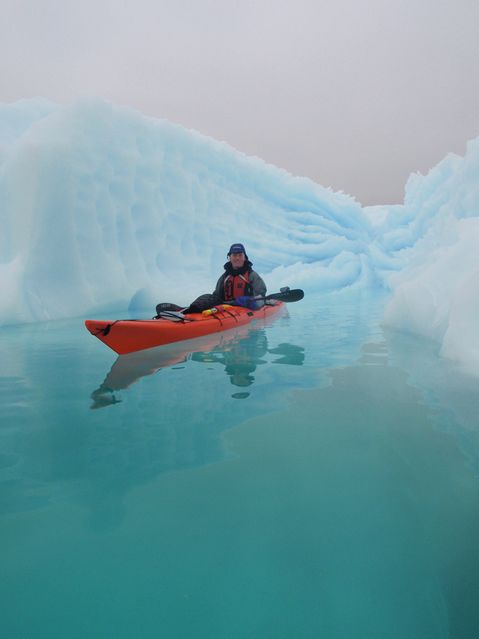
Chasing Ice in Greenland

The Greenland ice sheet is a vast body of ice covering 660,235 sq miles, roughly 80% of the surface of Greenland. It is the second largest ice body in the world, after the Antarctic Ice Sheet. Some scientists predict that climate change may be near a "tipping point" where the entire ice sheet will melt in about 2000 years. If the entire 2,850,000 cubic kilometres (683,751 cu mi) of ice were to melt, it would lead to a global sea level rise of 7.2 m (23.6 ft).
Details
30 Apr 2014 13:15:00
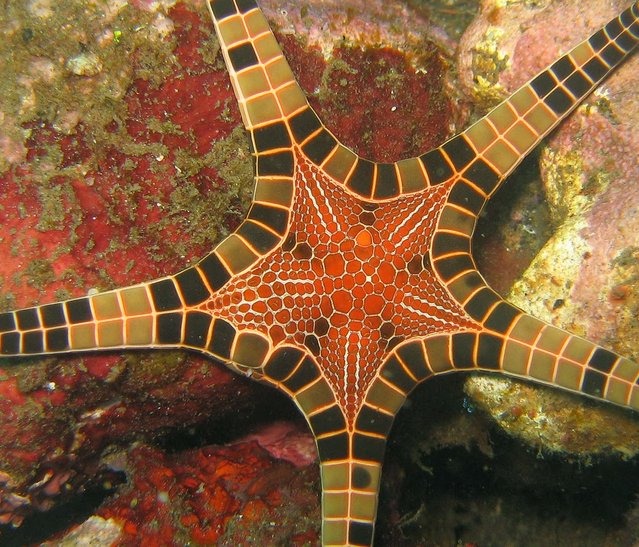
Conaster Iongimanus AKA The Icon Star Or Double Star

Iconaster longimanus, the icon star or double star, is a species of starfish in the family Goniasteridae. It is found in the west and central Indo-Pacific Ocean. The genus name comes from the Greek eikon, meaning portrait or image and possibly referring to the way the marginal plates frame the disc, and aster, meaning star. The specific name comes from the Latin longus manus and refers to the long, slender arms.
Details
14 Jul 2014 12:50:00
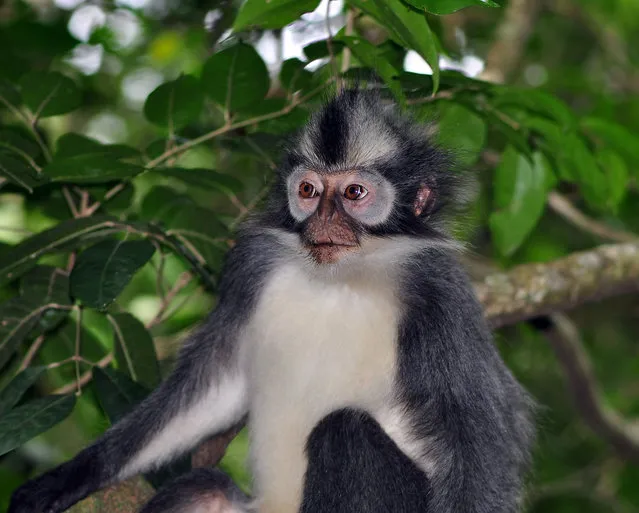
Gunung Leuser National Parkr"

Gunung Leuser National Park is a national park covering 7,927 km² in northern Sumatra, Indonesia, straddling the border of North Sumatra and Aceh provinces. The national park, named after Mount Leuser (3,381 m), protects a wide range of ecosystems. An orangutan sanctuary of Bukit Lawang is located inside the park. Together with Bukit Barisan Selatan and Kerinci Seblat national parks it forms a World Heritage Site, Tropical Rainforest Heritage of Sumatra.
Details
14 Jul 2013 10:28:00
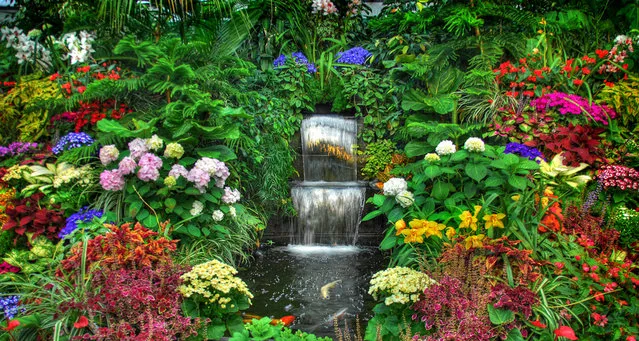
Butchart Gardens - British Columbia, Canada

The Butchart Gardens is a group of floral display gardens in Brentwood Bay, British Columbia, Canada, located near Victoria on Vancouver Island. The gardens receive close to a million visitors each year. The gardens have been designated a National Historic Site of Canada due to their international renown.
Details
27 Apr 2014 09:33:00
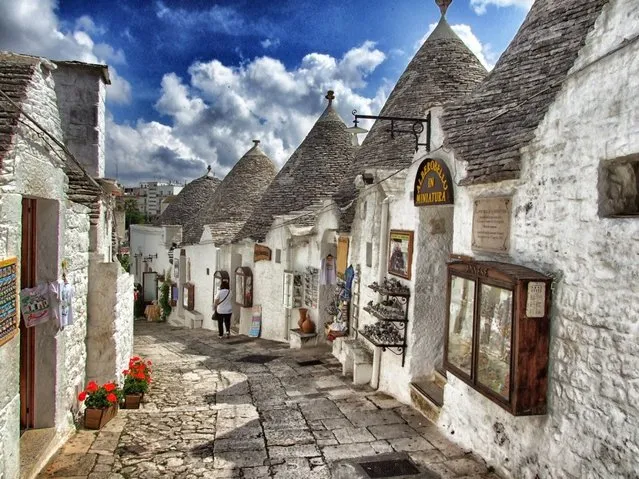
Ttrulli Alberobello, Italy‎

The stone huts and streets of this Italian city look like a scene from a fairytale. The buildings you see before you are called trulli. The rise in popularity of such houses was in 19th century when they were constructed as storehouses and temporary field shelters or as permanent shelters by agricultural laborers and small proprietors. Wouldn’t it be amazing to own such a house? To become engulfed by the fairytale as you sip a cup of coffee, looking out of a small window onto a crowded street.
Details
20 Nov 2014 12:36:00