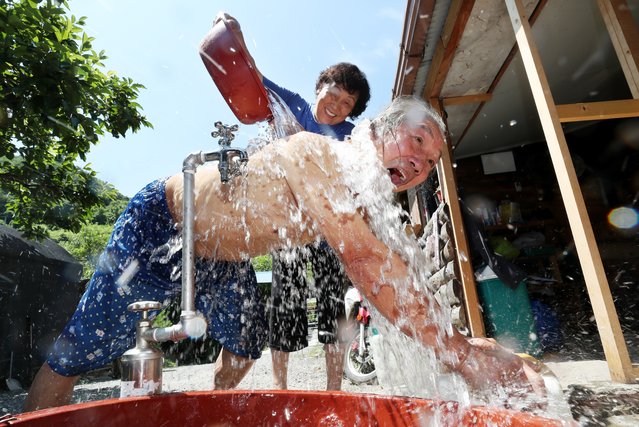
On the July 10, 2025, an elderly couple in Eonam-dong, Jung-gu, Daejeon, who finished their field work, cooled off by sitting on a bench in the yard near the water tap. (Photo by Shin Hyeon-jong)
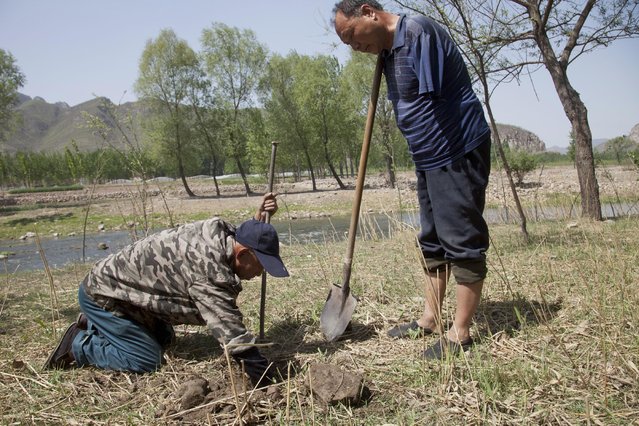
In this April 23, 2015 photo, friends Jia Haixia, left, and Jia Wenqi work to plant a tree in a field in Yeli village near Shijiazhuang city in northern China's Hebei province. For the past 13 years, Jia Wenqi, who has no arms, and Jia Haixia, who is blind, have worked together to plant and water more than 12,000 trees near their village. (Photo by Helene Franchineau/AP Photo)
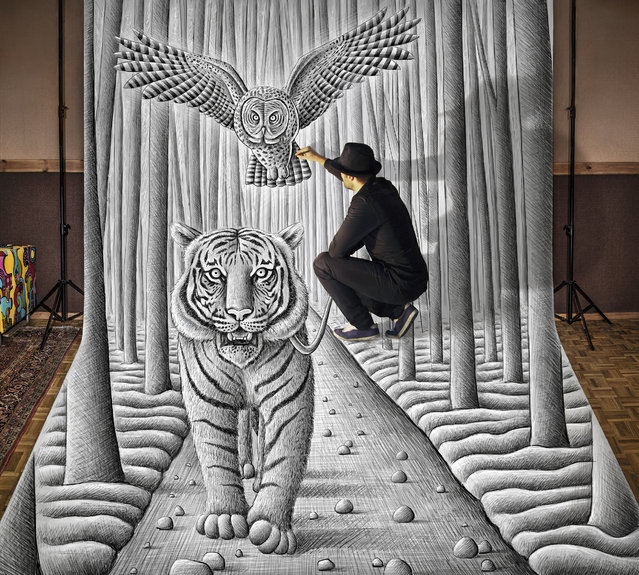
An arm holding a giant gun appears to explode through a wall, while elsewhere a man walks a tiger on a leash. These breathtaking pencil drawings are the work of 31-year-old artist Ben Heine, who lives and works in Rochefort, Belgium. The “anamorphic illusions”, part of the artist's “Pencil Vs Camera” series, appear slightly distorted unless viewed from the exact same perspective in which they were created. Photo: Visual artist Ben Heine at work in his studio while he creates one of his “anamorphic illusions” in Rochefort, Belgium. (Photo by Ben Heine/Barcroft Media)
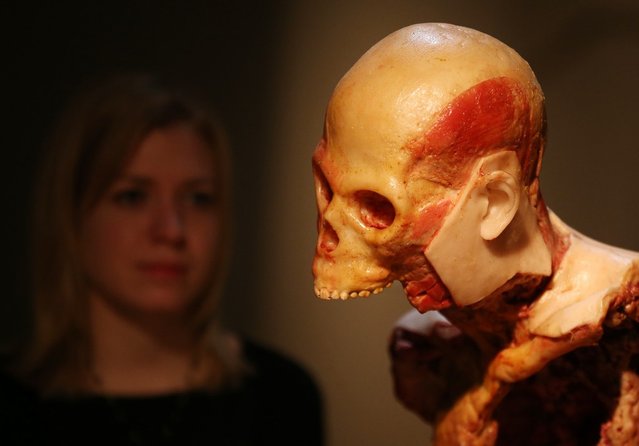
An artwork entitled “Are you still mad at me?” by John Isaacs is displayed at the Death: A Self-portrait exhibition at the Wellcome Collection on November 14, 2012 in London, England. The exhibition showcases 300 works from a unique collection by Richard Harris, a former antique print dealer from Chicago, devoted to the iconography of death. The display highlights art works, historical artifacts, anatomical illustrations and ephemera from around the world and opens on November 15, 2012 until February 24, 2013. (Photo by Peter Macdiarmid)
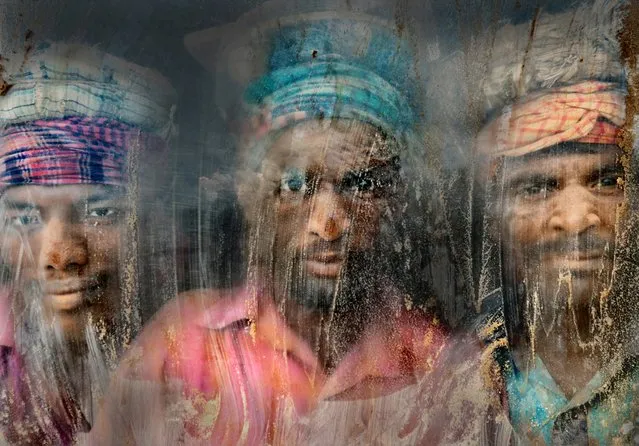
From Tibetan monks playing basket ball with ice thawing high up in the Himalayas, to the pollution that hides behind the Taj Mahal, here’s pick from 60 exceptional environmental photographs, by photographers and filmmakers from 70 countries, that will go on show at the Royal Geographical Society in London from 29 June to 21 August. The winners will be announced on 28 June. Here: Gravel Workmen of Chittagong, Bangladesh, by Faisal Azim. Gravel workmen look through a glass window at a gravel-crushing yard in Chittagong. Full of dust and sand, it is an extremely unhealthy environment for working, but still hundreds of people work here for their livelihoods. (Photo by Faisal Azim/2016 Atkins CIWEM Environmental Photographer of the Year)
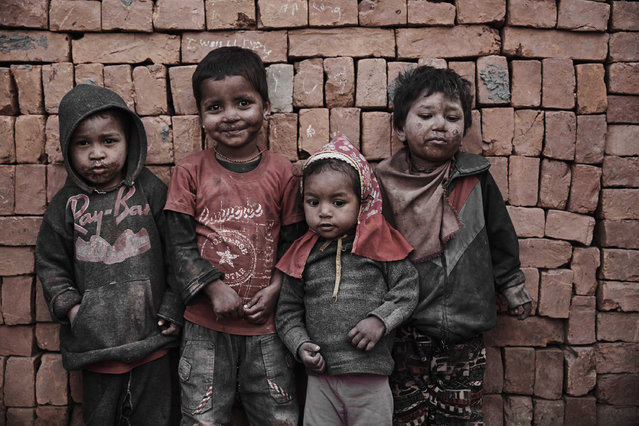
A group of dust covered child labourers gather for a portrait in the brick kiln in Kathmandu Valley, Nepal, 22 February 2015. Bleak photos identify the children working their fingers to the bone in Nepalís brick kilns. Photographer Jan Mˆller Hansen documented the conditions of the brick kilns in Kathmandu Valley, Nepal between 2013 and 2016 while he lived and worked in the area. Jan estimates between 150,000 and 175,000 people are employed in the 200 brick kilns littering the Kathmandu Valley. (Photo by Jan Moeller Hansen/Barcroft Images)
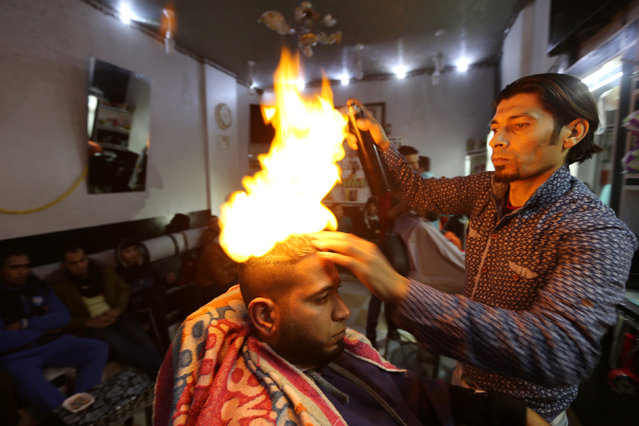
Palestinian barber Ramadan Odwan styles and straightens the hair of a customer with fire at his salon in Rafah, in the southern Gaza Strip February 2, 2017. In Ramadan Odwan's barbershop in Gaza, hair isn't just blow-dried, it's blowtorch-dried. “People have gone crazy about it, many people are curious to go through the experience and they are not afraid”, he told Reuters. “People here love adventures”. (Photo by Ibraheem Abu Mustafa/Reuters)
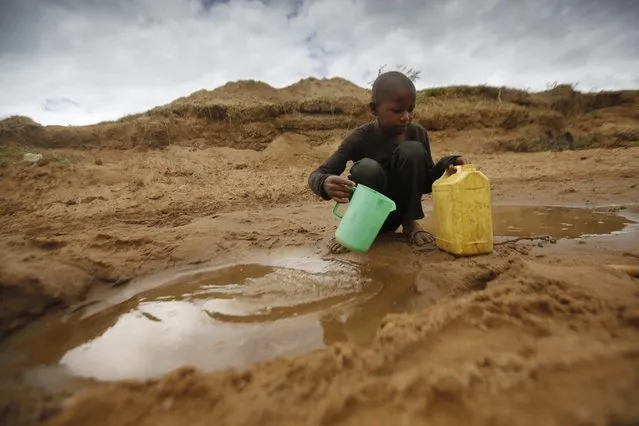
A young boy scoops water from a hand-dug well in the dry riverbed near Matinyani, in the semi-arid Kitui County in southeastern Kenya, 22 March 2015, the World Water Day. Residents of Kitui County and other arid and semi-arid areas of the country have been hard-hit by extremely poor rainfall this year while the government said in previous month that some 1.6 million people countrywide are facing acute starvation due to the drought and will need relief food over the next six months. Residents of Matinyani say they haven't seen a drop of rain in nearly four months. Thousands of Kenyans in rural areas walk tens of kilometers just to fetch water to drink and to be used in their homes. According to an estimate by UNESCO (United Nations Educational, Scientific and Cultural Organization), 17 million people lack access to safe water in Kenya, where the drought is a perennial problem. (Photo by Dai Kurokawa/EPA)