Loading...
Done
Fire patterns created by igniting gasoline in midair. (Photo by Rob Prideaux)

A photographer has taken an explosive set of images by igniting gasoline in midair. Rob Prideaux, 45, photographs fire and smoke and then creates patterns from it. The San Francisco-based artist captures the fire in the split second its visible by using highly arcane methods. Rob's Smoke and Fire series is his quest “to shape one of the more uncontrollable phenomena in nature”. (Photo by Rob Prideaux)
Details
10 Sep 2013 11:50:00
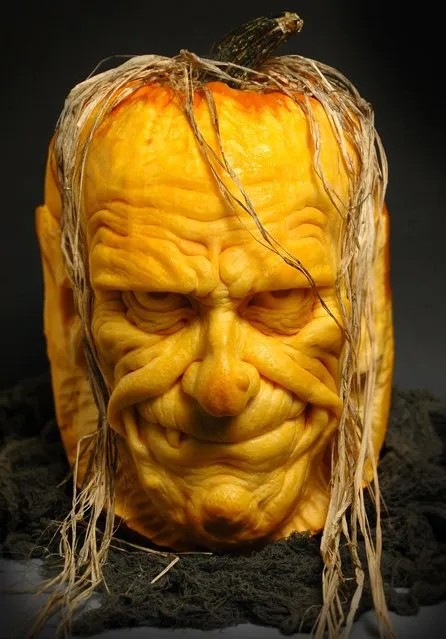
A horror face carved out of a pumpkin by Ray Villafane and team in Bellaire, Michigan. (Photo by Ray Villafane/Barcroft Media)

These Halloween horrors were all carved out of humble pumpkins by Ray Villafane and his team of professional sculptors who meticulously carved the terrifying characters using spoons and scalpels. Each one takes on average two hours to complete – with the horrifying results netting Villafane, plus colleagues Andy Bergholtz and Chris Vierra, numerous TV appearances each Halloween. This year the team has gone global travelling to Germany, Switzerland and Hong Kong to create their masterpieces. Photo: A horror face carved out of a pumpkin by Ray Villafane and team in Bellaire, Michigan. (Photo by Ray Villafane/Barcroft Media)
Details
30 Oct 2013 10:32:00
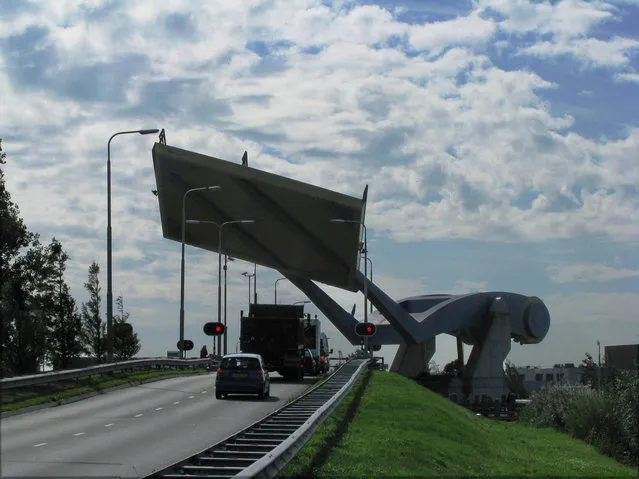
Slauerhoff Bridge, Netherlands

The Slauerhoffbrug (English: Slauerhoff Bridge) is a fully automatic bascule bridge (aka tail bridge) in the city of Leeuwarden in the Netherlands. It uses two arms to swing a section of road in and out of place within the road itself. It is also known as the “Slauerhoffbrug ‘Flying’ Drawbridge”. A tail bridge can quickly and efficiently be raised and lowered from one pylon (instead of hinges). This quickly allows water traffic to pass while only briefly stalling road traffic. The deck is 15 m by 15 m. It is painted in yellow and blue, representative of Leeuwarden's flag and seal.
Details
06 Nov 2013 10:34:00
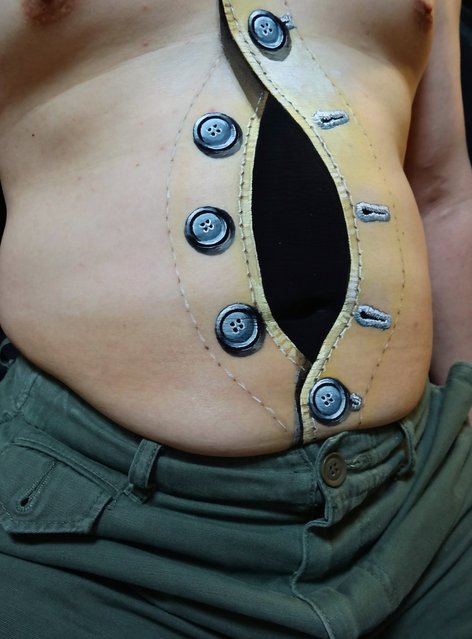
Body Art Illusions by Chooo-San

Using acrylic paint, 19-year old Japanese student and artist Chooo-San has transformed the bodies of herself and a handful of lucky volunteers into ones that appear to be from another planet. Bored with technology, she wanted to see how far she could go with creating eye-catching illusions in the real world, rather than relying on programs like Photoshop.

SEE ALSO: «A frightening-realistic Body Art by Chooo-San»

Details
22 Oct 2012 09:12:00
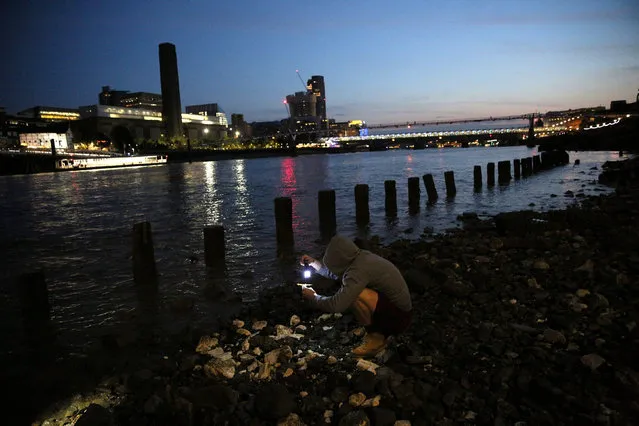
A mudlark uses a torch to look for items on the bank of the River Thames in London, Britain June 06, 2016. Mudlarking is believed to trace its origins to the 18th and 19th century, when scavengers searched the Thames' shores for items to sell. These days, history and archaeology fans are the ones hoping to find old relics such as coins, ceramics, artifacts or everyday items from across centuries. They wait for the low tide and then scour specific areas of exposed shores. "If you're in a field you could be out all day long, with the river you're restricted to about two or three hours," mudlark Nick Stevens said. While many just use the naked eye for their searches, others rely on metal detectors for which a permit from the Port of London Authority is needed. Digging also requires consent. (Photo by Neil Hall/Reuters)

A mudlark uses a torch to look for items on the bank of the River Thames in London, Britain June 06, 2016. Mudlarking is believed to trace its origins to the 18th and 19th century, when scavengers searched the Thames' shores for items to sell. These days, history and archaeology fans are the ones hoping to find old relics such as coins, ceramics, artifacts or everyday items from across centuries. their finds with the Portable Antiquities Scheme. Any item over 300 years old must be recorded. (Photo by Neil Hall/Reuters)
Details
27 Aug 2016 10:43:00
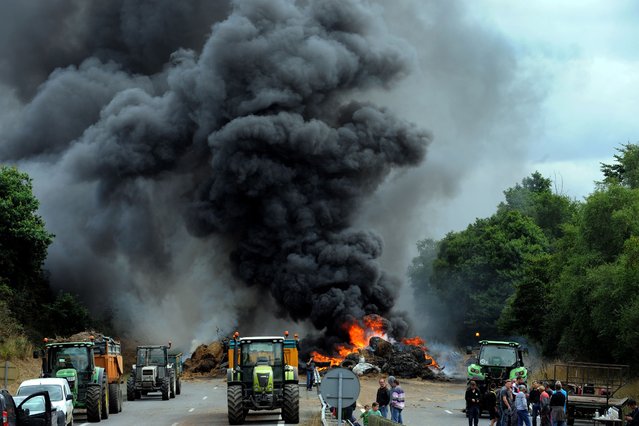
Farmers use tractors and burn tires, hay and manure as they block the highway between Morlaix and Brest during a demonstration against the market prices of their product, on July 22, 2015 in Morlaix, western of France. French farmers protesting over falling food prices threatened to step up blockades of cities, roads and tourist sites, as the government prepared to unveil emergency aid for them. (Photo by Fred Tanneau/AFP Photo)

Farmers use tractors and burn tires, hay and manure as they block the highway between Morlaix and Brest during a demonstration against the market prices of their product, on July 22, 2015 in Morlaix, western of France. French farmers protesting over falling food prices threatened to step up blockades of cities, roads and tourist sites, as the government prepared to unveil emergency aid for them. Farmers have dumped manure in cities, blocked access roads and motorways and hindered tourists from reaching Mont St-Michel in northern France, one of France's most visited sites. (Photo by Fred Tanneau/AFP Photo)
Details
23 Jul 2015 10:39:00
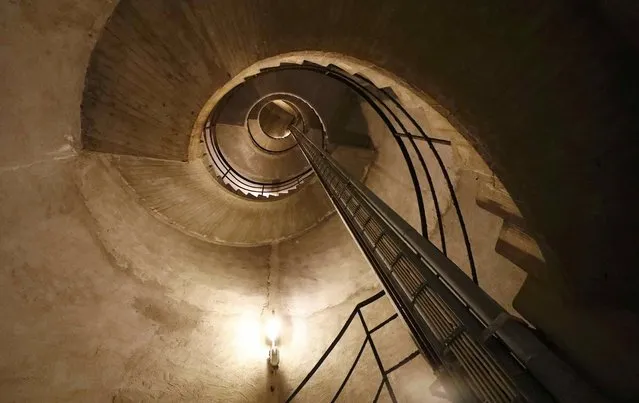
A 20 metre high spiral staircase in a tower used as an emergency exit, is seen inside a Federal Reserve bank (Bundesbank) bunker, prior to the bunker's official opening to the public in Cochem, Germany, March 18, 2016. (Photo by Kai Pfaffenbach/Reuters)

A 20 metre high spiral staircase in a tower used as an emergency exit, is seen inside a Federal Reserve bank (Bundesbank) bunker, prior to the bunker's official opening to the public in Cochem, Germany, March 18, 2016. West Germany's Central Bank (Deutsche Bundesbank) stored some 20 billion German marks of emergency notes in two underground bunkers, one in Frankfurt the other in Cochem, between 1964-1988 during the cold war. (Photo by Kai Pfaffenbach/Reuters)
Details
19 Mar 2016 12:36:00
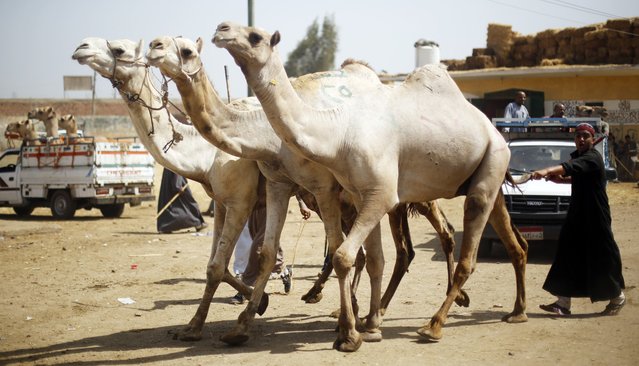
A man walks behind camels at the Birqash Camel Market, ahead of Eid al-Adha or Festival of Sacrifice, on the outskirts of Cairo September 29, 2014. (Photo by Amr Abdallah Dalsh/Reuters)

A man walks behind camels at the Birqash Camel Market, ahead of Eid al-Adha or Festival of Sacrifice, on the outskirts of Cairo September 29, 2014. Birqash Camel Market, one of the biggest markets for camel meat in Africa, draws sellers from Libya, Sudan, Somalia and other regions in Egypt. The camels sold at the market are also used in tourism. Traders say that the selling rate for a camel in 2014 is anywhere between 5,000 and 20,000 Egyptian pounds (700 – 2800 USD). (Photo by Amr Abdallah Dalsh/Reuters)
Details
02 Oct 2014 10:20:00