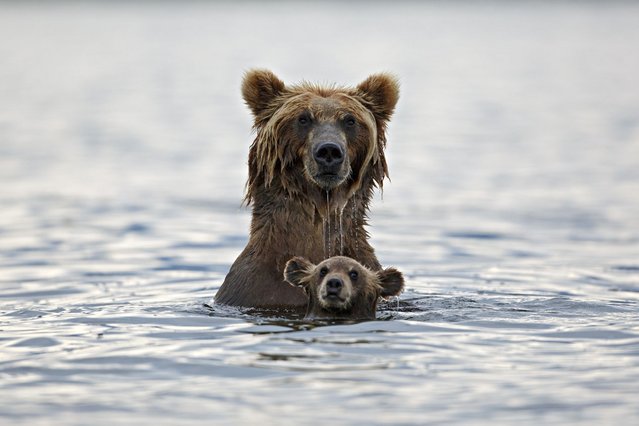
These little grizzly bear cubs had fun making a real splash when their mum took them for a dip to learn how to fish. Kamchatka, Russia. (Photo by Marco Mattiussi/Solent News & Photo Agency)
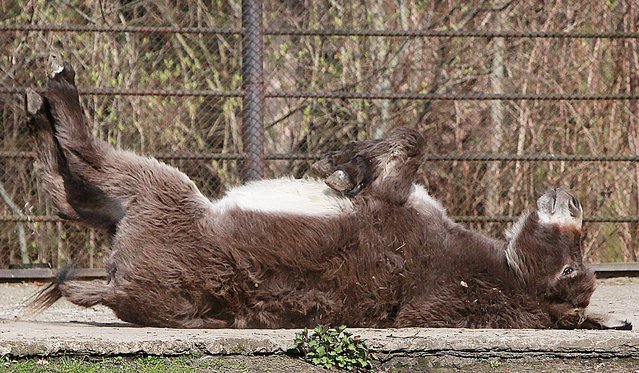
A donkey savors warming temperatures after a long winter at the zoo in Warsaw, Poland, on Wednesday, April 8, 2015. (Photo by Czarek Sokolowski/AP Photo)
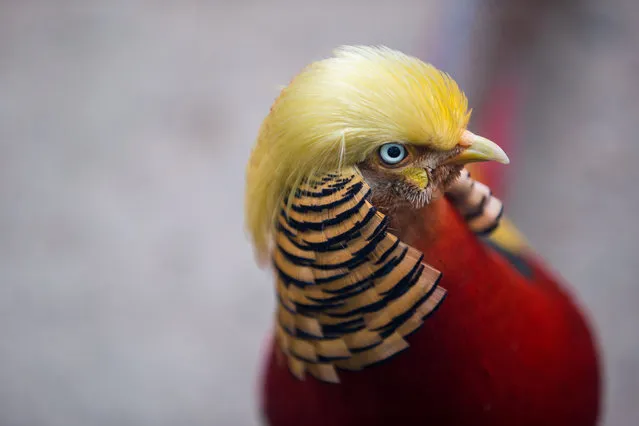
A golden pheasant is seen at Hangzhou Safari Park in Hangzhou, Zhejiang Province, China, November 13, 2016. According to local media, the pheasant gains popularity as its golden feathers resemble the hairstyle of U.S. President-elect Donald Trump. (Photo by Reuters/Stringer)
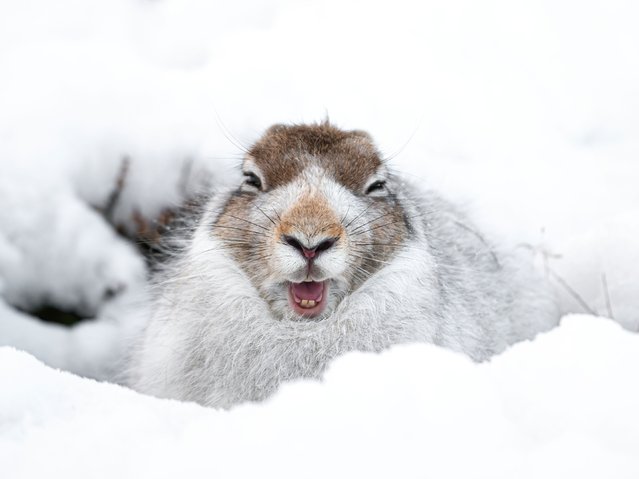
The hare was actually yawning and stretching but, looking back at the photos, it does look like it was laughing — probably at my husband and I as we had been sat there in the freezing conditions for about five hours just waiting for this kind of behaviour in Cairngorms, Scotland in the last decade of February 2025. (Photo by Michelle Coyle/Solent News & Photo Agency)
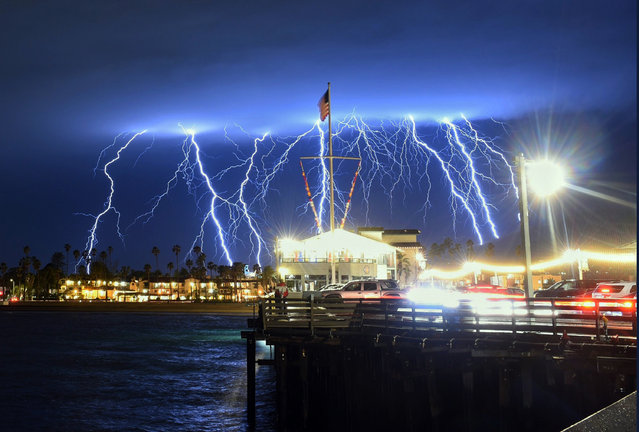
This time exposure photo provided by the Santa Barbara County Fire Department shows a series of lightning strikes over Santa Barbara, Calif., seen from Stearns Wharf in the city's harbor, Tuesday evening, March 5, 2019. A storm soaking California on Wednesday could trigger mudslides in wildfire burn areas where thousands of residents are under evacuation orders, authorities warned. (Photo by Mike Eliason/Santa Barbara County Fire Department via AP Photo)
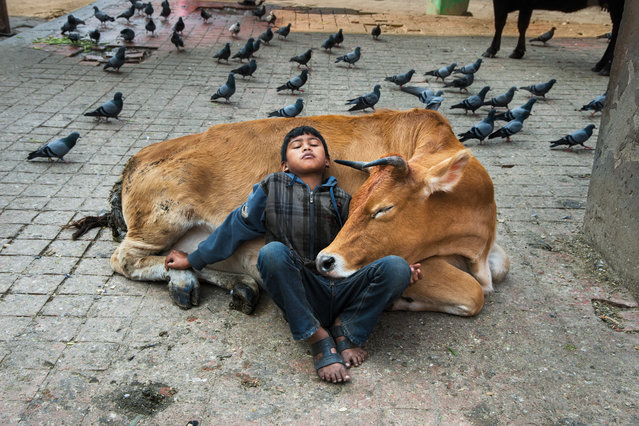
The legendary US photographer’s favourite shots of creatures and how they interact with humans feature in “Animals”, his latest book. Here: A boy rests against a cow, Kathmandu, Nepal, 2013. “Cows have been designated the national animal in Nepal. They roam freely, and are considered sacred by the 80% of Nepalis who are Hindu”. (Photo by Steve McCurry/The Guardian)
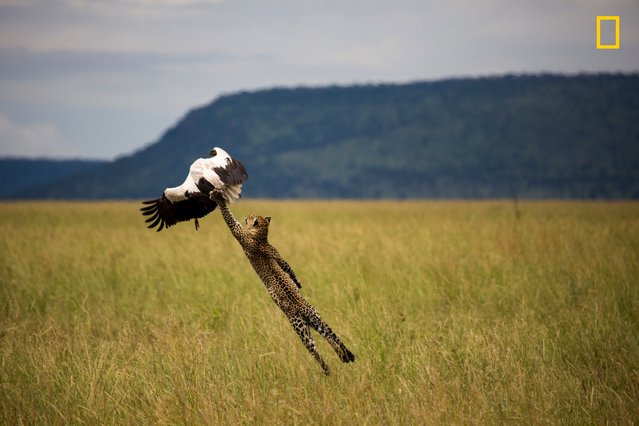
“Leopard Hunting a Stork”. “One-shot capture. I watched the leopard stalking the stork, I only had time to focus at 400mm, no time to change to high speed, I watched the stork, and as soon as it flapped its wings, I shot one shot”. (Photo by Paul Rifkin/National Geographic Travel Photographer of the Year Contest)
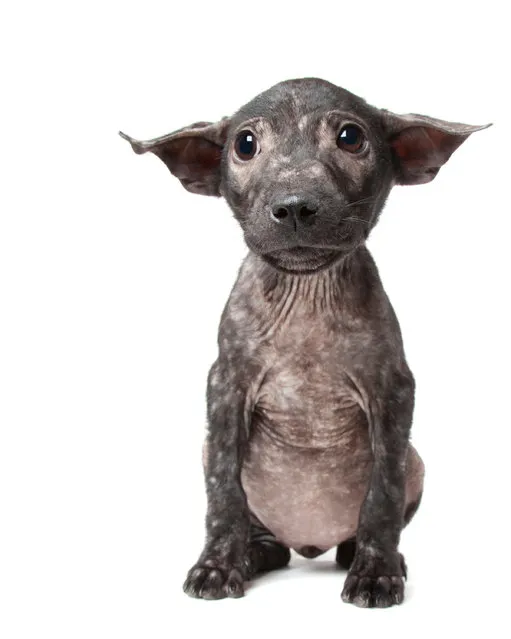
For her book “Perfect Imperfection”, the Australian pet photographer Alex Cearns set out to capture the personalities of animals who adapt to their damaged or different bodies without complaint. Part of the proceeds from sales of Perfect Imperfection go to the Australian Animal Cancer Foundation. Here: “Bali Pip”. Bali street dog. Had the skin condition mange. (Photo by Alex Cearns/The Guardian)