Loading...
Done
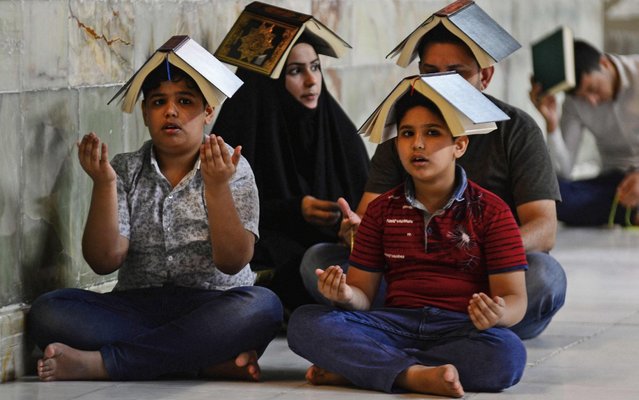
Shiite Muslims gather, albeit in fewer numbers due to the COVID-19 pandemic, at the Imam Ali shrine in the central Iraqi holy city of Najaf late on May 16, 2020, to mark Lailat al-Qadr, a night in the holy month of Ramadan during which the Koran was first revealed to the Prophet Mohammed in the seventh century. Worshippers placed copies of the Koran on their heads to convey veneration during the overnight prayers in a centuries-old ritual, as they pleaded to God to rid them of the ongoing novel coronavirus pandemic. (Photo by Haidar Hamdani/AFP Photo)

Shiite Muslims gather, albeit in fewer numbers due to the COVID-19 pandemic, at the Imam Ali shrine in the central Iraqi holy city of Najaf late on May 16, 2020, to mark Lailat al-Qadr, a night in the holy month of Ramadan during which the Koran was first revealed to the Prophet Mohammed in the seventh century. Worshippers placed copies of the Koran on their heads to convey veneration during the overnight prayers in a centuries-old ritual, as they pleaded to God to rid them of the ongoing novel coronavirus pandemic. (Photo by Haidar Hamdani/AFP Photo)
Details
19 May 2020 00:07:00
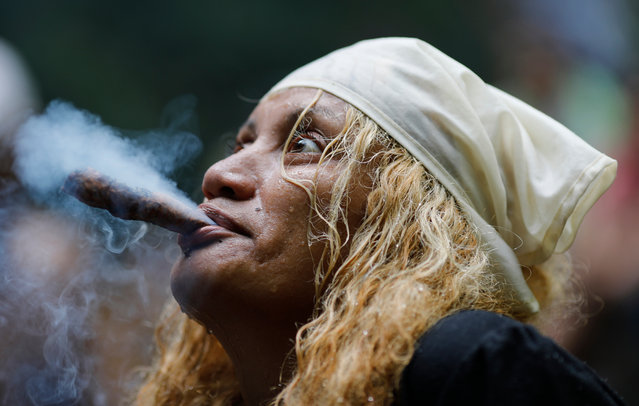
In this photo taken October 12, 2019, a spiritual healer known as a “madrina” starts a ritual on Sorte Mountain where followers of indigenous goddess Maria Lionza gather annually in Venezuela's Yaracuy state. While her followers gather on the mountain for weeks at this time of the year, October 12 marks the biggest gathering, coinciding with Indigenous People's Day, known in Latin America as “Dia de la Raza”. (Photo by Ariana Cubillos/AP Photo)

In this photo taken October 12, 2019, a spiritual healer known as a “madrina” starts a ritual on Sorte Mountain where followers of indigenous goddess Maria Lionza gather annually in Venezuela's Yaracuy state. While her followers gather on the mountain for weeks at this time of the year, October 12 marks the biggest gathering, coinciding with Indigenous People's Day, known in Latin America as “Dia de la Raza”. (Photo by Ariana Cubillos/AP Photo)
Details
17 Oct 2019 00:05:00
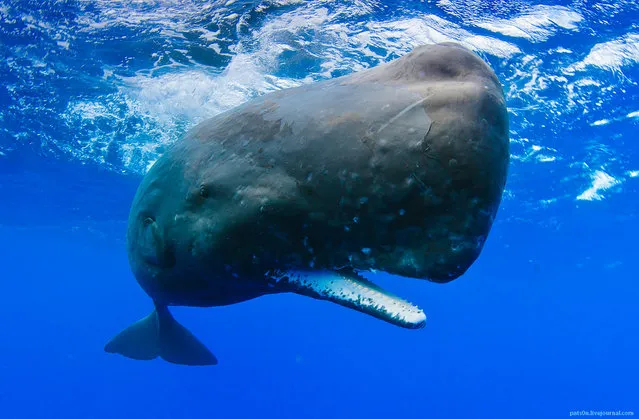
“Sperm whale opening it's huge mouth, Ogasawara Islands, Japan. Sperm whales are the biggest carnivorous animals on the planet. Each teeth in the mouth of adult specimen weights more than 1 kilogram. Interestingly enough that modern marine biologists believe that these teeth despite being fearsome play little role in capturing and eating giant squid – with their main function being mainly ritual aggression between males!”. (Alexander Safonov)

“Sperm whale opening it's huge mouth, Ogasawara Islands, Japan. Sperm whales are the biggest carnivorous animals on the planet. Each teeth in the mouth of adult specimen weights more than 1 kilogram. Interestingly enough that modern marine biologists believe that these teeth despite being fearsome play little role in capturing and eating giant squid – with their main function being mainly ritual aggression between males!”. (Photo by Alexander Safonov)
Details
30 Nov 2012 11:22:00
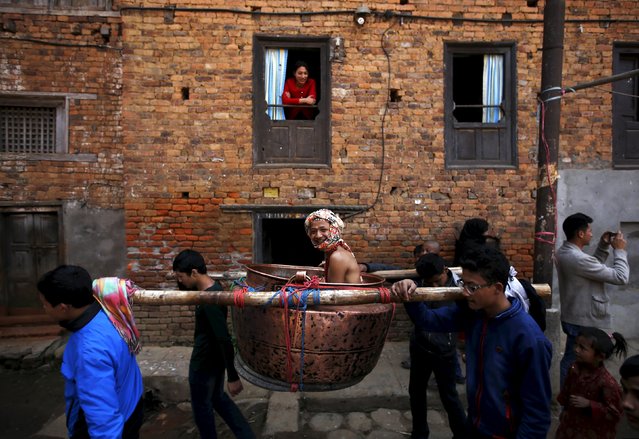
A devotee is carried around town in a vessel as part of rituals during the Swasthani Bratakatha festival at Thecho in Lalitpur, Nepal, February 19, 2016. During the month long festival, devotees recite one chapter of a Hindu tale daily from the 31-chapter sacred Swasthani Brata Katha book that is dedicated to God Madhavnarayan and Goddess Swasthani, alongside various other gods and goddess and the miraculous feats performed by them. (Photo by Navesh Chitrakar/Reuters)

A devotee is carried around town in a vessel as part of rituals during the Swasthani Bratakatha festival at Thecho in Lalitpur, Nepal, February 19, 2016. During the month long festival, devotees recite one chapter of a Hindu tale daily from the 31-chapter sacred Swasthani Brata Katha book that is dedicated to God Madhavnarayan and Goddess Swasthani, alongside various other gods and goddess and the miraculous feats performed by them. (Photo by Navesh Chitrakar/Reuters)
Details
21 Feb 2016 11:32:00
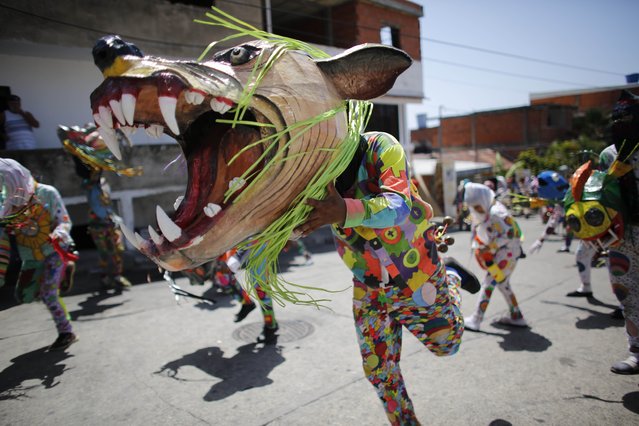
People dressed as a dancing devils with giant mask dance on a street, during a traditional celebration in Naiguata, Venezuela, Thursday, May 31, 2018. Carrying in their hands striking masks mostly animals and sea monsters, hundreds of men, women and children went out to dance frantically as possessed by evil spirits in an ancient ritual known as Dancing Devils of Naiguata, the unorthodox way of the coastal towns of Venezuela to venerate God during the celebrations of Corpus Christi. (Photo by Ariana Cubillos/AP Photo)

People dressed as a dancing devils with giant mask dance on a street, during a traditional celebration in Naiguata, Venezuela, Thursday, May 31, 2018. Carrying in their hands striking masks mostly animals and sea monsters, hundreds of men, women and children went out to dance frantically as possessed by evil spirits in an ancient ritual known as Dancing Devils of Naiguata, the unorthodox way of the coastal towns of Venezuela to venerate God during the celebrations of Corpus Christi. (Photo by Ariana Cubillos/AP Photo)
Details
02 Jun 2018 07:20:00
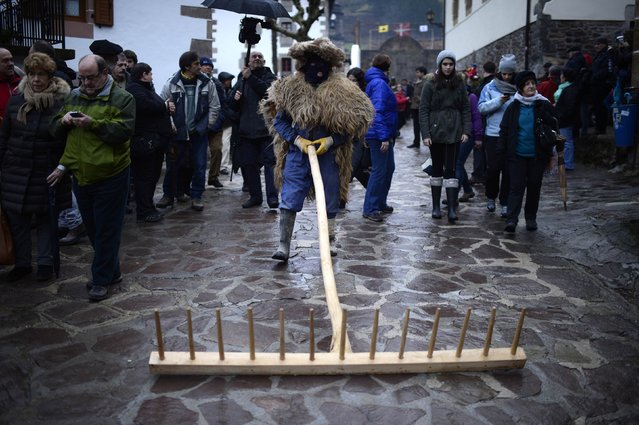
A man walks with a giant rake during carnival celebrations in Zubieta January 27, 2015. Bell carrying dancers known as Joaldunak from Zubieta and neighbouring Ituren visit each other's villages performing a ritual dance to ward off evil spirits and awaken the coming spring. Alongside the dancers, villagers dress in bizarre and frightening costumes to harass and scare visitors. (Photo by Vincent West/Reuters)

A man walks with a giant rake during carnival celebrations in Zubieta January 27, 2015. Bell carrying dancers known as Joaldunak from Zubieta and neighbouring Ituren visit each other's villages performing a ritual dance to ward off evil spirits and awaken the coming spring. Alongside the dancers, villagers dress in bizarre and frightening costumes to harass and scare visitors. (Photo by Vincent West/Reuters)
Details
28 Jan 2015 11:46:00
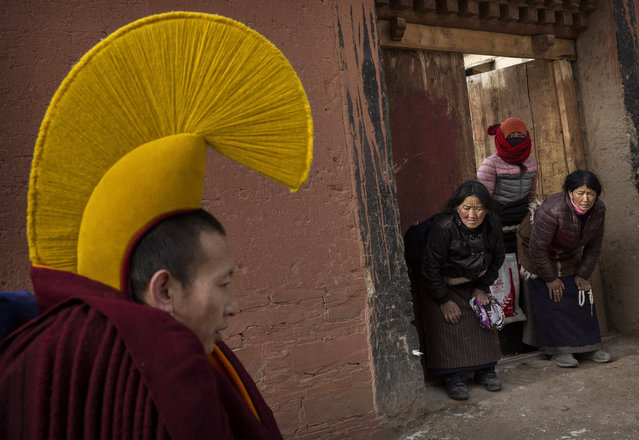
Devotees bow to a passingTibetan Buddhist monk on his way to take part in a special prayer during Monlam or the Great Prayer rituals on March 5, 2015 at the Labrang Monastery, Xiahe County, Amdo, Tibetan Autonomous Prefecture, Gansu Province, China. (Photo by Kevin Frayer/Getty Images)

Devotees bow to a passingTibetan Buddhist monk on his way to take part in a special prayer during Monlam or the Great Prayer rituals on March 5, 2015 at the Labrang Monastery, Xiahe County, Amdo, Tibetan Autonomous Prefecture, Gansu Province, China. Labrang Monastery is one of the six great monasteries of the Gelug school of Tibetan Buddhism and one of the largest outside of the Tibetan Autonomous Region. Monlam, the most important prayer event for many Tibetans was banned during the Cultural Revolution in China but once again in recent years it is celebrated in many areas. (Photo by Kevin Frayer/Getty Images)
Details
14 Mar 2015 14:37:00
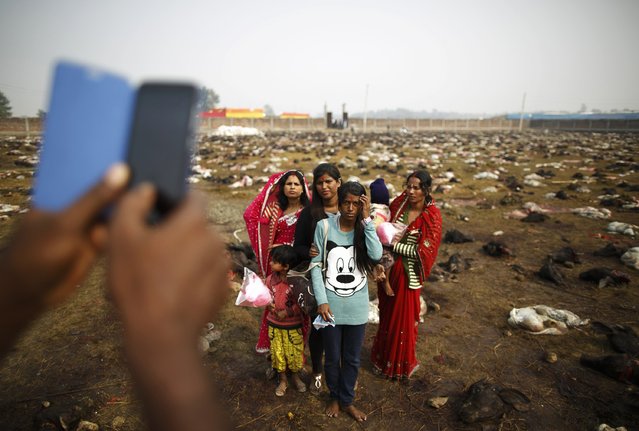
A family poses for a picture in front of the carcasses of sacrificed buffalos a day after the sacrificial ceremony of the “Gadhimai Mela” festival held in Bariyapur November 29, 2014. Sword-wielding Hindu devotees in Nepal began slaughtering thousands of animals and birds in a ritual sacrifice on Friday, ignoring calls by animal rights activists to halt what they described as the world's largest such exercise. (Photo by Navesh Chitrakar/Reuters)

A family poses for a picture in front of the carcasses of sacrificed buffalos a day after the sacrificial ceremony of the “Gadhimai Mela” festival held in Bariyapur November 29, 2014. Sword-wielding Hindu devotees in Nepal began slaughtering thousands of animals and birds in a ritual sacrifice on Friday, ignoring calls by animal rights activists to halt what they described as the world's largest such exercise. (Photo by Navesh Chitrakar/Reuters)
Details
30 Nov 2014 12:35:00