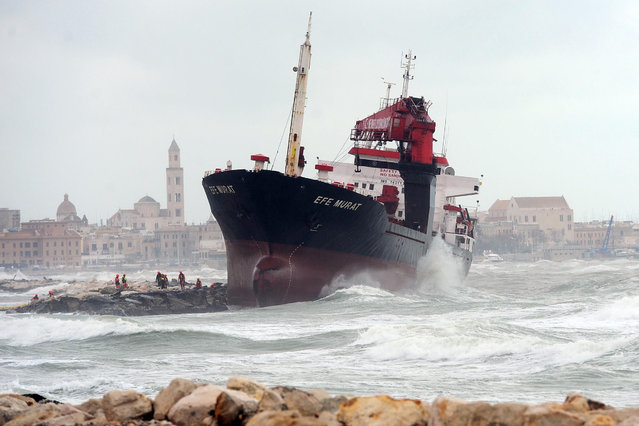
The Turkish merchant ship Efe Murat is driven aground in strong winds in Bari, Italy on February 25, 2019. (Photo by De Giglio/Fotogramma/Ropi/ROPI via ZUMA Press/Rex Features/Shutterstock)
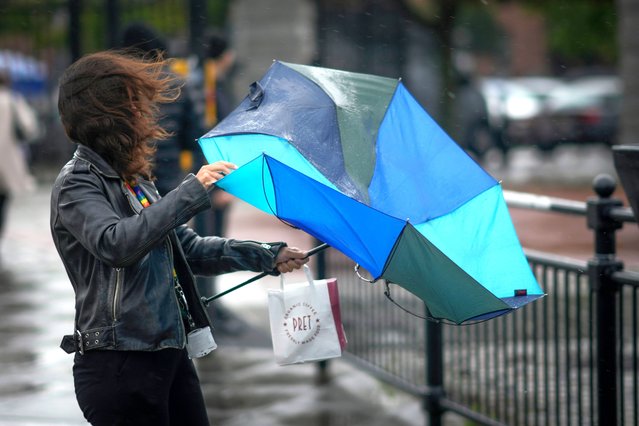
Racegoers shield themselves from the rain and wind at the Fairyhouse Easter Festival in Fairyhouse, Co. Meath, Ireland on April 10, 2023. (Photo by Morgan Treacy/Inpho)
People brave the first rain and wind of Storm Agnes as it approaches the UK on September 27, 2023 in Liverpool, United Kingdom. (Photo by Christopher Furlong/Getty Images)
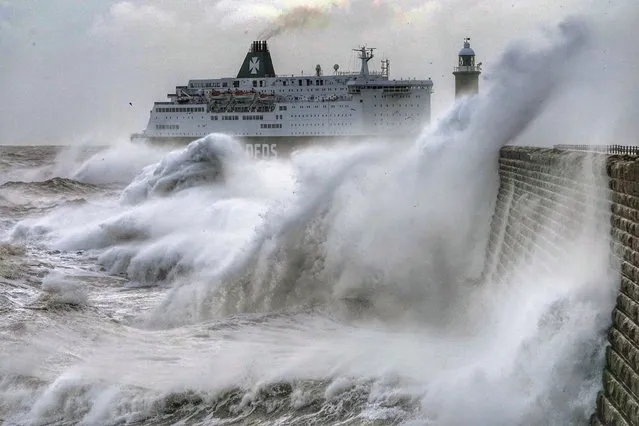
The MS Princess Seaways battles through the waves off Tynemouth pier as gale force winds hit the North east UK on September 25, 2020. (Photo by Owen Humphreys/PA Images via Getty Images)
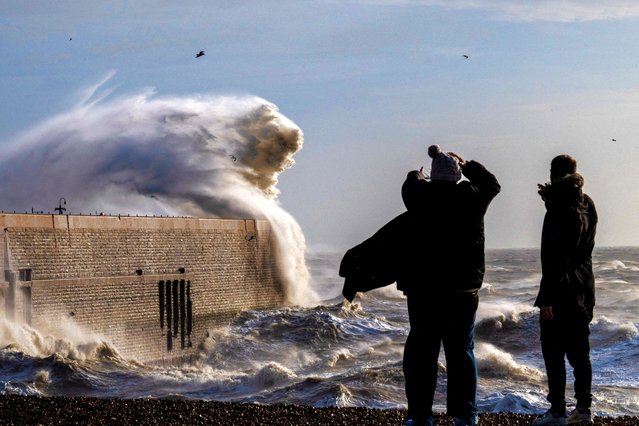
Locals look on as high winds from Storm Bert cause waves to crash over the harbour arm in Folkestone, Britain, on November 24, 2024. (Photo by Chris J. Ratcliffe/Reuters)
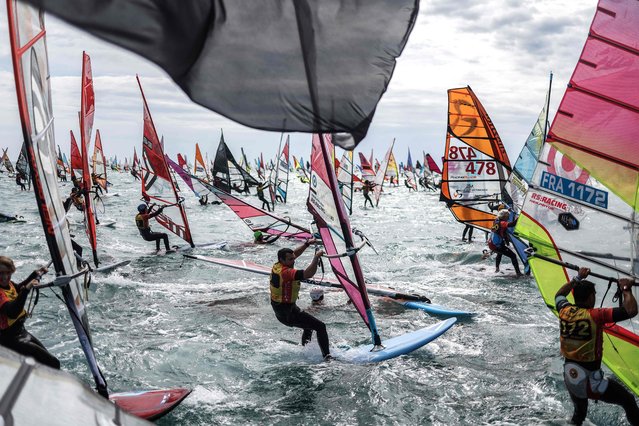
Some 1200 windsurfers take the start of the 21th edition of the Defi Wind in the Mediterranean Sea, off the coast of Gruissan in southern France, on May 19, 2023. (Photo by Charly Triballeau/AFP Photo)
Members of the public take to the water at Barassie Beach in Troon, on the west coast of Scotland on Boxing Day, December 26, 2020 as Storm Bella brings rain and high winds to the UK. (Photo by Andy Buchanan/AFP Photo)
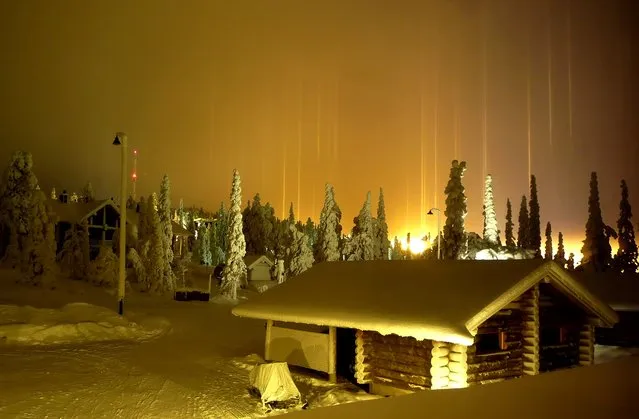
A light pillar is a visual phenomenon created by the reflection of light from ice crystals with near horizontal parallel planar surfaces. The light can come from the Sun (usually at or low to the horizon) in which case the phenomenon is called a sun pillar or solar pillar. It can also come from the Moon or from terrestrial sources such as streetlights.