Women carry pitchers filled with drinking water in Devmali village in the desert state of Rajasthan, India, June 16, 2016. (Photo by Himanshu Sharma/Reuters)
A boy looks for scrap metal using an improvised magnetic tool near a construction site in New Delhi, India, March 21, 2016. (Photo by Cathal McNaughton/Reuters)
British Holidaymakers seen partying partying in Punta Bella main Street in Magaluf, a major holiday resort on the Spanish island of Majorca this summer, July 2017. (Photo by Splash News and Pictures)
Cybermen patrol the National Museum of Scotland before the opening of the Doctor Who Worlds of Wonder exhibition in Edinburgh, Scotland on Wednesday, December 7, 2022. (Photo by Murdo MacLeod/The Guardian)
A police cadet casts her vote in the presidential election in Moscow, Russia, Sunday, March 18, 2018. Vladimir Putin headed to an overwhelming win in Russia' s presidential election Sunday, adding six years in the Kremlin for the man who has led the world' s largest country for all of the 21 st century. (Photo by Pavel Golovkin/AP Photo)
A fisherman boats in Chao Lake where thick cyanobacteria gather on the surface on August 5, 2015 in Chaohu, Anhui Province of China. As high temperature came in summar, part of water in Anhui Province's Chao Lake breeds large tracts of cyanobacteria which not only brought pollution to sense of smell, but also affected people's life. (Photo by ChinaFotoPress/ChinaFotoPress via Getty Images)
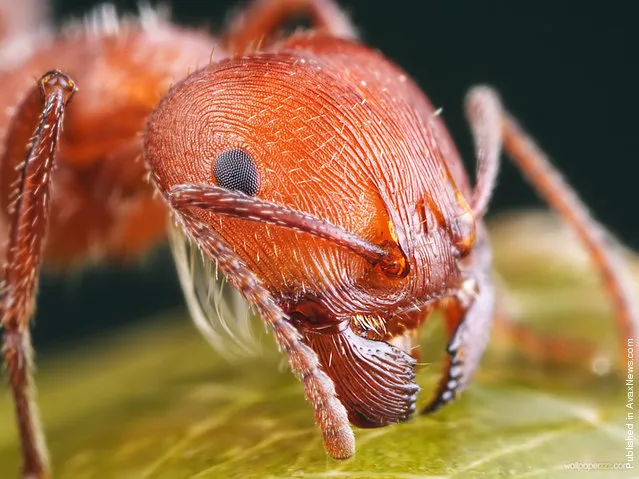
Once upon a time a myth was born that insects, unlike animals, are just a machines that not capable of learning and survive only based on their instincts. That myth has become the widespread opinion. Of course, this opinion is indeed erroneous, like many other widespread opinions. Let us try to find out which part is a myth and which part is true.
These are the stomach-churning pictures of the swing at the end of the world – a rickety wooden swing hanging over a precipice 2,660 metres above sea level – and not a seatbelt in sight. (Photo by Caters News)