Loading...
Done
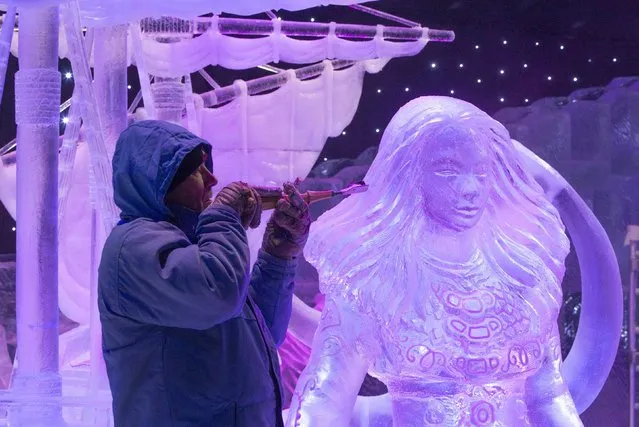
Sculptor Jiri Genzer of the Czech Republic carves an ice sculpture at the Disney Dreams Ice Festival in Antwerp November 27, 2014. Some 60 artists from all over the world participated in the festival, making sculptures out of around 500 tonnes of ice. The festival will open on November 29 until January 11, 2015. (Photo by Yves Herman/Reuters)

Sculptor Jiri Genzer of the Czech Republic carves an ice sculpture at the Disney Dreams Ice Festival in Antwerp November 27, 2014. Some 60 artists from all over the world participated in the festival, making sculptures out of around 500 tonnes of ice. The festival will open on November 29 until January 11, 2015. (Photo by Yves Herman/Reuters)
Details
30 Nov 2014 12:29:00
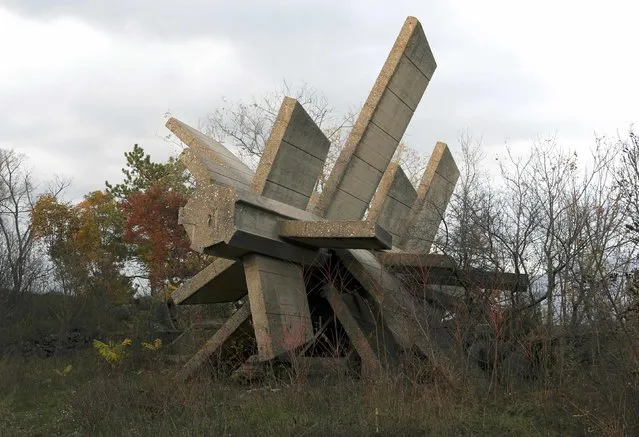
General view of the monument to memory of soldiers who liberated the city of Knin, in Knin, Croatia November 10, 2014. (Photo by Antonio Bronic/Reuters)

General view of the monument to memory of soldiers who liberated the city of Knin – in Knin, Croatia on November 10, 2014. Across the former Yugoslavia stand giant monuments to a state that no longer exists, once visited and celebrated during public holidays such as Republic Day on November 29, marking the creation of socialist Yugoslavia. Many are now neglected or ignored, aging symbols of a joint state forged during World War Two but torn apart by nationalism half a century later. Republic Day is no longer marked in any of the seven independent states that emerged from its ashes. (Photo by Antonio Bronic/Reuters)
Details
01 Dec 2014 14:00:00
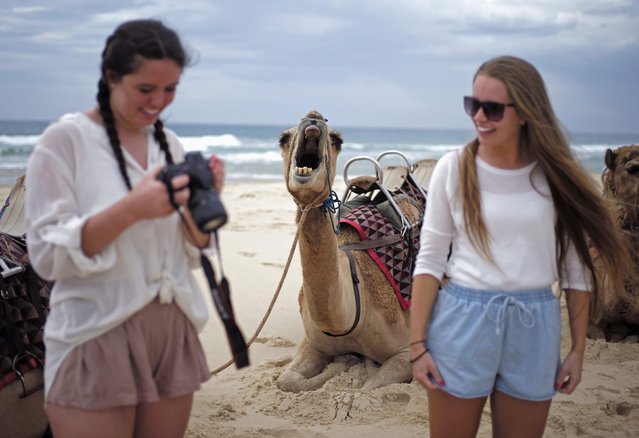
A camel yawns as a tourist checks images on her camera following a ride on a camel safari alongside the Pacific Ocean on Lighthouse Beach, north of Sydney, December 4, 2014. For 25 years camel rides on this beach have given visitors to Australia's holiday coast a rare experience available only in a handful of locations in the country. (Photo by Jason Reed/Reuters)

A camel yawns as a tourist checks images on her camera following a ride on a camel safari alongside the Pacific Ocean on Lighthouse Beach, north of Sydney, December 4, 2014. For 25 years camel rides on this beach have given visitors to Australia's holiday coast a rare experience available only in a handful of locations in the country. Australia's long history with the “ships of the desert” goes back to the 1800s when they were imported from Afghanistan and India for use as transportation across Australia's vast deserts before being released into the wild following their replacement by motorised transport. (Photo by Jason Reed/Reuters)
Details
06 Dec 2014 12:48:00
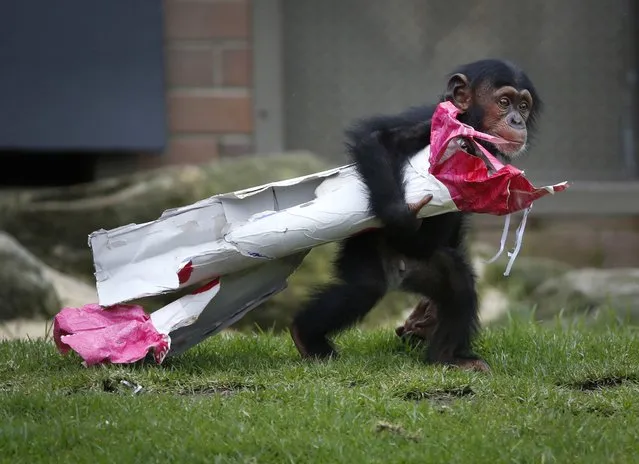
A 13-month-old chimp named Fumo carries a “Christmas present” of food treats in wrapping paper under his arm during a Christmas-themed feeding time at Sydney's Taronga Park Zoo, December 9, 2014. Fumo, meaning “chief” or “spear” in Swahili, is one of the latest additions to the zoo's successful primate breeding program. (Photo by Jason Reed/Reuters)

A 13-month-old chimp named Fumo carries a “Christmas present” of food treats in wrapping paper under his arm during a Christmas-themed feeding time at Sydney's Taronga Park Zoo, December 9, 2014. Fumo, meaning “chief” or “spear” in Swahili, is one of the latest additions to the zoo's successful primate breeding program. (Photo by Jason Reed/Reuters)
Details
09 Dec 2014 09:32:00
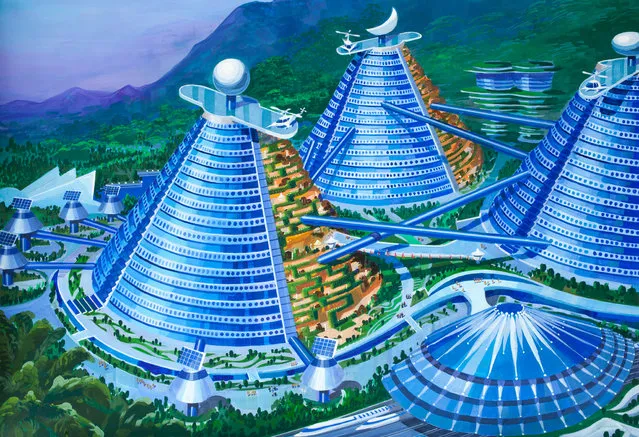
The following “Utopian Tours” drawings are conceptual images of what tourism in North Korea might one day look like, created by North Korean architects. The images, curated by Nick Bonner, are on view as part of the exhibition at the Venice Architecture Biennale in the Korean Pavilion. Bonner runs the Beijing-based Koryo Tours – a company that organizes tours of outsiders into North Korea. (Photo by Nick Bonner/Kyle Vanhemert/Venice Architecture Biennale)

At this year’s Venice Bienniale in Italy, the Korean pavilion has a curious exhibit called “Commissions for Utopia”. It includes renderings from North Korea’s top architects and artists (all anonymous), many of whom studied at the Paekho Institute of Architecture, North Korea’s state-run architectural college, and none of whom have ever left the country. They were asked to create a vision of North Korea’s future sustainable architecture for its expanding tourism industry. Their final products are a glimpse into what it would be like to envision the future after being entirely cut off from the present for almost 70 years. (Photo by Nick Bonner/Kyle Vanhemert/Venice Architecture Biennale)
Details
08 Aug 2014 11:03:00
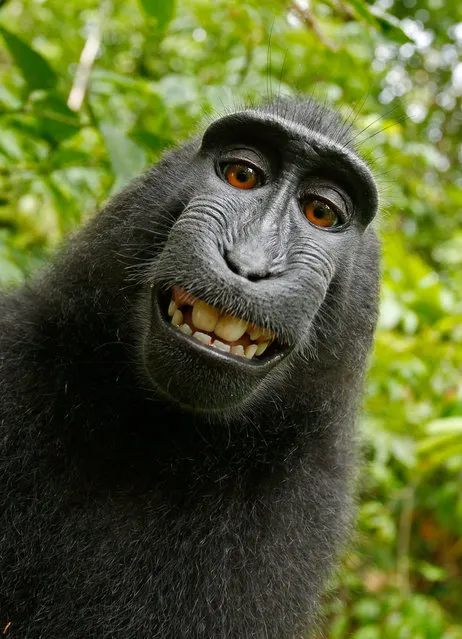
These are the chimp-ly marvellous images captured by a cheeky monkey after turning the tables on a photographer who left his camera unmanned. (Photo by David Slater)

These are the chimp-ly marvellous images captured by a cheeky monkey after turning the tables on a photographer who left his camera unmanned. The inquisitive scamp playfully went to investigate the equipment before becoming fascinated with his own reflection in the lens. And it wasnt long before the crested black macaque hijacked the camera and started snapping away sending award-winning photographer David Slater bananas. David, from Coleford, Gloucestershire, was on a trip to a small national park north of the Indonesian island of Sulawesi when he met the incredibly friendly bunch. (Photo by David Slater/Caters News)
Details
10 Aug 2014 11:04:00
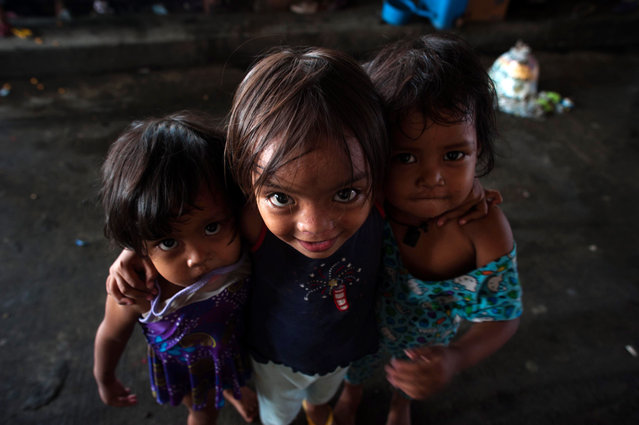
Children beg for alms in a street on August 11, 2014 in Manila, Philippines. The Philippines has one of the fastest growing populations in Southeast Asia with around 100 million people. (Photo by Dondi Tawatao/Getty Images)

Children beg for alms in a street on August 11, 2014 in Manila, Philippines. The Philippines has one of the fastest growing populations in Southeast Asia with around 100 million people. At least 12 million people live in the capital city of Manila alone, making it one of the most densely populated and largest cities in the world. Lack of space and economic opportunities has pushed around four million people to live informally along waterways, bridges and even cemeteries further straining the already weak infrastructure and straining the resources of the city. (Photo by Dondi Tawatao/Getty Images)
Details
12 Aug 2014 12:21:00
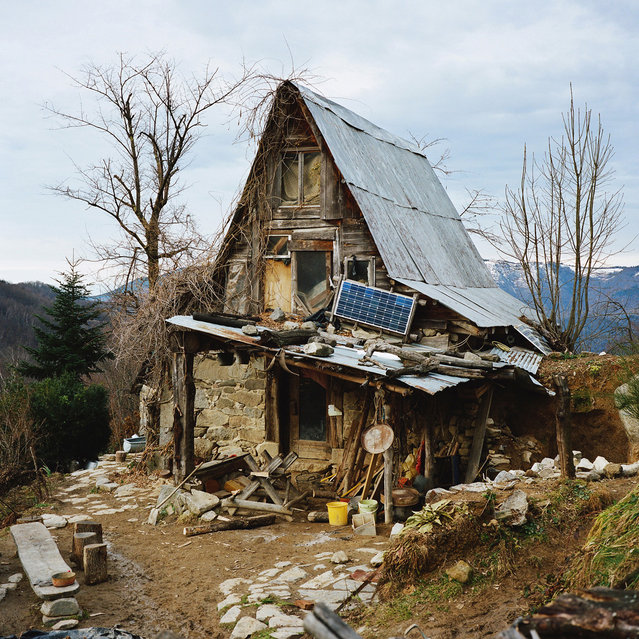
This property in the French Pyrenees is owned by a German man, who moved with his family here 25 years ago. He has since renovated the shack to be a completely self-sufficient house. There are no electrical appliances, but the solar panel powers small lights in the house. (Photo by Antoine Bruy)

Back in 2010, French photographer Antoine Bruy began hitchhiking around Europe without any fixed route. Along his travels, he met people who had entirely abandoned city life in favour of an isolated country existence they found more fulfilling. Bruy began seeking out people who lived off-the-grid. After three years on the road, staying in makeshift houses and on community farms, he has released Scrublands, a documentation of the lifestyle. While each living situation is different, Bruy found that all the people he met shared a common desire to escape the rat race and achieve a quieter life in harmony with nature. (Photo by Antoine Bruy)
Details
13 Aug 2014 09:45:00