Loading...
Done
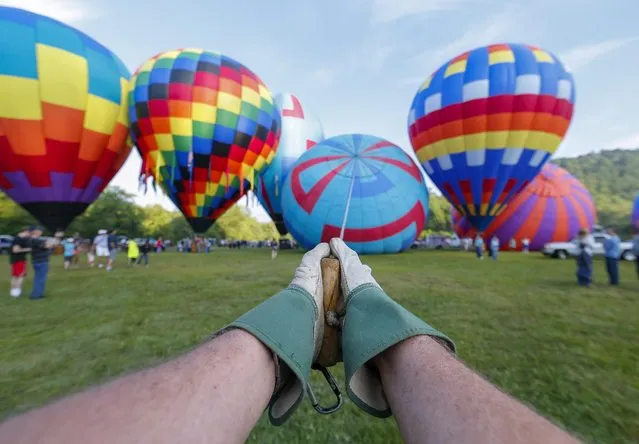
Crown line handler Bobby Marie controls 'Chain Gang' as the balloon is inflated during the 43nd Annual Helen to the Atlantic Balloon Race and Festival, in Helen, Georgia, USA, 04 June 2016. The race is the oldest balloon event in the southern USA and United States' only long-distance hot air balloon race, according to the organizers. (Photo by Erik S. Lesser/EPA)

Crown line handler Bobby Marie controls “Chain Gang” as the balloon is inflated during the 43nd Annual Helen to the Atlantic Balloon Race and Festival, in Helen, Georgia, USA, 04 June 2016. The race is the oldest balloon event in the southern USA and United States' only long-distance hot air balloon race, according to the organizers. (Photo by Erik S. Lesser/EPA)
Details
05 Jun 2016 13:37:00
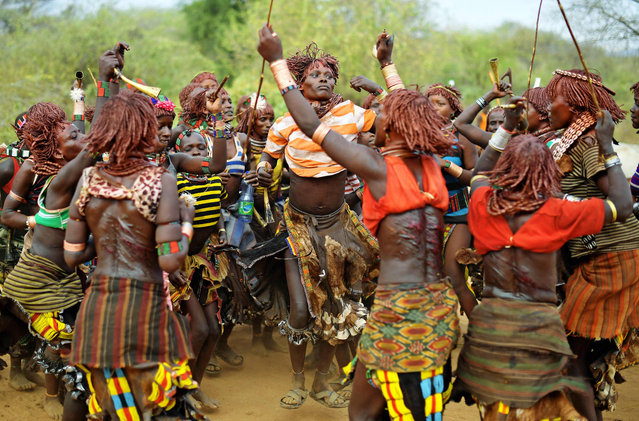
Hamar women dance before a bull jumping ceremony in Ethiopia's southern Omo Valley region near Turmi on September 19, 2016. The Hamar are a Nilotic ethnic group in Ethiopia. The construction of the Gibe III dam, the third largest hydroelectric plant in Africa, and large areas of very “thirsty” cotton and sugar plantations and factories along the Omo river are impacting heavily on the lives of tribes living in the Omo Valley who depend on the river for their survival and way of life. Human rights groups fear for the future of the tribes if they are forced to scatter, give up traditional ways through loss of land or ability to keep cattle as globalisation and development increases. (Photo by Carl De Souza/AFP Photo)

Hamar women dance before a bull jumping ceremony in Ethiopia's southern Omo Valley region near Turmi on September 19, 2016. The Hamar are a Nilotic ethnic group in Ethiopia. The construction of the Gibe III dam, the third largest hydroelectric plant in Africa, and large areas of very “thirsty” cotton and sugar plantations and factories along the Omo river are impacting heavily on the lives of tribes living in the Omo Valley who depend on the river for their survival and way of life. (Photo by Carl De Souza/AFP Photo)
Details
02 Oct 2016 08:45:00
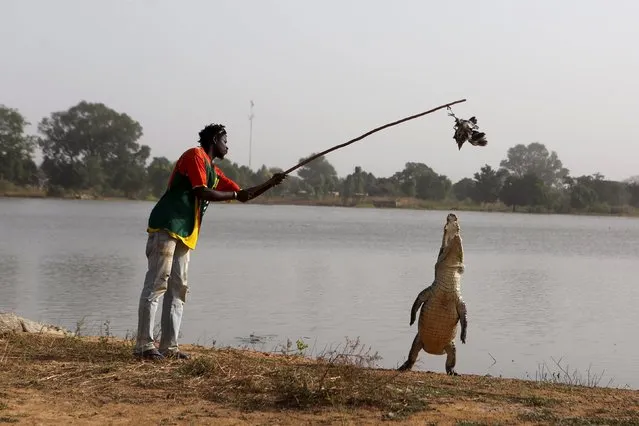
A guide dangles a live chicken in front of a crocodile in the village of Bazoule, Burkina Faso, December 4, 2015. The villagers believe the crocodiles that live there are sacred. (Photo by Joe Penney/Reuters)

A guide dangles a live chicken in front of a crocodile in the village of Bazoule, Burkina Faso, December 4, 2015. The villagers believe the crocodiles that live there are sacred. (Photo by Joe Penney/Reuters)
Details
07 Dec 2015 08:06:00
Eighty one-year-old Sakon Haba (L) wearing loin cloth walks past a police station after he bathed in ice-cold water at the Teppozu Inari shrine in Tokyo January 11, 2015. According to organizers, about 100 participants took part in the Shinto ceremony to purify their souls and wish for good health in the new year. (Photo by Toru Hanai/Reuters)

Eighty one-year-old Sakon Haba (L) wearing loin cloth walks past a police station after he bathed in ice-cold water at the Teppozu Inari shrine in Tokyo January 11, 2015. According to organizers, about 100 participants took part in the Shinto ceremony to purify their souls and wish for good health in the new year. (Photo by Toru Hanai/Reuters)
Details
17 Jan 2015 12:02:00
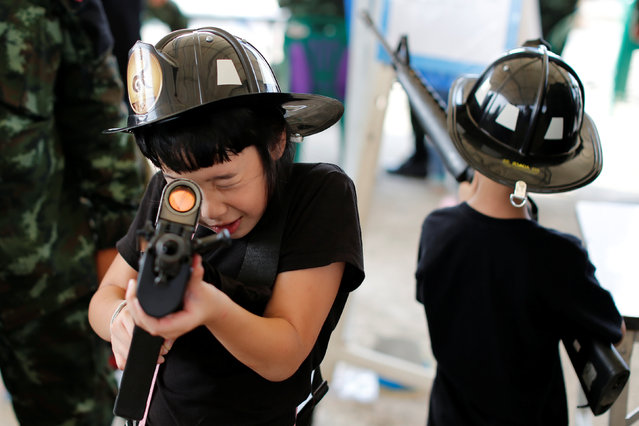
Children play with weapons during Children's Day celebration at a military facility in Bangkok, Thailand January 14, 2017. (Photo by Jorge Silva/Reuters)

Children play with weapons during Children's Day celebration at a military facility in Bangkok, Thailand January 14, 2017. (Photo by Jorge Silva/Reuters)
Details
15 Jan 2017 10:28:00
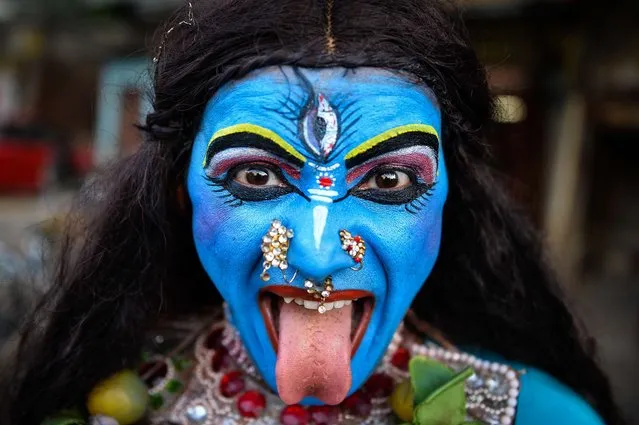
 Indian artist, Ravi Kali (32), dressed as Hindu goddess Kali, participates in a religious procession for the Hindu festival, Ganesh Chaturthi in New Delhi on September 24, 2015. (Photo by Chandan Khanna/AFP Photo)

Indian artist, Ravi Kali (32), dressed as Hindu goddess Kali, participates in a religious procession for the Hindu festival, Ganesh Chaturthi in New Delhi on September 24, 2015. (Photo by Chandan Khanna/AFP Photo)
Details
04 Oct 2015 08:01:00
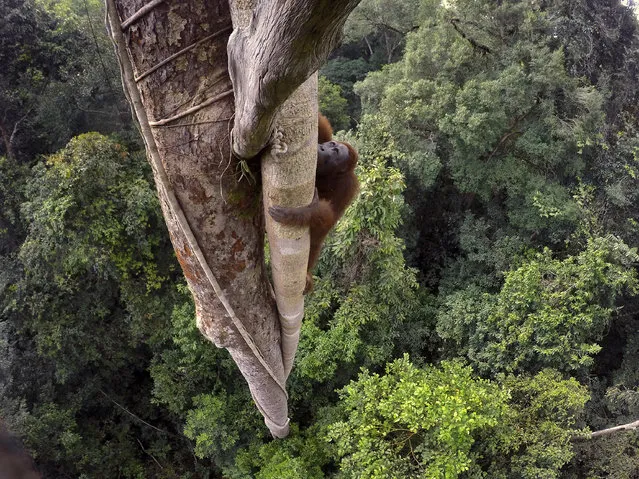
“Tough Times for Orangutans”. Nature, first prize stories. Tim Laman, USA. Location: West Kalimantan, Indonesia. A Bornean orangutan climbs over 30 meters up a tree in the rain forest of Gunung Palung National Park, West Kalimantan, Indonesia, August 12, 2015. The lives of wild orangutans are brought to light. Threats to these orangutans from fires, the illegal animal trade and loss of habitat due to deforestation have resulted in many orphan orangutans ending up at rehabilitation centers. (Photo by Tim Laman/World Press Photo Contest)

“Tough Times for Orangutans”. Nature, first prize stories. Tim Laman, USA. Location: West Kalimantan, Indonesia. A Bornean orangutan climbs over 30 meters up a tree in the rain forest of Gunung Palung National Park, West Kalimantan, Indonesia, August 12, 2015. The lives of wild orangutans are brought to light. Threats to these orangutans from fires, the illegal animal trade and loss of habitat due to deforestation have resulted in many orphan orangutans ending up at rehabilitation centers. (Photo by Tim Laman/World Press Photo Contest)
Details
19 Feb 2016 13:06:00
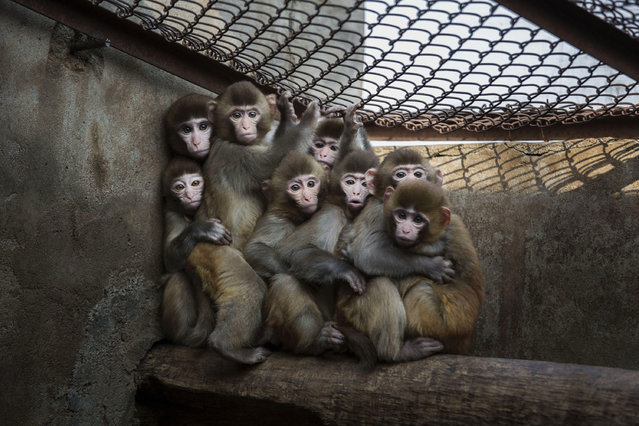
Macaque monkeys crowd together in their cage at a monkey farm on February 3, 2016 in Xinye county, Henan province, China. The area boasts a centuries-long and lucrative history of raising and training monkeys for performance. In Xinye, villagers are seeing an increase in business with the lunar calendar's “Year of the Monkey”. Farmers say most of the monkeys are bred and raised for domestic zoos, circuses, and performing groups, but add that some are also sold for medical research in China and the United States. Despite the popularity of the tradition, critics contend the training methods and conditions constitute animal cruelty. (Photo by Kevin Frayer/Getty Images)

Macaque monkeys crowd together in their cage at a monkey farm on February 3, 2016 in Xinye county, Henan province, China. The area boasts a centuries-long and lucrative history of raising and training monkeys for performance. In Xinye, villagers are seeing an increase in business with the lunar calendar's “Year of the Monkey”. Farmers say most of the monkeys are bred and raised for domestic zoos, circuses, and performing groups, but add that some are also sold for medical research in China and the United States. Despite the popularity of the tradition, critics contend the training methods and conditions constitute animal cruelty. (Photo by Kevin Frayer/Getty Images)
Details
31 Dec 2016 09:56:00