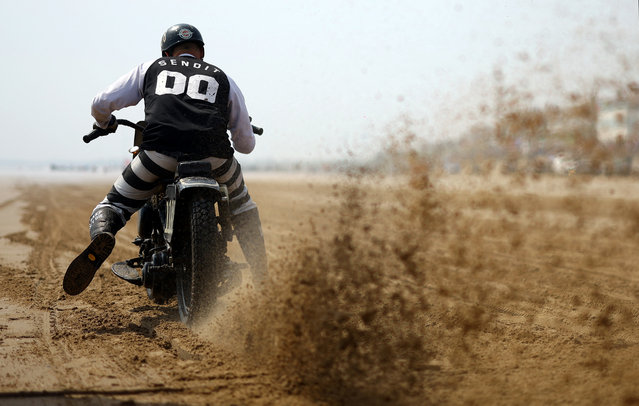
A motoring enthusiast takes part in the “Race The Waves” classic car and motorcycle meet at the beach in Bridlington, Britain, on May 12, 2024. (Photo by Lee Smith/Reuters)
Indian actress Ananya Panday poses for pictures on the red carpet on the day of the wedding of Anant Ambani and Radhika Merchant in Mumbai, India, on July 12, 2024. (Photo by Francis Mascarenhas/Reuters)
SpaceX launch of a Falcon 9 rocket carrying Starlink satellites on Mission 12-2 on December 23, 2024. The rocket launched from Kennedy Space Center Launch Pad 39A in Florida. (Photo by USA Today)
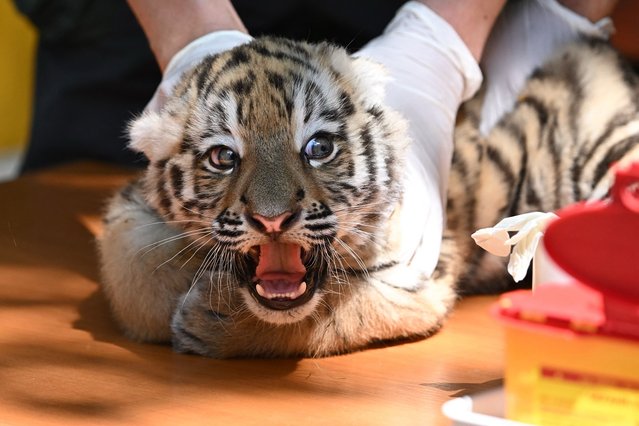
One of the Siberian tiger twins, born on April 13, 2025, is presented to the press at the Budapest zoo and botanic garden, on June 12, 2025 during their first veterinary examination. (Photo by Attila Kisbenedek/AFP Photo)
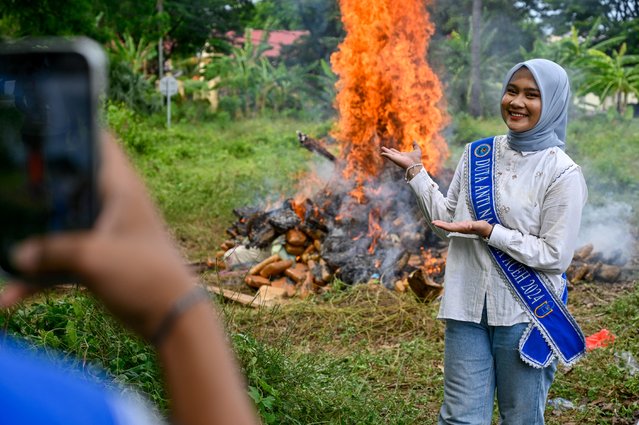
A woman poses for photographs while Indonesian police officers burn seized various drugs during a press conference at the regional police headquarters in Banda Aceh on June 12, 2025. (Photo by Chaideer Mahyuddin/AFP Photo)
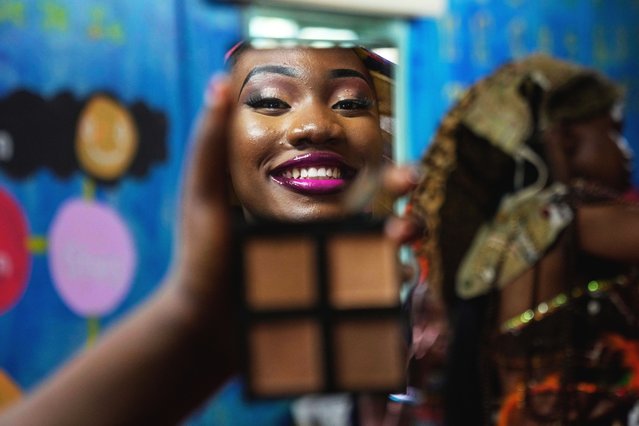
A model is reflected in the mirror applying makeup during the Mr. and Mrs. Kibera leadership contest, on International Youth Day, in Nairobi, Kenya, Tuesday, August 12, 2025. (Photo by Brian Inganga/AP Photo)
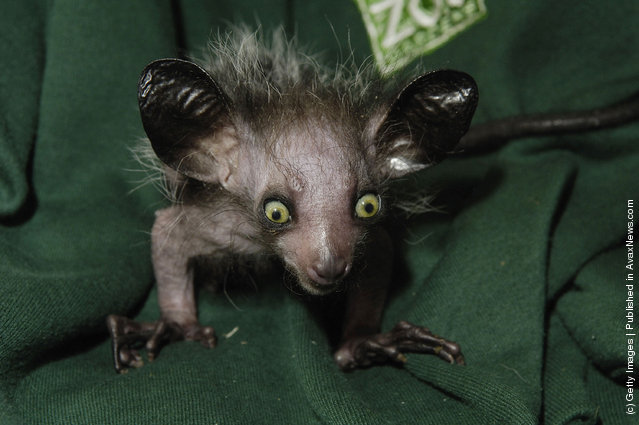
“The aye-aye (Daubentonia madagascariensis) is a lemur, a strepsirrhine primate native to Madagascar that combines rodent-like teeth and a special thin middle finger to fill the same ecological niche as a woodpecker. It is the world's largest nocturnal primate, and is characterized by its unusual method of finding food; it taps on trees to find grubs, then gnaws holes in the wood and inserts its narrow middle finger to pull the grubs out. The only other animal species known to find food in this way is the striped possum. From an ecological point of view the aye-aye fills the niche of a woodpecker as it is capable of penetrating wood to extract the invertebrates within”. – Wikipedia
Photo: In this handout image from Bristol Zoo is seen the first captive bred aye-aye in the UK named “Kintana” (meaning star in Malagasy) April 15, 2005 at Bristol Zoo Gardens, England. The zoo announced today only the second baby aye-aye to be hand-reared in the world (the first was in Jersey Zoo) and has now made his first public appearance since his birth on 11 February 2005. (Photo by Rob Cousins/Bristol Zoo via Getty Images)
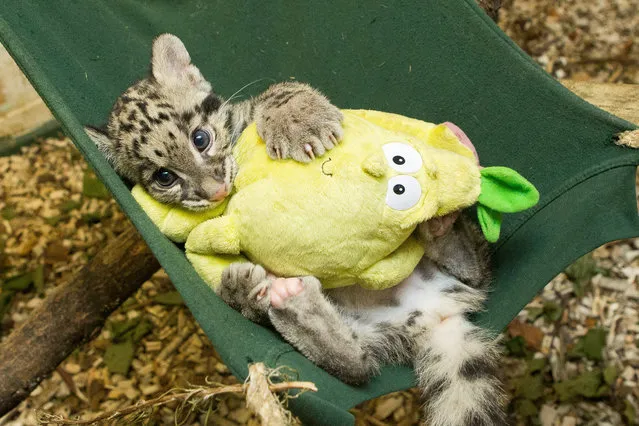
Nimbus, the 2 month old clouded leopard cub, who was hand reared at the home of curator Jamie Craig. Photographed sitting in her hammock at Cotswold Wildlife Park, Burford, Oxfordshire, UK on September 2014. Jamie Craig the curator of the Cotswold Wildlife park has hand reared the baby clouded leopard in his family bathroom after he was rejected by his mother. Now two months old Nimbus is been fed a cat milk replacement diet by bottle and is given soft toys to play with. It is hoped that the leopard will re-join others at the park and eventually join their breeding program. (Photo by SWNS/ABACAPress)