Loading...
Done
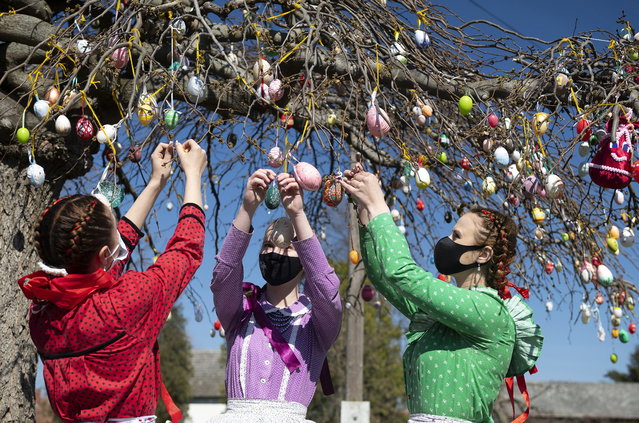
Dressed in folk costumes, young women decorate a tree with painted Easter eggs in Dombrad, Hungary, Monday, April 5, 2021. (Photo by Attila Balazs/MTI via AP Photo)

Dressed in folk costumes, young women decorate a tree with painted Easter eggs in Dombrad, Hungary, Monday, April 5, 2021. (Photo by Attila Balazs/MTI via AP Photo)
Details
06 Apr 2021 10:30:00
An aerial view shows local residents visiting a river side park in Taipei during the Lunar Mew Year on February 19, 2021. (Photo by Sam Yeh/AFP Photo)

An aerial view shows local residents visiting a river side park in Taipei during the Lunar Mew Year on February 19, 2021. (Photo by Sam Yeh/AFP Photo)
Details
15 Apr 2021 09:04:00
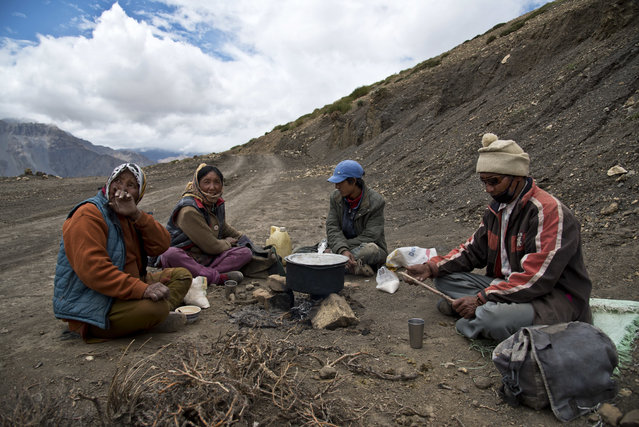
In this August 17, 2016, photo, from left to right, Chhering Chodom, 60, Tashi Yangzom, 50, Lobsang Chhering, 27, and Dorje Tandup, 58, drink milk tea on the side of the road. For centuries, the sleepy valley nestled in the Indian Himalayas remained a hidden Buddhist enclave forbidden to outsiders. Enduring the harsh year-round conditions of the high mountain desert, the people of Spiti Valley lived by a simple communal code – share the Earth's bounty, be hospitable to neighbors, and eschew greed and temptation at all turns. That's all starting to change, for better or worse. Since India began allowing its own citizens as well as outsiders to visit the valley in the early 1990s, tourism and trade have boomed. And the marks of modernization, such as solar panels, asphalt roads and concrete buildings, have begun to appear around some of the villages that dot the remote landscape at altitudes above 4,000 meters (13,000 feet). (Photo by Thomas Cytrynowicz/AP Photo)

In this August 17, 2016, photo, from left to right, Chhering Chodom, 60, Tashi Yangzom, 50, Lobsang Chhering, 27, and Dorje Tandup, 58, drink milk tea on the side of the road. For centuries, the sleepy valley nestled in the Indian Himalayas remained a hidden Buddhist enclave forbidden to outsiders. Enduring the harsh year-round conditions of the high mountain desert, the people of Spiti Valley lived by a simple communal code – share the Earth's bounty, be hospitable to neighbors, and eschew greed and temptation at all turns. That's all starting to change, for better or worse. (Photo by Thomas Cytrynowicz/AP Photo)
Details
15 Sep 2016 09:22:00
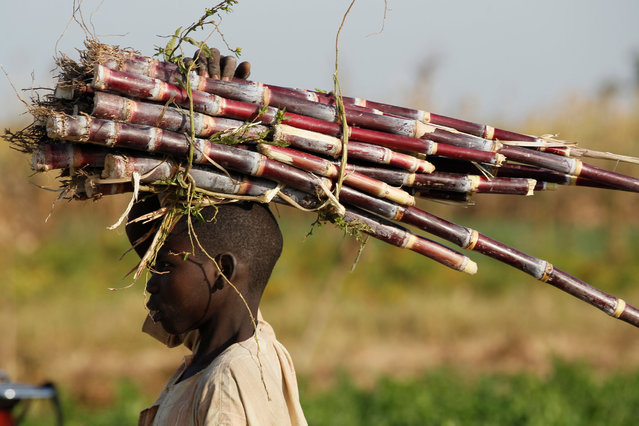
A boy carries sugar cane through a farm on the outskirt of Zaria in Nigeria's northern state of Kaduna November 15, 2016. (Photo by Akintunde Akinleye/Reuters)

A boy carries sugar cane through a farm on the outskirt of Zaria in Nigeria's northern state of Kaduna November 15, 2016. (Photo by Akintunde Akinleye/Reuters)
Details
05 Dec 2016 11:17:00
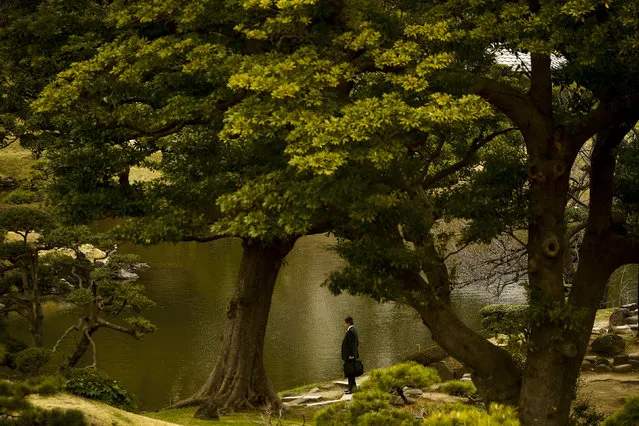
JAPAN: A businessman stands at a pond in the Kyu-Shiba-rikyu Garden on a warm and sunny day in Tokyo, Japan, March 18, 2016. (Photo by Thomas Peter/Reuters)

JAPAN: A businessman stands at a pond in the Kyu-Shiba-rikyu Garden on a warm and sunny day in Tokyo, Japan, March 18, 2016. (Photo by Thomas Peter/Reuters)
Details
26 Dec 2016 06:56:00
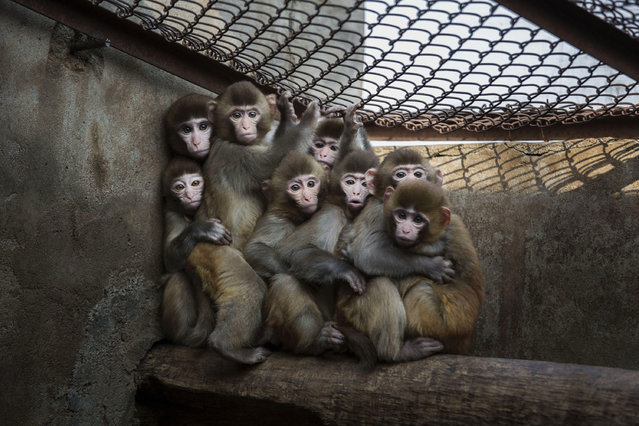
Macaque monkeys crowd together in their cage at a monkey farm on February 3, 2016 in Xinye county, Henan province, China. The area boasts a centuries-long and lucrative history of raising and training monkeys for performance. In Xinye, villagers are seeing an increase in business with the lunar calendar's “Year of the Monkey”. Farmers say most of the monkeys are bred and raised for domestic zoos, circuses, and performing groups, but add that some are also sold for medical research in China and the United States. Despite the popularity of the tradition, critics contend the training methods and conditions constitute animal cruelty. (Photo by Kevin Frayer/Getty Images)

Macaque monkeys crowd together in their cage at a monkey farm on February 3, 2016 in Xinye county, Henan province, China. The area boasts a centuries-long and lucrative history of raising and training monkeys for performance. In Xinye, villagers are seeing an increase in business with the lunar calendar's “Year of the Monkey”. Farmers say most of the monkeys are bred and raised for domestic zoos, circuses, and performing groups, but add that some are also sold for medical research in China and the United States. Despite the popularity of the tradition, critics contend the training methods and conditions constitute animal cruelty. (Photo by Kevin Frayer/Getty Images)
Details
31 Dec 2016 09:56:00
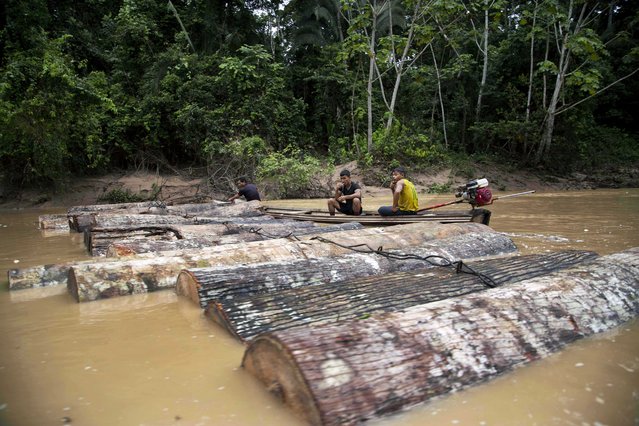
In this March 17, 2015 photo, Ashaninka Indian men, identified by locals as illegal loggers, tie tree trunks together to move them along the Putaya River near the hamlet of Saweto, Peru. Illegal logging persists unabated in this remote Amazon community where four indigenous leaders who resisted it were slain in September. The Putaya River is the waterway that transports felled trees, cut both legally and illegally, to the city of Pucallpa. (Photo by Martin Mejia/AP Photo)

In this March 17, 2015 photo, Ashaninka Indian men, identified by locals as illegal loggers, tie tree trunks together to move them along the Putaya River near the hamlet of Saweto, Peru. Illegal logging persists unabated in this remote Amazon community where four indigenous leaders who resisted it were slain in September. The Putaya River is the waterway that transports felled trees, cut both legally and illegally, to the city of Pucallpa. (Photo by Martin Mejia/AP Photo)
Details
27 Mar 2015 12:40:00
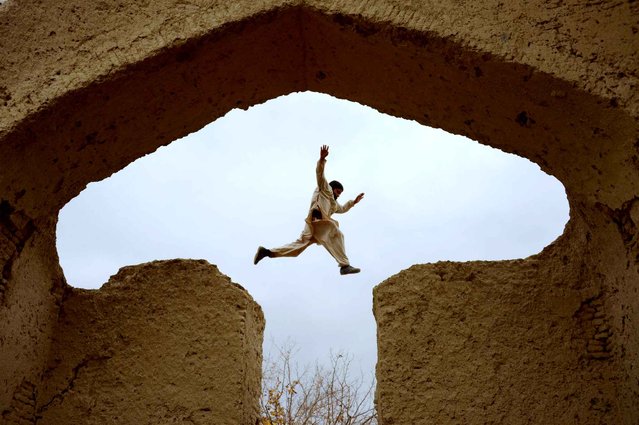
An Afghan boy plays in the ruins of a house that at one point belonged to the 13th-century Persian poet, Islamic scholar and Sufi mystic Jalal ad-Din Muhammad Rumi on the outskirts of Mazar-i-Sharif on November 25, 2015. (Photo by Farshad Usyan/AFP Photo)

An Afghan boy plays in the ruins of a house that at one point belonged to the 13th-century Persian poet, Islamic scholar and Sufi mystic Jalal ad-Din Muhammad Rumi on the outskirts of Mazar-i-Sharif on November 25, 2015. (Photo by Farshad Usyan/AFP Photo)
Details
26 Jan 2016 11:52:00