Loading...
Done
A Comb jelly – Beroe cucumis. (Photo by Alexander Semenovs/Caters News)

Underwater photographer Alexander Semenovs has snapped some of the most stunning, fragile life forms anywhere on planet Earth. Shot in deep, dark conditions, the images continue to provide an insight into what lies beneath, with glowing creatures appearing a lot like aliens in the pitch-black water. Semenovs has shot the likes of bioluminescent jellyfish, aggressive-looking worms and many species that leave a lot to the imagination. The 30-year-old from Moscow does the majority of his work in the White Sea, near the Arctic Circle. Here: A Comb jelly – Beroe cucumis. (Photo by Alexander Semenovs/Caters News)
Details
23 Nov 2015 08:06:00
Jeff Dabe Owner Of The Giant Hand

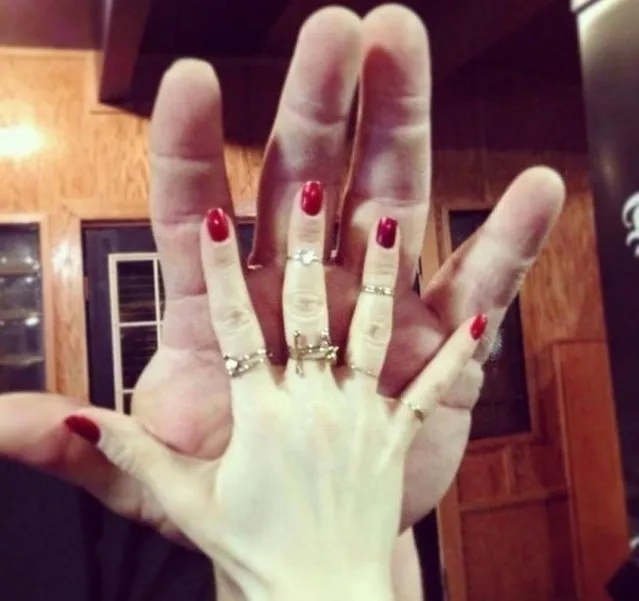
Saying 50-year-old armwrestler Jeff Dabe has big hands would be a huge understatement! Dabe’s bear paws are so big that he has been compared to cartoon characters like Popeye and Wreck-It Ralph. His forearms are 49 cm in circumference and his palms look like they could crush a man’s skull like a watermelon. Luckily, Jeff only uses his enormous guns for arm wrestling and operating heavy equipment.
Details
11 Jul 2015 11:44:00
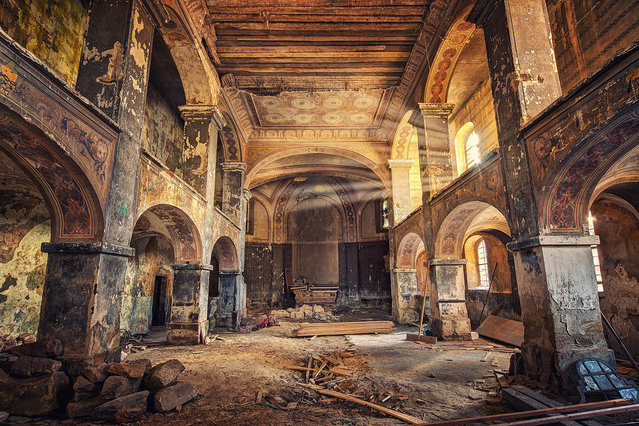
The Church of All Saints. (Photo by Matthias Haker/Caters News)

These illuminating images show the crumbling remains of some of the worlds places of worship. The shots include golden chapels, overgrown synagogues and eerily silent rooms that were once used for prayer. They were visited by Matthias Haker, a 31-year-old photographer from Potsdam, Germany. Adding to the general intrigue of his images, Matthias never discloses the location of a shot – not even the town, country or continent. Here: The Church of All Saints. (Photo by Matthias Haker/Caters News)
Details
29 Apr 2016 11:32:00
Afghan children wait as their mothers receive treatment at a USAID-funded health center

Afghan children wait as their mothers receive treatment at a USAID-funded health center on September 7, 2011 in Farza, Afghanistan. Almost 10 years after the 9/11 attacks and the U.S. invasion of Afghanistan, the U.S. government funds some of 500 Afghan health facilities nationwide, most run by non-governmental organizations contracted by the Afghan Ministry of Public Health. (Photo by John Moore/Getty Images)
Details
09 Sep 2011 09:54:00
Afghan war amputees

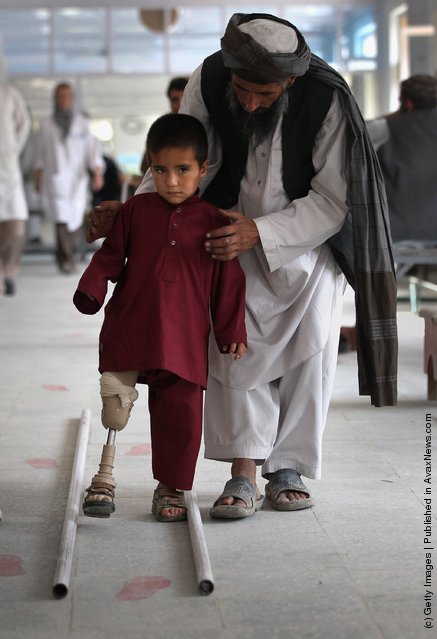
An Afghan child practices walking with his new prosthesis at the International Committee of the Red Cross (ICRC), orthopedic center on September 10, 2011 in Kabul, Afghanistan. After more than 30 years of war and a decade since the 9/11 attacks in the United States, thousands of Afghans, both military and civilian, continue to pay a heavy price from the conflict. The ICRC center makes prosthetics for amputees and helps them, as well as Afghans with spinal injuries and children with congenital birth defects, to learn to walk. (Photo by John Moore/Getty Images)
Details
11 Sep 2011 09:56:00


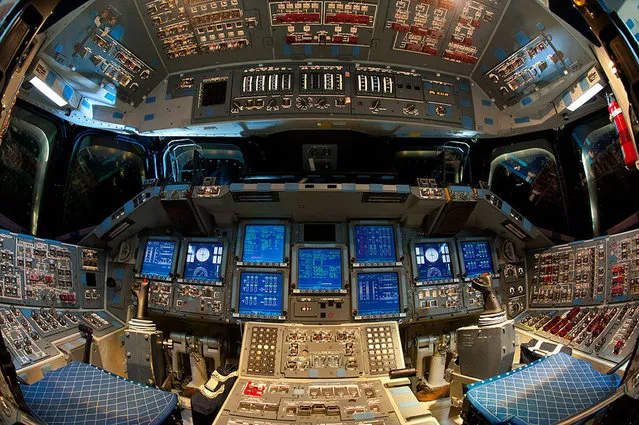
These rare photos capture the Flight Deck (cockpit) of the Space Shuttle Endeavour, fully powered for one of the final times. Just a few weeks later, at 9:58am EDT on May 11, Endeavour was powered down for the final time in history. It was the last of the three space shuttles to have power. Below, other views show the mid-deck, gutted of its lockers and storage areas, and three final photos show the white room entrance in the Orbiter Processing Facility, signed by thousands over the years.
Details
03 Oct 2012 13:49:00
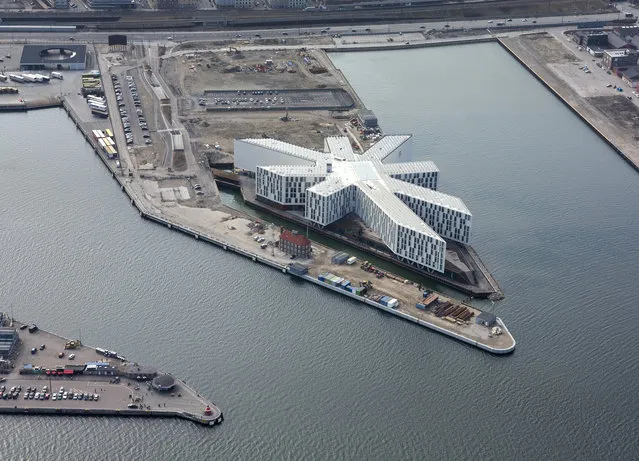
UN City In Copenhagen

Cooperation is key to success. This motto was used by the Government of Denmark when they decided to create a project that bore the name of UN City. This compound was designed to house all nine Copenhagen based UN agencies under a single roof. This embodies the core idea of the United Nations, since this project allows for better efficiency and practicality thanks to joint effort. The first plans for the UN City were hatched in 2002. After 11 years, in 2013 the first stage of the project was finally finished. Presently, Campus 1 of UN City accommodates 1,300 staff member, while Campus 2 is going to become the largest humanitarian warehouse in the whole world.
Details
28 Feb 2015 16:17:00
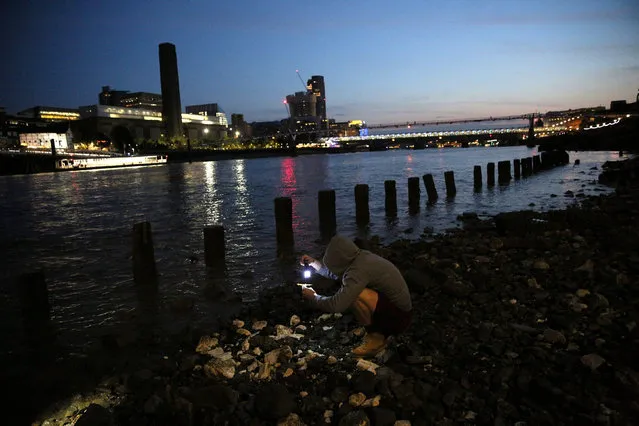
A mudlark uses a torch to look for items on the bank of the River Thames in London, Britain June 06, 2016. Mudlarking is believed to trace its origins to the 18th and 19th century, when scavengers searched the Thames' shores for items to sell. These days, history and archaeology fans are the ones hoping to find old relics such as coins, ceramics, artifacts or everyday items from across centuries. They wait for the low tide and then scour specific areas of exposed shores. "If you're in a field you could be out all day long, with the river you're restricted to about two or three hours," mudlark Nick Stevens said. While many just use the naked eye for their searches, others rely on metal detectors for which a permit from the Port of London Authority is needed. Digging also requires consent. (Photo by Neil Hall/Reuters)

A mudlark uses a torch to look for items on the bank of the River Thames in London, Britain June 06, 2016. Mudlarking is believed to trace its origins to the 18th and 19th century, when scavengers searched the Thames' shores for items to sell. These days, history and archaeology fans are the ones hoping to find old relics such as coins, ceramics, artifacts or everyday items from across centuries. their finds with the Portable Antiquities Scheme. Any item over 300 years old must be recorded. (Photo by Neil Hall/Reuters)
Details
27 Aug 2016 10:43:00