Loading...
Done
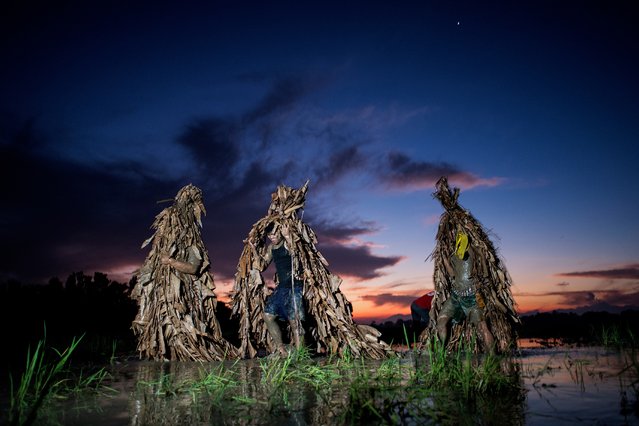
Devotees wear costumes made of banana leaves as they head to church to attend mass as part of a religious festival, in honor of St. John the Baptist, also known locally as the “mud people” festival, in Aliaga town, Nueva Ecija province, north of Manila, on June 24, 2017. Farmers coated in mud paraded in Philippine villages on June 24 to mark one of the Catholic nation's most colourful religious festivals. (Photo by Noel Celis/AFP Photo)

Devotees wear costumes made of banana leaves as they head to church to attend mass as part of a religious festival, in honor of St. John the Baptist, also known locally as the “mud people” festival, in Aliaga town, Nueva Ecija province, north of Manila, on June 24, 2017. Farmers coated in mud paraded in Philippine villages on June 24 to mark one of the Catholic nation's most colourful religious festivals. (Photo by Noel Celis/AFP Photo)
Details
27 Jun 2017 08:30:00
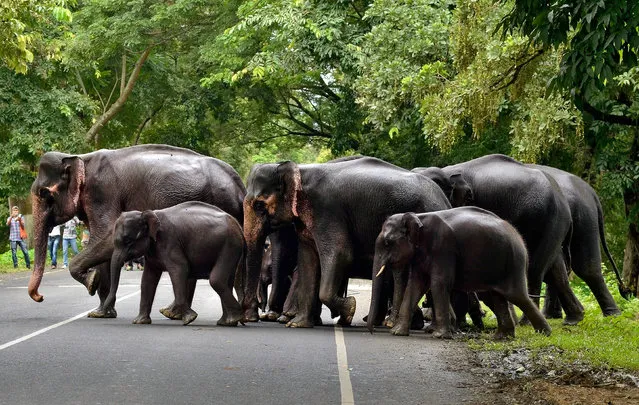
A herd of elephants cross a road that passes through the flooded Kaziranga National Park in the northeastern state of Assam, India, July 12, 2017. (Photo by Anuwar Hazarika/Reuters)

A herd of elephants cross a road that passes through the flooded Kaziranga National Park in the northeastern state of Assam, India, July 12, 2017. (Photo by Anuwar Hazarika/Reuters)
Details
15 Jul 2017 08:26:00
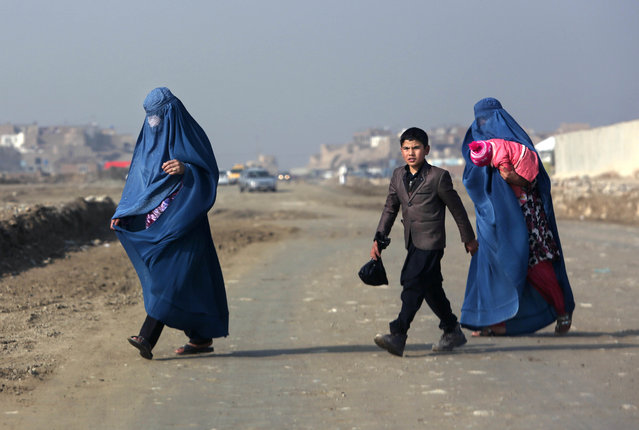
Afghan women and a boy make their way in Kabul, Afghanistan, Sunday, November 15, 2015. (Photo by Rahmat Gul/AP Photo)

Afghan women and a boy make their way in Kabul, Afghanistan, Sunday, November 15, 2015. (Photo by Rahmat Gul/AP Photo)
Details
25 Nov 2015 08:06:00
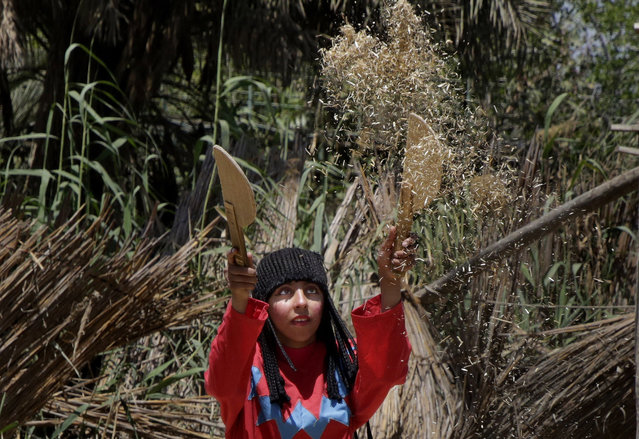
An Egyptian actress working at the Pharaonic Village simulates ancient agriculture scenes during a show marking Sham el-Nessim, or “smelling the breeze”, in Giza, Egypt, Monday, April 13, 2015. (Photo by Amr Nabil/AP Photo)

An Egyptian actress working at the Pharaonic Village simulates ancient agriculture scenes during a show marking Sham el-Nessim, or “smelling the breeze”, in Giza, Egypt, Monday, April 13, 2015. The holiday signifies the arrival of Spring, a uniquely Egyptian tradition practiced since the days of the Pharaohs. (Photo by Amr Nabil/AP Photo)
Details
14 Apr 2015 11:31:00
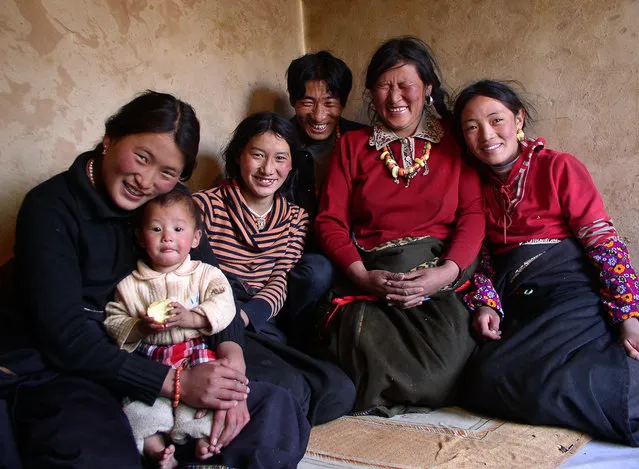
Buddhist pilgrim family from Sichuan. (Photo by Tom Carter/The Atlantic)

Nine years ago, Tom Carter traveled from San Francisco to China, responding to a job posting that turned out to be a scam. He managed to find another job as a teacher, and saved enough money to embark on a 56,000 km trip through all of China's 33 provinces that lasted two years. Carrying a camera – just a a 4-megapixel point-and-shoot – Carter captured some amazing images of the widely varying landscape, people, and architecture across the nation. Photo: Buddhist pilgrim family from Sichuan. (Photo by Tom Carter via The Atlantic)
Details
12 Mar 2013 14:19:00


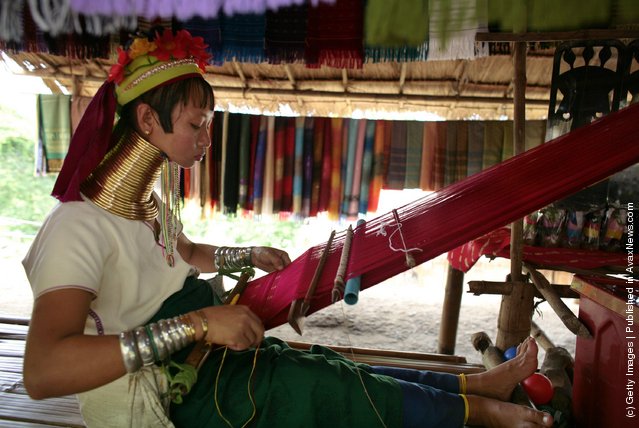
Mah Chan, a Long Neck Padaung hill tribe woman weaves a scraf for sale to tourists in a small village where 30 familes live July 13, 2006 in Chiang Dao, Thailand. All the Long Neck villages are set up for tourists and just over a year ago the hill tribe members were hand picked to move closer to Chiang Mai from more remote communities so that they could be more accessible. The Padaung women famously wear brass rings around their necks, beginning at five-years-old, to distort the growth of their collarbones and making them look like they have long necks. They are originally from eastern Burma near the Thailand border. (Photo by Paula Bronstein/Getty Images)
Details
19 Apr 2011 11:56:00


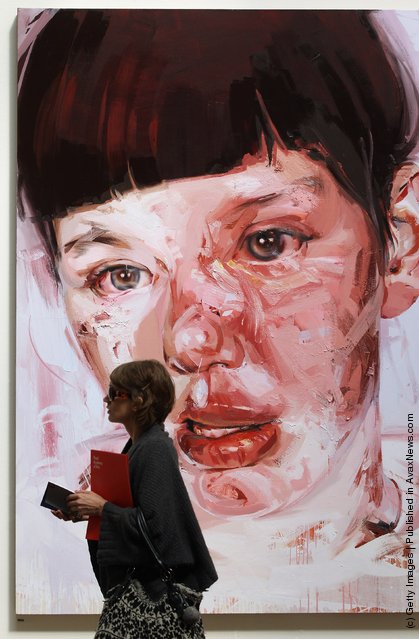
A woman walks past a painting by Jenny Saville entitled “Red Stare Head IV” on display in the Royal Academy of Arts' Summer Exhibition on June 2, 2011 in London, England. The Summer Exhibition is the world's largest open submission contemporary art show, now in its 243rd year, with over 12,000 entries received from 27 countries. The exhibition features over 1100 works of art including: painting, sculpture, photography, architecture and film, it officially opens to the public on June 7, 2011. (Photo by Oli Scarff/Getty Images)
Details
03 Jun 2011 08:34:00


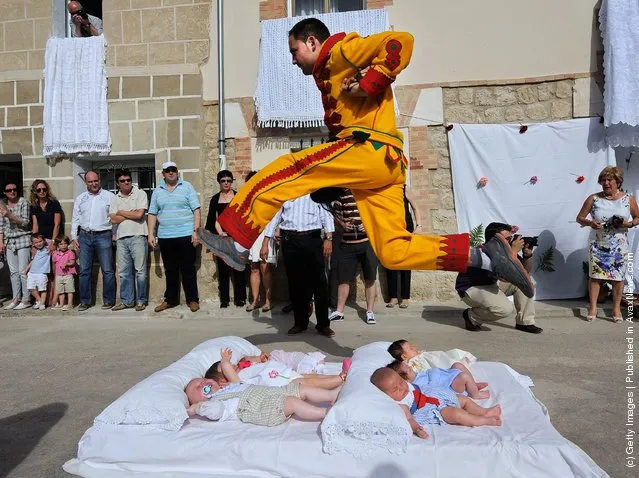
“Baby jumping (El Colacho) is a traditional Spanish practice dating back to 1620 that takes place annually to celebrate the Catholic feast of Corpus Christi in the village of Castrillo de Murcia near Burgos. During the act – known as El Salto del Colacho (the devil's jump) or simply El Colacho – men dressed as the Devil (known as the Colacho) jump over babies born during the previous twelve months of the year who lie on mattresses in the street. ... The festival has been rated as one of the most dangerous in the world”. – Wikipedia

Photo: A man representing the devil leaps over babies during the festival of El Colacho on June 26, 2011 in Castrillo de Murcia near Burgos, Spain. The festival, held on the first Sunday after Corpus Cristi, represents the devil taking away original sin from the newly born babies by leaping over them. (Photo by Denis Doyle/Getty Images)
Details
27 Jun 2011 09:20:00