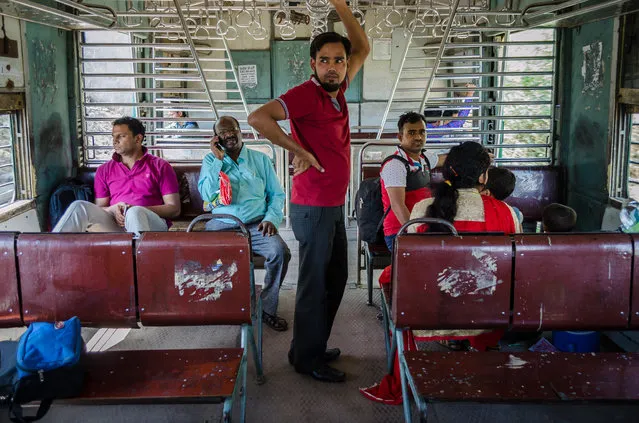
Indian passengers travel on a local train in New Delhi, India, October 2017. Constructed in 1975 to bypass the crowded and passenger-heavy Old Delhi, New Delhi and Hazrat Nizamuddin railway stations, the railway line once used to be the lifeline of the capital. (Photo by Ankur Dutta/Barcroft Media)
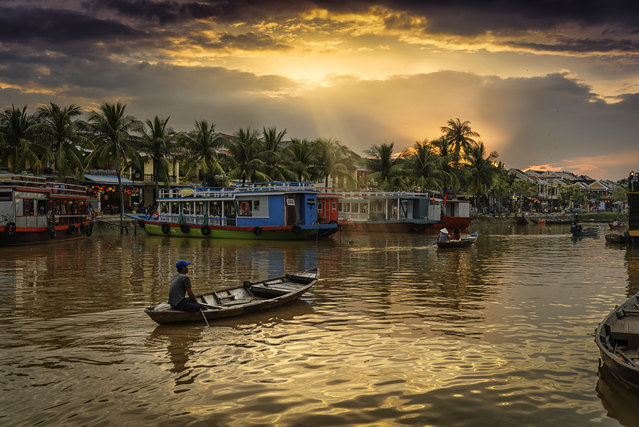
South Asian countries in terms of total contribution of travel and tourism to GDP. #6. Vietnam, Total GDP: USD 202.6 billion (2016). Contribution of Travel and Tourism to GDP: 9.1% . Here: A boat in the Thu Bon River, Hoi An, Vietnam. (Photo by Domingo Leiva/Getty Images)
A model walks the runway during the Vivienne Westwood show as part of the Paris Fashion Week Womenswear Fall/Winter 2018/2019 on March 3, 2018 in Paris, France. (Photo by Patrick Kovarik/WireImage)
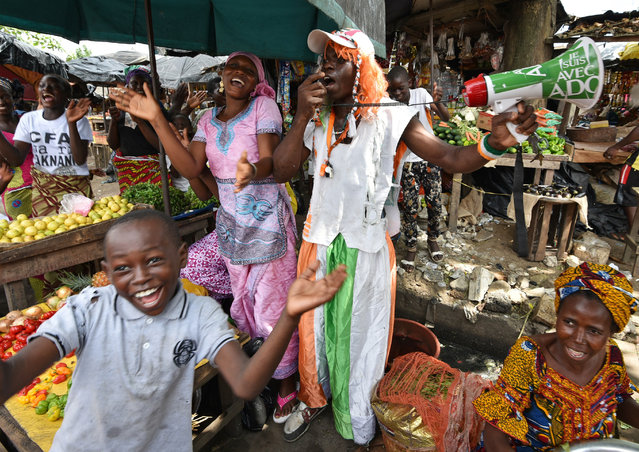
A period of relative stability has put the Iranian capital No1 on the list of world cities that have achieved biggest improvements in liveability over the past five years, as calculated by the Economist Intelligence Unit. The “most improved” top 10 contains some unexpected names. So, eg, the fourth place: Abidjan, Ivory Coast. Latest ranking: 128; Ranking five years ago: 131; Five-year index movement: 3.8%. Here: A supporter of Ivory Coast president Alassane Ouattara campaigns in a market in the city’s Koumassi quarter. (Photo by Sia Kambou/AFP Photo)
Rian Johnson, left, director of the upcoming film “Knives Out”, takes a picture of cast member Ana de Armas as they are introduced onstage during the Lionsgate presentation at CinemaCon 2019, the official convention of the National Association of Theatre Owners (NATO) at Caesars Palace, Thursday, April 4, 2019, in Las Vegas. (Photo by Chris Pizzello/Invision/AP Photo)
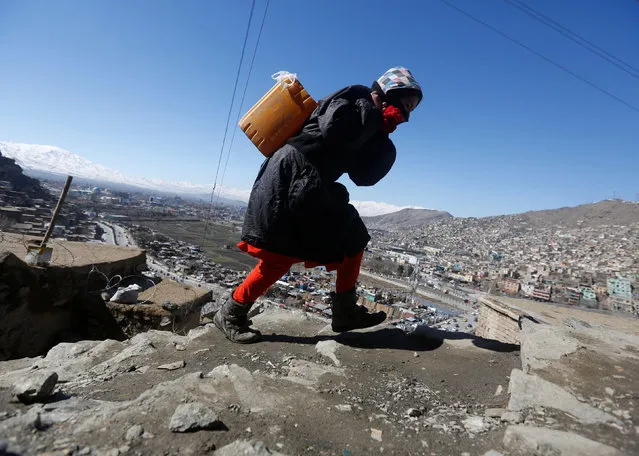
An Afghan girl carries water on her back as she climbs a hill in Kabul, Afghanistan February 20, 2017. A growing population is straining water supplies in Afghanistan's capital, forcing those who can afford it to dig unregulated wells ever deeper to tap a falling water table. Finding water in arid Afghanistan is virtually always a challenge, but a drop in the groundwater level in Kabul caused by overuse and drought is making it even more difficult for residents, especially the poor. (Photo by Omar Sobhani/Reuters)