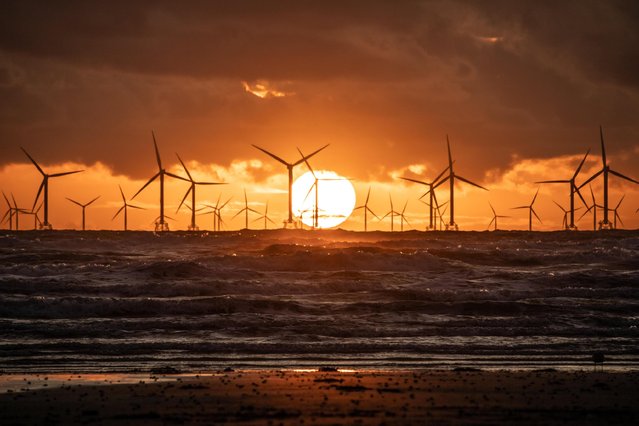
The sun sets on Walney Island, Cumbria, county in North West England on October 10, 2019. Today will be unsettled with spells of heavy rain. (Photo by GREENBURN/Alamy Live News)
A model wears a creation by Inmaculada Martinez on the backstage, during the International Flamenco Fashion Show SIMOF in the Andalusian capital of Seville, Spain February 8, 2019. (Photo by Marcelo del Pozo/Reuters)
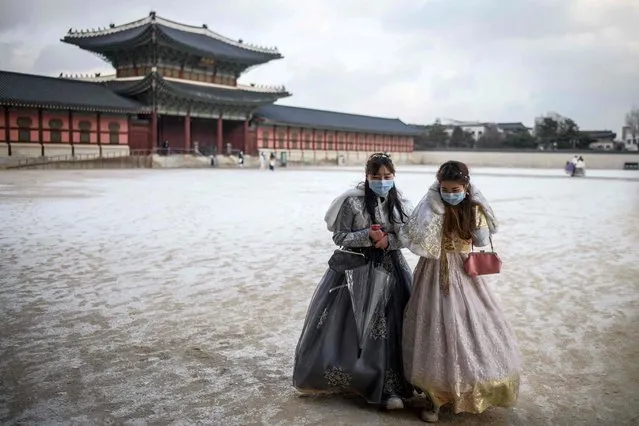
Visitors wear traditional hanbok dress as they walk on the grounds of the Gyeongbokgung Palace after a snowfall in Seoul on January 17, 2022. (Photo by Anthony Wallace/AFP Photo)
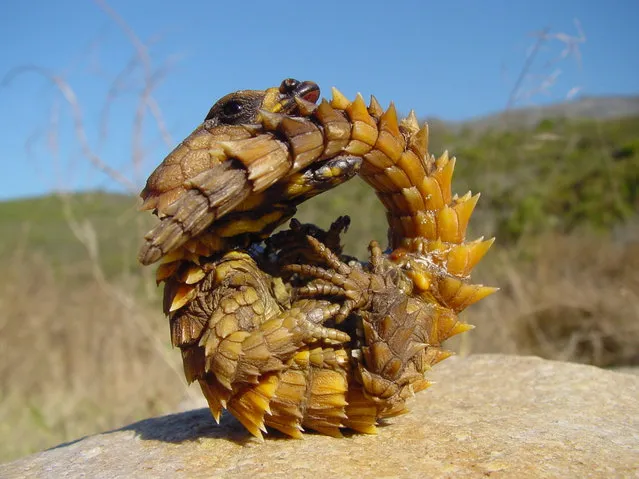
The armadillo girdled lizard, Ouroborus cataphractus, is a lizard endemic to desert areas of southern Africa. It is also commonly known as typical girdled lizard, armadillo lizard, golden armadillo lizard, and armadillo spiny-tailed lizard.
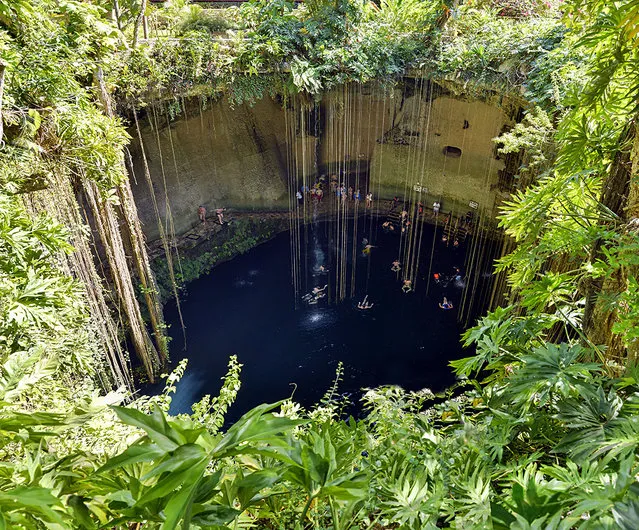
A cenote is a natural phenomenon, a sinkhole in the Earth’s surface. The Yucatan Peninsula in Mexico has an estimated 7,000 cenotes because it is primarily made up of porous limestone. For millions of years, rainfall slowly ate away at the limestone and a huge system of underground caves and caverns was formed. Many filled with water from rain or from the underground water table. When the roof of a water filled cave collapses, a cenote is born. The water found in a cenote may be fresh water, salt water, or both. Structurally it may be completely open, like a lake, almost completely closed with just a small opening at the top, or somewhere in between.
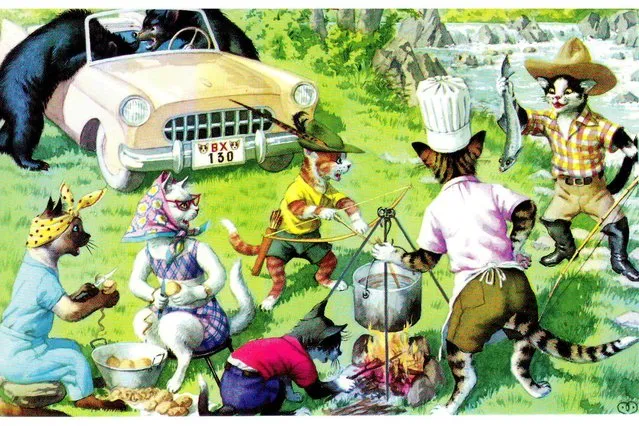
From the 1940s through the 1960s, the Alfred Mainzer Company of Long Island City, NY published a series of linen and photochrome humorous cat postcards illustrated by Eugen Hartung (or Hurtong) (1897–1973), sometimes referred to as “Mainzer Cats”. These postcards normally illustrate settings that are filled with action, often with a minor disaster just about to occur. While the dressed cats were by far the most popular and most plentiful cards, Hartung also painted other dressed animals – primarily mice, dogs, and hedgehogs.
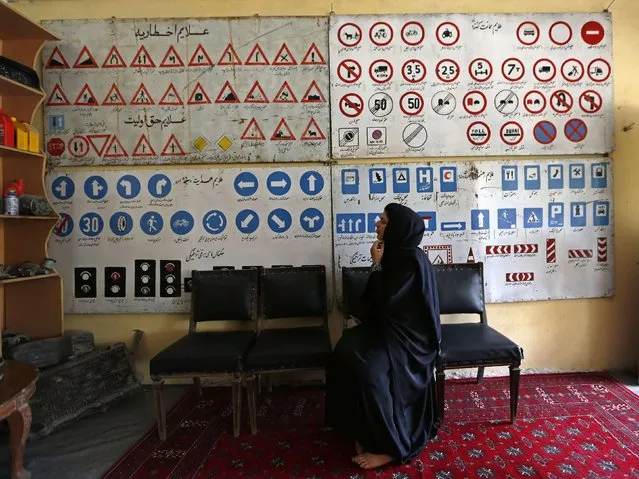
A women attends a class at a driving school in Kabul August 17, 2014. Kabul is one of the world's fastest growing cities and its streets are increasingly blocked by cars and buses. In the city's private driving schools, students pay a $60 fee for a 45-day course, which includes oral and practical driving tests at the country's Traffic Department. Some of the women who have signed up say learning to drive is a way to escape unwanted gazes and physical harassment on the cramped, crowded minibuses that are often the only method of urban public transport. (Photo by Mohammad Ismail/Reuters)