Loading...
Done
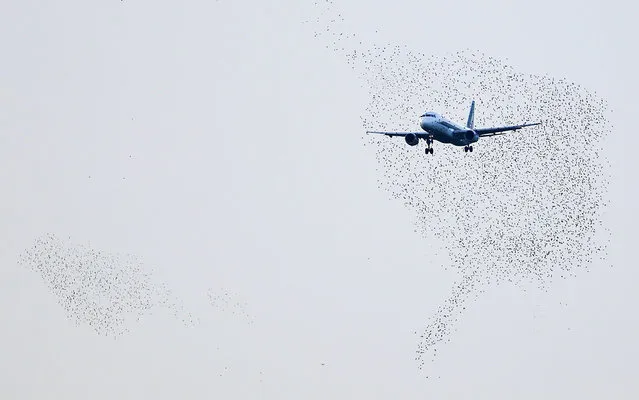
An Alitalia plane approaches to land as starlings fly at Fiumicino international airport in Rome October 14, 2013. Italy will have to notify a planned government-led 500-million-euro bailout of near-bankrupt airline Alitalia to EU regulators who will then assess whether the measure complies with EU state aid rules, the European Commission said on Monday. (Photo by Max Rossi /Reuters)

An Alitalia plane approaches to land as starlings fly at Fiumicino international airport in Rome October 14, 2013. Italy will have to notify a planned government-led 500-million-euro bailout of near-bankrupt airline Alitalia to EU regulators who will then assess whether the measure complies with EU state aid rules, the European Commission said on Monday. (Photo by Max Rossi /Reuters)
Details
19 Oct 2013 11:50:00
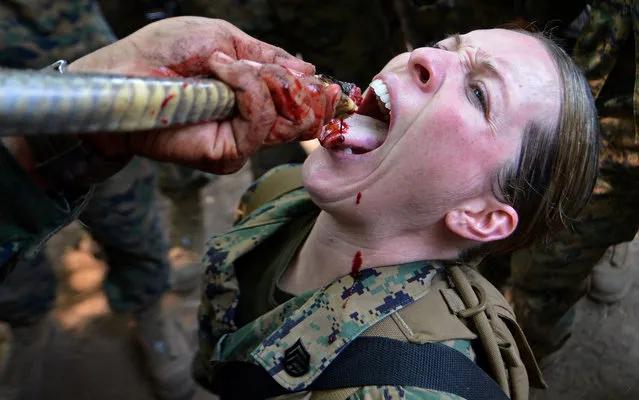
In a military base in the Thai province of Chon Buri February 20 U.S. Marines Navy with Thailand began their studies in jungle survival. The event is held in joint military exercises “Cobra Gold 2013”. During a jungle survival program February 20, 2013 taught by Royal Thai Special Forces in Sannapit, Thailand, U.S. Marines learned to catch cobras and drink their fresh blood, not to mention eat forest insects and pull the heads off of chicken. The training was part of Operation Cobra Gold 13, the 32nd edition of international military exercises hosted by the Thai. According to a U.S. Marines press release, Cobra Gold is the largest exercise of its kind in Asia and incorporates troops from five other nations in addition to the U.S. and Thailand. The Daily Mail reports that the Marines were invited to experience the local custom of drinking cobra blood after being taught to catch and kill cobras in the wild. As CNN notes, Cobra blood is believed to be a panacea and aphrodiasic in parts of Southeast Asia. In Jakarta, vendors can earn over $100 a night selling shots of cobra blood mixed with liquor. (Photo by Pornchai Kittiwongsakul/AFP Photo)

During a jungle survival program February 20, 2013 taught by Royal Thai Special Forces in Sannapit, Thailand, U.S. Marines learned to catch cobras and drink their fresh blood, not to mention eat forest insects and pull the heads off of chicken. The training was part of Operation Cobra Gold 13, the 32nd edition of international military exercises hosted by the Thai. According to a U.S. Marines press release, Cobra Gold is the largest exercise of its kind in Asia and incorporates troops from five other nations in addition to the U.S. and Thailand. The Daily Mail reports that the Marines were invited to experience the local custom of drinking cobra blood after being taught to catch and kill cobras in the wild. As CNN notes, Cobra blood is believed to be a panacea and aphrodiasic in parts of Southeast Asia. In Jakarta, vendors can earn over $100 a night selling shots of cobra blood mixed with liquor. (Photo by Pornchai Kittiwongsakul/AFP Photo)
Details
23 Feb 2013 11:52:00
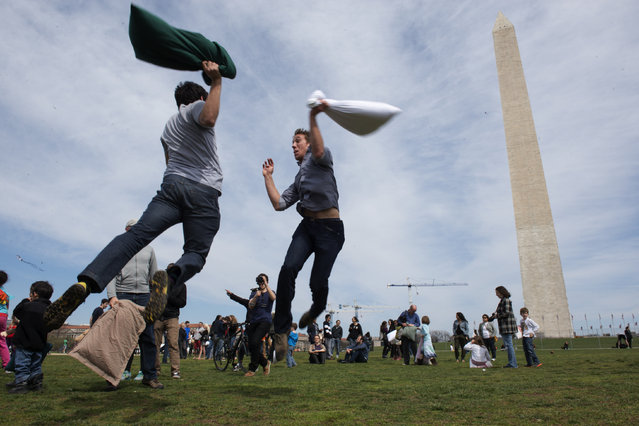
Alex Plunkett, left, and Sean Hart, both of Arlington, Va., join hundreds participating in the annual International Pillow Fight Day on April 5. Massive pillow fights broke out on the Mall in Washington and in cities around the world. (Photo by Marvin Joseph/The Washington Post)

Alex Plunkett, left, and Sean Hart, both of Arlington, Va., join hundreds participating in the annual International Pillow Fight Day on April 5. Massive pillow fights broke out on the Mall in Washington and in cities around the world. (Photo by Marvin Joseph/The Washington Post)
Details
28 Dec 2014 10:39:00
Dancers wearing masks and kimonos perform in the streets at the “Super Yosakoi 2015” dance festival in Tokyo on August 30, 2015. One hundred dance teams with some 5,500 people participated in the two-day summer festival event. (Photo by Yoshikazu Tsuno/AFP Photo)

Dancers wearing masks and kimonos perform in the streets at the “Super Yosakoi 2015” dance festival in Tokyo on August 30, 2015. One hundred dance teams with some 5,500 people participated in the two-day summer festival event. (Photo by Yoshikazu Tsuno/AFP Photo)
Details
31 Aug 2015 12:33:00
A bear that wandered into a University of Colorado Boulder dorm complex falls from a tree after being tranquilized by Colorado wildlife officials on April 26

A bear that wandered into a University of Colorado Boulder dorm complex falls from a tree after being tranquilized by Colorado wildlife officials on April 26, 2012. Colorado wildlife official Jennifer Churchill said that the 200-pound male bear was tagged and relocated to a remote Rocky Mountain area. The bear was hit by two cars on May 3 and died. (Photo by Andy Duann)
Details
08 May 2012 12:20:00
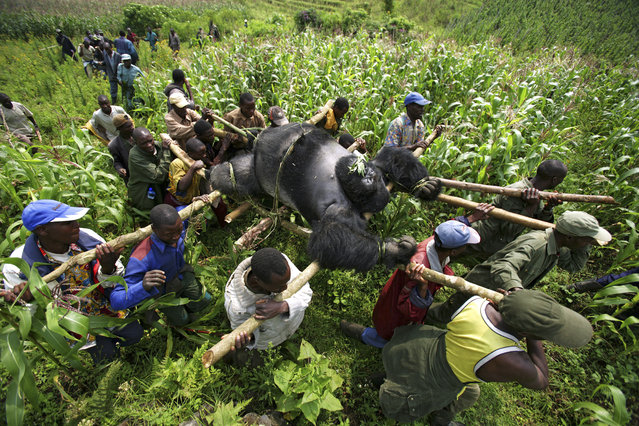
2008 Visa d'or Feature: Brent Stirton. Conservation Rangers from an Anti-Poaching unit work with locals to evacuate the bodies of four Mountain Gorrillas killed in mysterious circumstances in the park,  July 24, 2007, Virunga National Park, Eastern Congo. (Photo by Brent Stirton/Exclusive by Getty Images)

Jean-François Leroy launched Visa Pour l’Image, the international photojournalism festival, in Perpignan in 1989. Before heading up the festival, Leroy was shooting reportage for the agency Sipa Press and also working for Photo-Reporter, Le Photographe, Photo-Revue and Photo Magazine. He is the chairman of the company Images Evidence. Photo: 2008 Visa d'or Feature: Brent Stirton. Conservation Rangers from an Anti-Poaching unit work with locals to evacuate the bodies of four Mountain Gorrillas killed in mysterious circumstances in the park, July 24, 2007, Virunga National Park, Eastern Congo. (Photo by Brent Stirton/Exclusive by Getty Images)
Details
27 Aug 2013 10:42:00
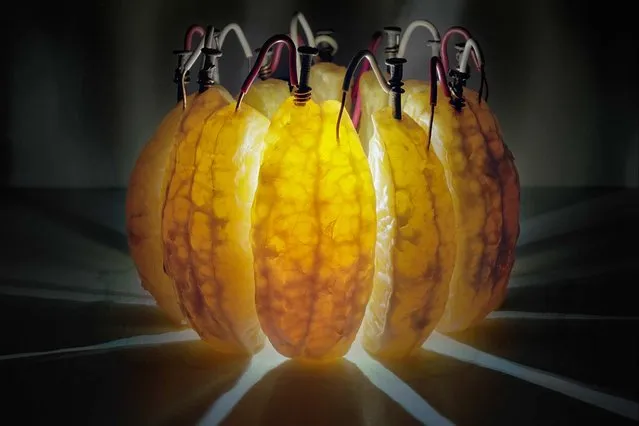
Wedges of an orange generate enough current and electrical juice – 3.5 volts – to power an LED. The fruit’s citric acid helps electrons flow from galvanized nails to copper wire in this 14-hour exposure. This image was published in September’s Visions of Earth, a trio of photos that appear in each issue of National Geographic. (Photo by Caleb Charland/National Geographic)

Wedges of an orange generate enough current and electrical juice – 3.5 volts – to power an LED. The fruit’s citric acid helps electrons flow from galvanized nails to copper wire in this 14-hour exposure. This image was published in September’s Visions of Earth, a trio of photos that appear in each issue of National Geographic. (Photo by Caleb Charland/National Geographic)
Details
06 Jan 2014 12:09:00
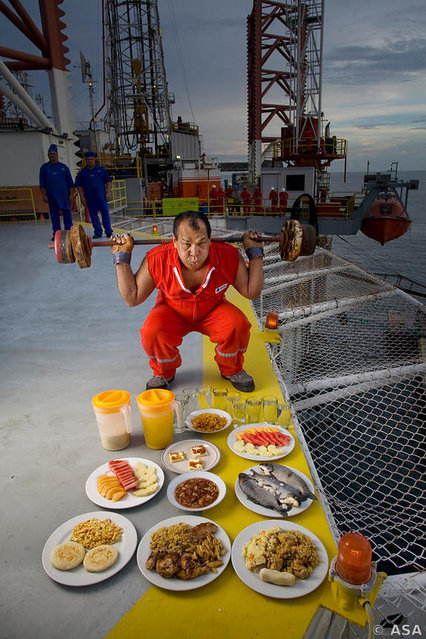
What the World Eats By Peter Menzel And Faith D'Aluisio Part 1

A stunning photographic collection featuring portraits of people from 30 countries and the food they eat in one day. In this fascinating study of people and their diets, 80 profiles are organized by the total number of calories each person puts away in a day. Featuring a Japanese sumo wrestler, a Massai herdswoman, world-renowned Spanish chef Ferran Adria, an American competitive eater, and more, these compulsively readable personal stories also include demographic particulars, including age, activity level, height, and weight. Essays from Harvard primatologist Richard Wrangham, journalist Michael Pollan, and others discuss the implications of our modern diets for our health and for the planet. This compelling blend of photography and investigative reportage expands our understanding of the complex relationships among individuals, culture, and food.
Details
23 Apr 2014 14:34:00