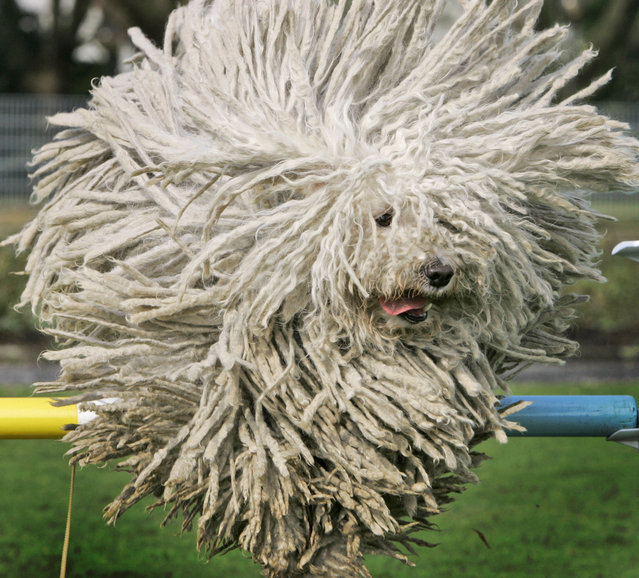
Hungarian Puli sheep dog, Fee, jumps over a hurdle during a preview for a pedigree dog show in Dortmund on Thursday April 24, 2008. (Photo by Frank Augstein/AP Photo)
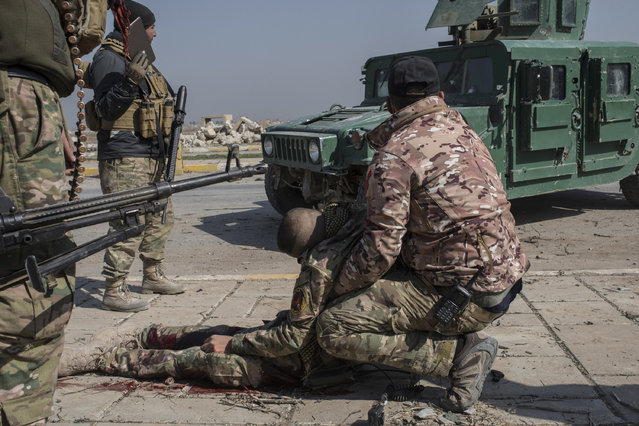
An injured Iraqi Emergency Response Division (ERD) soldier hit by a mortar is held by another officer as they wait for medics to arrive at the Islamic State occupied Mosul Airport in west Mosul, part of the offensive to retake the city some two years after it fell to the hardline jihadist group, February 23, 2017. Iraqi forces encountered stiff resistance with improvised explosives, heavy mortar fire and snipers hampering their advance before they successfully took the airport. (Photo by Martyn Aim/Getty Images)
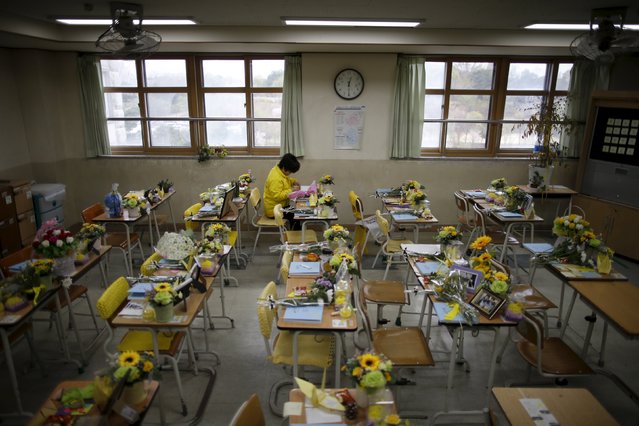
A mother of a victim who was onboard sunken ferry Sewol, leaves a message on a desk used by her child at an empty classroom, which was preserved since the disaster, at Danwon high school during the second anniversary of the disaster in Ansan, South Korea, April 16, 2016. (Photo by Kim Hong-Ji/Reuters)
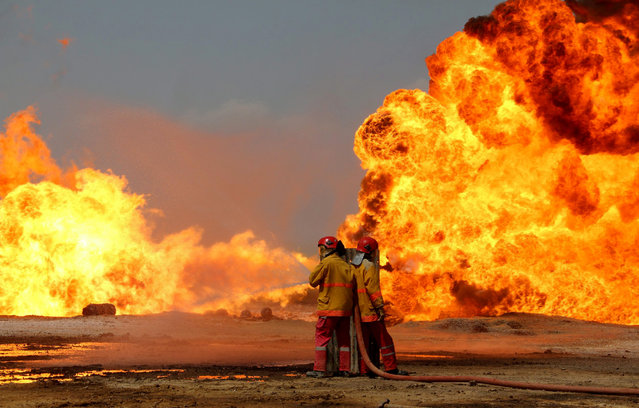
Iraqi firefighters try to stop the fire of burning oil wells in Kirkuk, northern Iraq, 02 June 2016. Two Khabbaz oil field wells in Kirkuk Province, northern Iraq, exploded by suspected insurgents, a security official said. (Photo by EPA/Stringer)
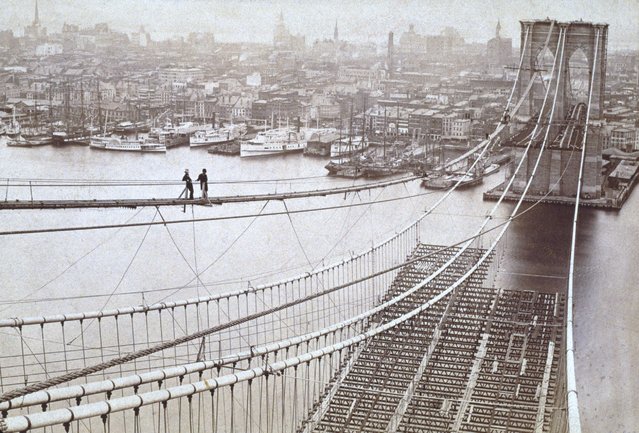
Two men standing on a high catwalk, surveying the construction of the Brooklyn Bridge, with Manhattan in the background, New York City, 1877. (Photo by Museum of the City of New York/Archive Photos/Getty Images)
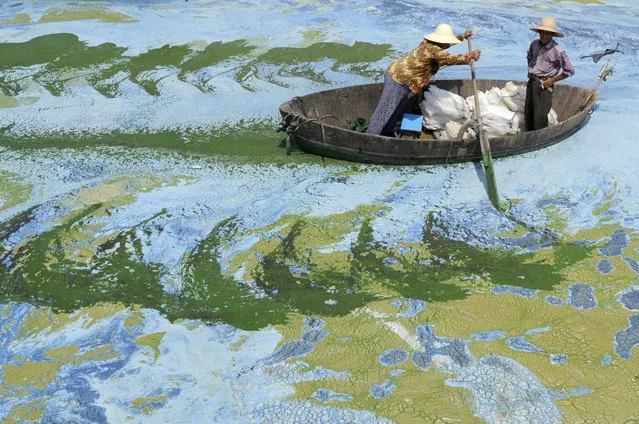
Growing cities, overuse of fertilizers and factory wastewater have degraded China's water supplies to the extent that half the nation's rivers and lakes are severely polluted. China aims to spend $850 billion to improve filthy water supplies over the next decade, but even such huge outlays may do little to reverse damage caused by decades of pollution and overuse in Beijing's push for rapid economic growth. Photo: Fishermen row a boat in the algae-filled Chaohu Lake in Hefei, Anhui province, June 19, 2009. (Photo by Jianan Yu/Reuters)
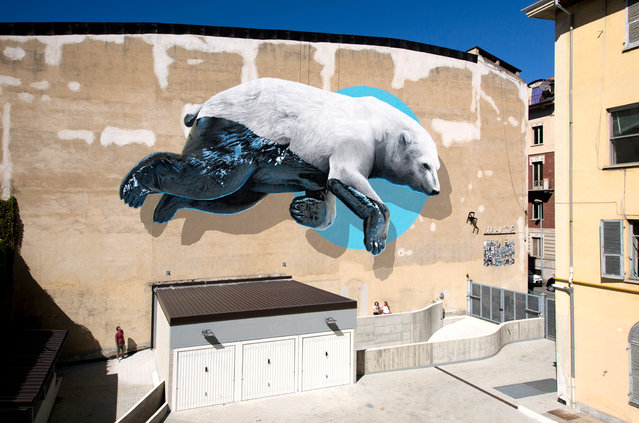
A polar bear whose bottom half is caked in oily black gunk. A whale wrapped in striped fabric: a pseudo straightjacket. These are the messes climate change leaves behind, the things we know are happening but often don’t have the opportunity to see with our own eyes. Swiss street art duo Christian Rebecchi and Pablo Togni, otherwise known as NeverCrew, met in art school when they were 15 and started making work together soon after. As a team, the artists adorn the world with eye-popping and gut-wrenching images depicting the consequences of humanity’s actions on earth. (Photo by NeverCrew/The Huffington Post)