Loading...
Done
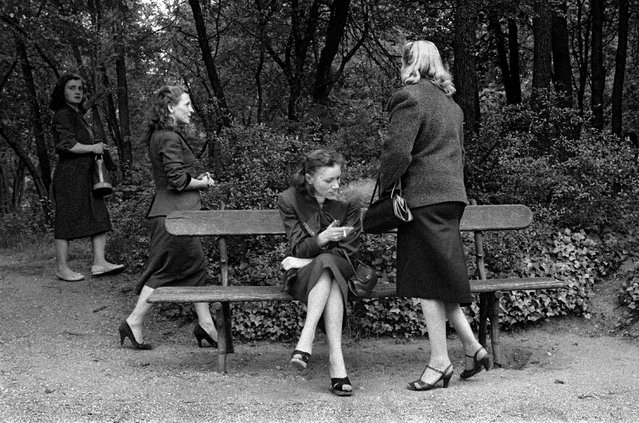
Horvat started out as a photojournalist. Meeting Henri Cartier-Bresson in 1951 proved to be a milestone in his career, leading to a two-year trip to Asia and exhibiting internationally, including in the 1955 show The Family of Man at New York's Museum of Modern Art. Here: Prostitutes, Bois de Boulogne, 1956. (Photo by Frank Horvat/The Guardian)

Born in 1958 in Abbazia, Italy, Frank Horvat is considered one of the founding fathers of French fashion photography. Frank Horvat: Storia di un Fotografo is on at Palazzo Chiablese Musei Reali, Turin, until 16 June. Here: Prostitutes, Bois de Boulogne, 1956. (Photo by Frank Horvat/The Guardian)
Details
01 Jun 2018 00:05:00


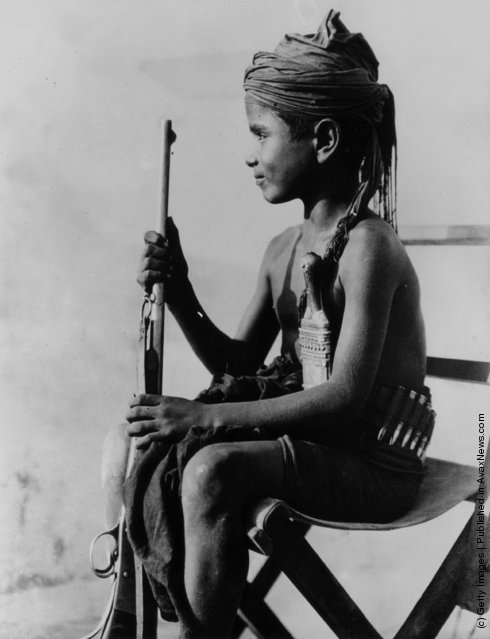
A young arab boy, armed with a rifle and a knife, in the Aden Protectorate near Yemen. (Photo by Richards/Fox Photos/Getty Images). February 1938
Details
01 Apr 2011 14:39:00


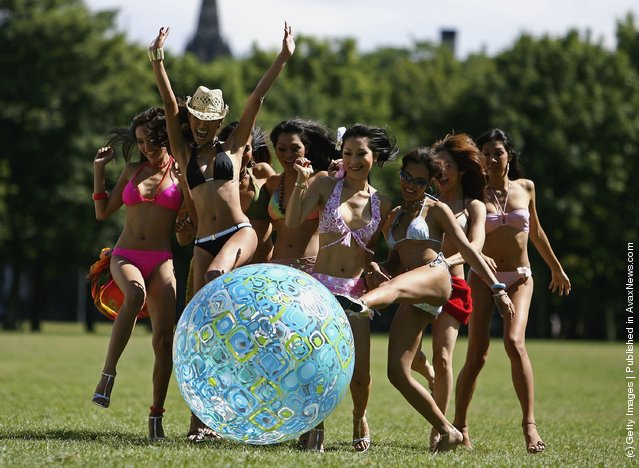
The Lady Boys of Bangkok have fun at the Meadows August 1, 2006 in Edinburgh, Scotland. (Photo by Jeff J Mitchell/Getty Images)
Details
05 May 2011 11:32:00


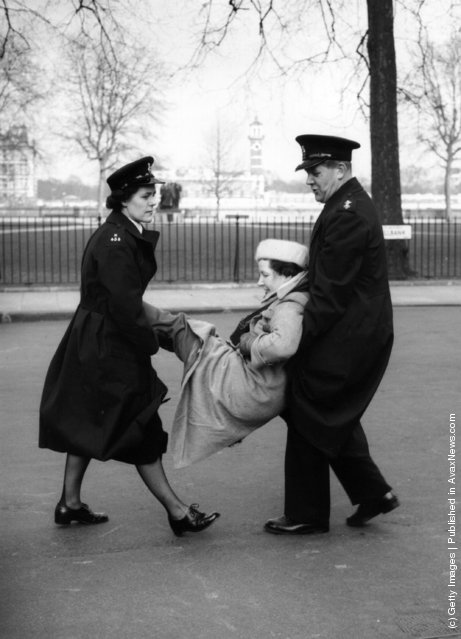
A British policewoman chasing after a group of naked street boys by the Serpentine in Hyde Park, London. (Photo by Reg Speller/Getty Images). 1926
Details
23 Jul 2011 12:43:00
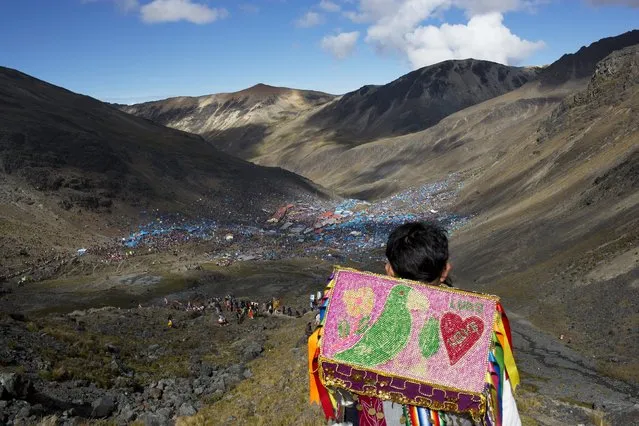
In this May 24, 2016 photo, a young boy descends the Qullqip'unqu mountain looking out at the tens of thousands of pilgrims gathered to celebrate the three-day festival Qoyllur Rit’i, translated from the Quechua language as Snow Star, in the Andean Sinakara Valley, in Peru's Cusco region. The celebration that mixes Catholic and indigenous beliefs honors Jesus as well as the area’s glacier, which is considered sacred among some indigenous people. While the native celebration is far older, the Christian part of the ritual stretches back to the 1700s, when Jesus is said to have appeared to a young shepherd in the form of another boy. (Photo by Rodrigo Abd/AP Photo)

In this May 24, 2016 photo, a young boy descends the Qullqip'unqu mountain looking out at the tens of thousands of pilgrims gathered to celebrate the three-day festival Qoyllur Rit’i, translated from the Quechua language as Snow Star, in the Andean Sinakara Valley, in Peru's Cusco region. The celebration that mixes Catholic and indigenous beliefs honors Jesus as well as the area’s glacier, which is considered sacred among some indigenous people. While the native celebration is far older, the Christian part of the ritual stretches back to the 1700s, when Jesus is said to have appeared to a young shepherd in the form of another boy. (Photo by Rodrigo Abd/AP Photo)
Details
04 Jun 2016 11:52:00
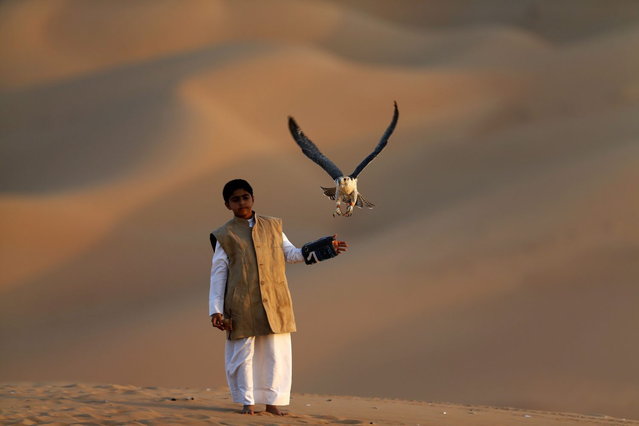
A young Emirati boy looks on as his falcon flies at the Liwa desert, 220 kms west of Abu Dhabi, on the sidelines of the Mazayin Dhafra Camel Festival on December 21, 2013. (Photo by Karim Sahib/AFP Photo)

A young Emirati boy looks on as his falcon flies at the Liwa desert, 220 kms west of Abu Dhabi, on the sidelines of the Mazayin Dhafra Camel Festival on December 21, 2013. The festival, which attracts participants from around the Gulf region, includes a camel beauty contest, a display of UAE handcrafts and other activities aimed at promoting the country's folklore. (Photo by Karim Sahib/AFP Photo)
Details
27 Dec 2013 10:55:00
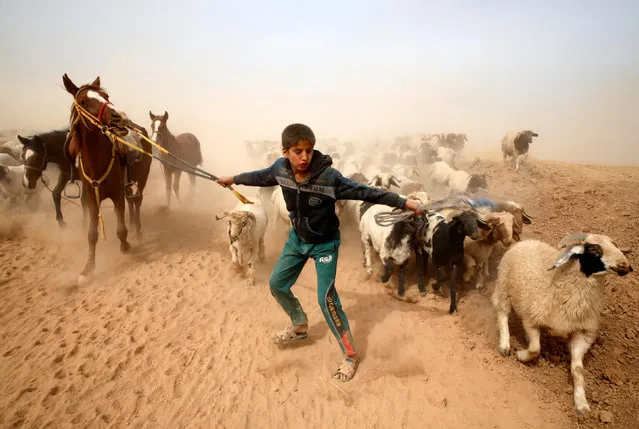
A displaced Iraqi boy leads his animals to safety after escaping from Islamic State controlled village of Abu Jarboa during clashes with IS militants near Mosul, Iraq November 1, 2016. (Photo by Ahmed Jadallah/Reuters)

A displaced Iraqi boy leads his animals to safety after escaping from Islamic State controlled village of Abu Jarboa during clashes with IS militants near Mosul, Iraq November 1, 2016. (Photo by Ahmed Jadallah/Reuters)
Details
02 Nov 2016 12:11:00
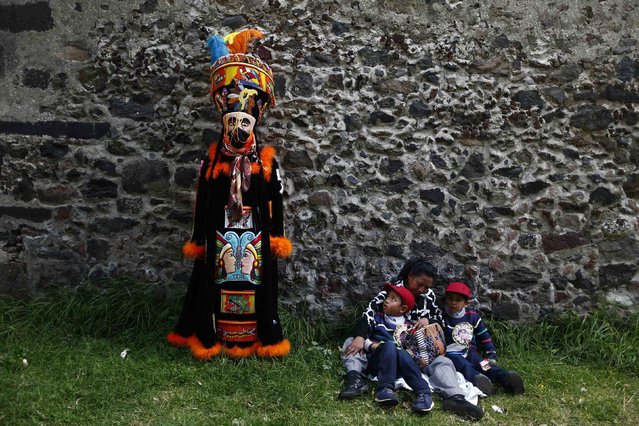
A boy sitting with his family looks up at a traditional Chinelo costumed dancer during a celebration 40 days after the birth of Jesus, in Xochimilco on the outskirts of Mexico City, February 2, 2015. (Photo by Edgard Garrido/Reuters)

A boy sitting with his family looks up at a traditional Chinelo costumed dancer during a celebration 40 days after the birth of Jesus, in Xochimilco on the outskirts of Mexico City, February 2, 2015. The tradition of the Chinelo dates back to colonial times and the outfits and masks, which are supposed to resemble the faces of the Europeans and always sport an uptilted beard, became more elaborate between the 1800s and 1900s to make fun of the upper social classes. (Photo by Edgard Garrido/Reuters)
Details
03 Feb 2015 13:09:00