Loading...
Done
Crime Tatoo  Part 2

Tattoos are commonly used among criminals to show gang membership and record the wearer's personal history—such as his or her skills, specialties, accomplishments and convictions. They are also used as a means of personal expression. Certain designs have developed recognized coded meanings. The code systems can be quite complex and because of the nature of what they encode, the tattoo designs are not widely recognized.
Details
24 Apr 2013 09:49:00
Cast member Shu Qi poses during a photocall for the film “The Assassin” (Nie yin niang) in competition at the 68th Cannes Film Festival in Cannes, southern France, May 21, 2015. (Photo by Eric Gaillard/Reuters)

Cast member Shu Qi poses during a photocall for the film “The Assassin” (Nie yin niang) in competition at the 68th Cannes Film Festival in Cannes, southern France, May 21, 2015. (Photo by Eric Gaillard/Reuters)
Details
25 May 2015 09:04:00
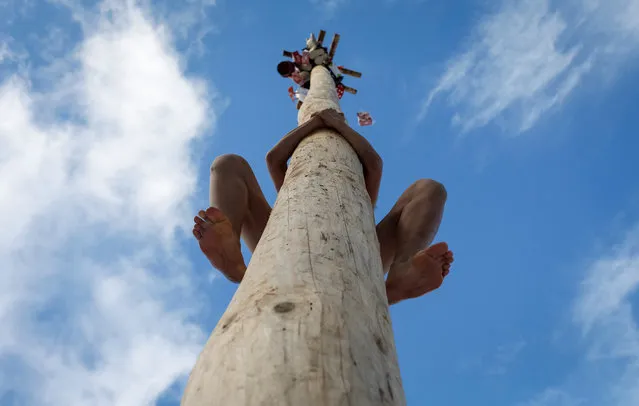
A man climbs up a wooden pole to get a prize during celebration of Maslenitsa, or Pancake Week, a pagan holiday marking the end of winter, near Rumyantsevo, Moscow region, Russia, February 26, 2017. (Photo by Sergei Karpukhin/Reuters)

A man climbs up a wooden pole to get a prize during celebration of Maslenitsa, or Pancake Week, a pagan holiday marking the end of winter, near Rumyantsevo, Moscow region, Russia, February 26, 2017. (Photo by Sergei Karpukhin/Reuters)
Details
28 Feb 2017 00:05:00
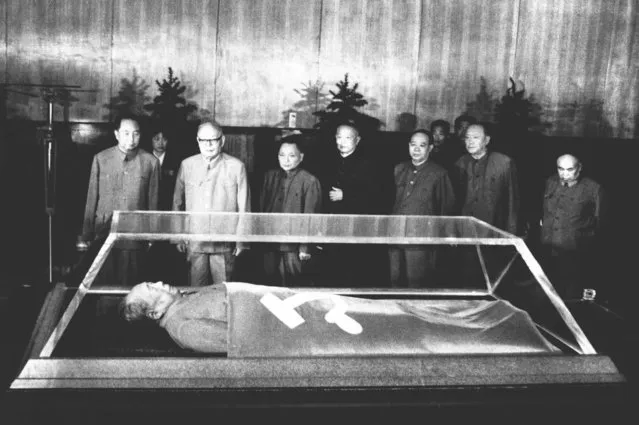
In this September 10, 1977, file photo, from left, Hua Guofeng, Chinese Communist Party (CCP) chairman and Mao Zedong's immediate successor; Ye Jianying, CCP vice chairman and future ceremonial head of state; Deng Xiaoping, no formal titles at the time but soon to emerge as paramount leader during the reform era; Li Xiannian, CCP vice chairman and future president; Wang Dongxing, head of the leadership bodyguard unit who helped topple the Gang of Four, view the body of later Chinese leader Mao Zedong in Beijing. (Photo via AP Photo)

In this September 10, 1977, file photo, from left, Hua Guofeng, Chinese Communist Party (CCP) chairman and Mao Zedong's immediate successor; Ye Jianying, CCP vice chairman and future ceremonial head of state; Deng Xiaoping, no formal titles at the time but soon to emerge as paramount leader during the reform era; Li Xiannian, CCP vice chairman and future president; Wang Dongxing, head of the leadership bodyguard unit who helped topple the Gang of Four, view the body of later Chinese leader Mao Zedong in Beijing. (Photo via AP Photo)
Details
13 Jun 2016 10:34:00
Festival goers arrive for the Glastonbury festival at Worthy Farm, in Somerset, England, Thursday, June 23, 2016. (Photo by Guy Bell/Rex Features/Shutterstock)

Festival goers arrive for the Glastonbury festival at Worthy Farm, in Somerset, England, Thursday, June 23, 2016. (Photo by Guy Bell/Rex Features/Shutterstock)
Details
25 Jun 2016 12:17:00
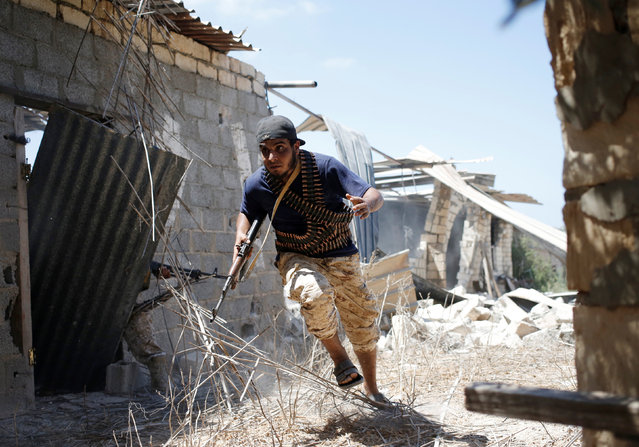
A fighter of Libyan forces allied with the U.N.-backed government runs for cover during a battle with Islamic State fighters in Sirte, Libya, July 31, 2016. (Photo by Goran Tomasevic/Reuters)

A fighter of Libyan forces allied with the U.N.-backed government runs for cover during a battle with Islamic State fighters in Sirte, Libya, July 31, 2016. (Photo by Goran Tomasevic/Reuters)
Details
01 Aug 2016 10:16:00
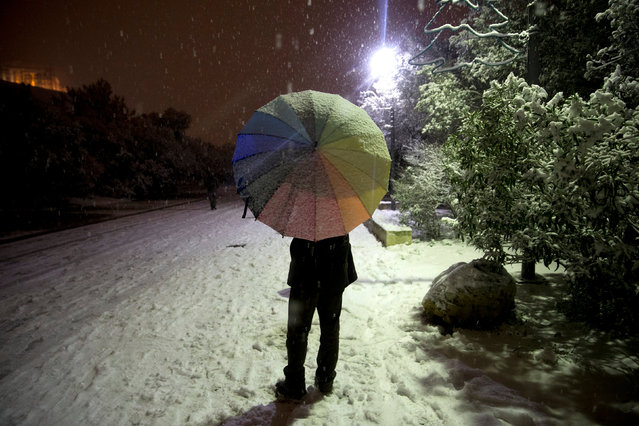
A man holds his umbrella during snowfall on the Areopagitou pedestrian street beneath the Acropolis hill during snowfall in Athens, Greece, January 10, 2017. (Photo by Alkis Konstantinidis/Reuters)

A man holds his umbrella during snowfall on the Areopagitou pedestrian street beneath the Acropolis hill during snowfall in Athens, Greece, January 10, 2017. (Photo by Alkis Konstantinidis/Reuters)
Details
12 Jan 2017 11:29:00
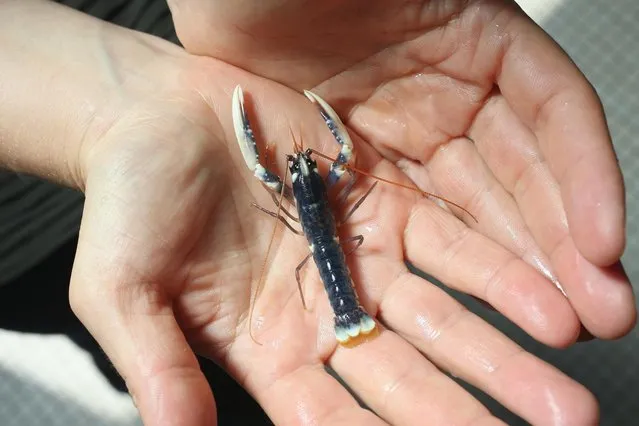
Isabel Schmalenbach, an environmental scientist with the Helgoland Biological Institute (Biologische Anstalt Helgoland), part of the Alfred Wegener Institute for Polar and Marine Research, holds a one-year old baby European lobster (Homarus gammarus) raised at the institute on August 3, 2013 on Helgoland Island, Germany. (Photo by Sean Gallup/Getty Images)

Isabel Schmalenbach, an environmental scientist with the Helgoland Biological Institute (Biologische Anstalt Helgoland), part of the Alfred Wegener Institute for Polar and Marine Research, holds a one-year old baby European lobster (Homarus gammarus) raised at the institute on August 3, 2013 on Helgoland Island, Germany. Later in the day Schmalenbach and her colleagues released a total of 415 one-year old lobsters into the North Sea as part of an effort to repopulate the lobster population around Helgoland (also called Heligoland). In the 19th century local fishermen caught up to 80,000 lobsters a year in the surrounding waters, combined with the heavy allied bombing of the island during and after World War II, as well as other environmental factors, decimated the lobster population. (Photo by Sean Gallup)
Details
05 Aug 2013 08:39:00