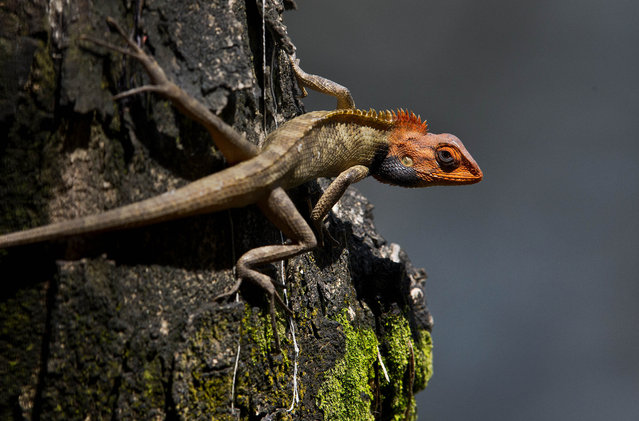
An Oriental Garden Lizard sits on a tree in Gauhati, India, Tuesday, April 16, 2019. During the breeding season, the male lizard's head and throat turn a bright color. (Photo by Anupam Nath/AP Photo)
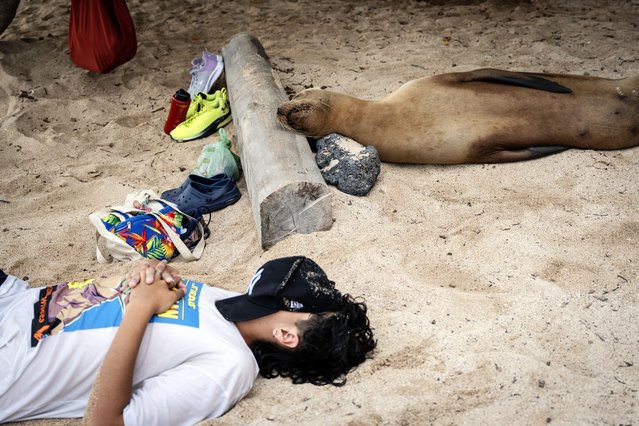
Sea lion is seen among people on a beach in San Cristobal island, part of Galapagos archipelago on February 11, 2025. Located in Ecuadorone of South America's most fascinating countriesthe Galapagos National Park spans 13 main islands and numerous islets, captivating biologists, environmental scientists, and tourists with its rich ecology. (Photo by Ozge Elif Kizil/Anadolu via Getty Images)
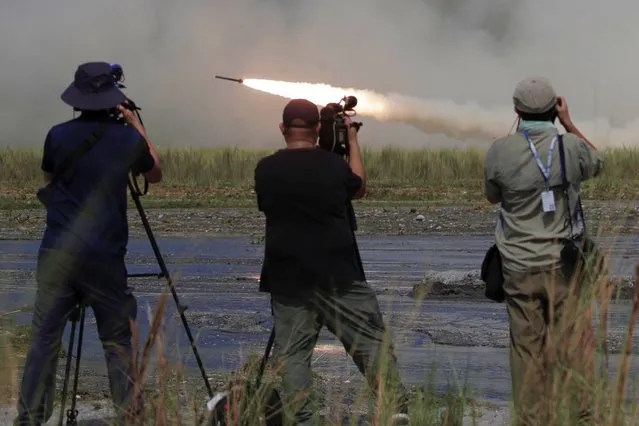
US M142 High Mobility Artillery Rocket System (HIMARS) is launched as journalists film during a military exercise in Capas, Tarlac province, Philippines, 13 October 2022. The Philippines hosted simultaneous combat drills with the United States, South Korea, and Japan to improve interoperability in times of conflict. (Photo by Francis R. Malasig/EPA/EFE)
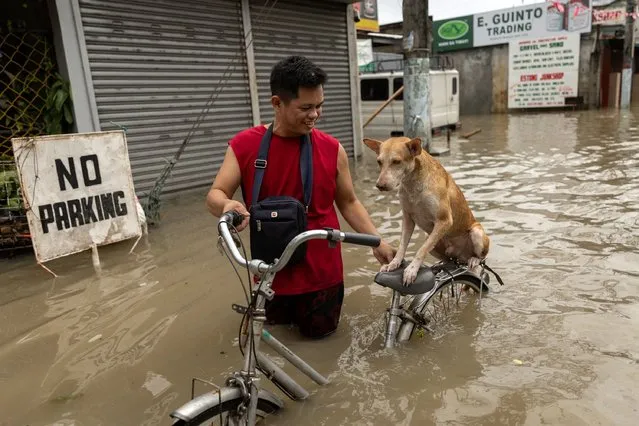
A-Jhay Celis, 35, wades through flood water with his dog Domeng, following heavy rains brought by tropical storm Nalgae, in Imus, Cavite province, Philippines on October 30, 2022. (Photo by Eloisa Lopez/Reuters)
Dogs pose for a photo in the likeness of a photo time line of Face Book during the “Blocao” dog carnival parade in Rio de Janeiro, Brazil, Saturday, February 14, 2015. (Photo by Silvia Izquierdo/AP Photo)
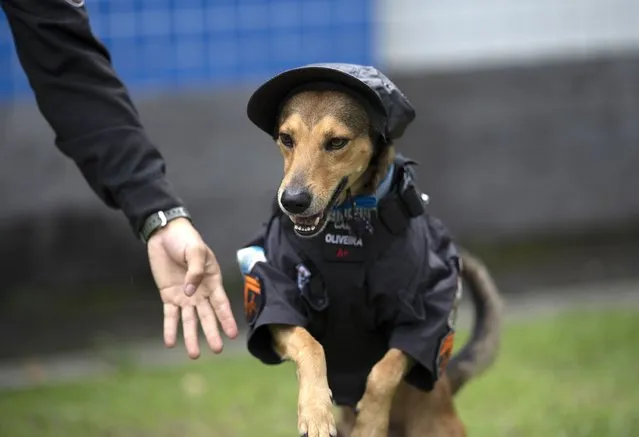
Police Cpl. Cristiano de Oliveira offers a hand to police dog “Corporal Oliveira”, at the 17 Military Police Battalion's station, in Rio de Janeiro, Brazil, Thursday, April 7, 2022. Oliveira is one of two rescue dogs that have turned into local mascots and budding online influencers after joining their rescuers' ranks. (Photo by Silvia Izquierdo/AP Photo)
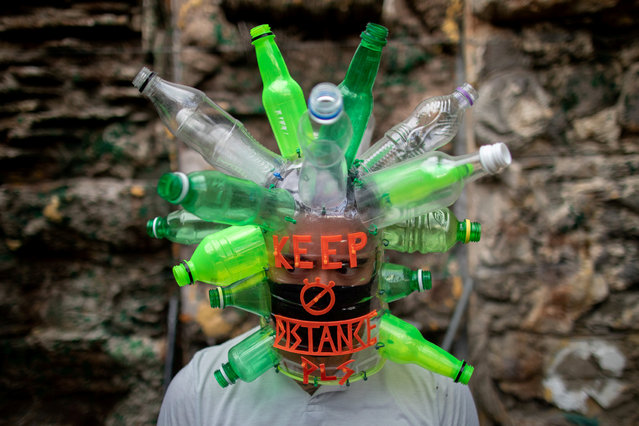
Filipino artist Leeroy New poses with a makeshift mask he designed with recycled materials as he adapts to the effects of the coronavirus disease (COVID-19) pandemic in the art industry, in his studio in Quezon City, Metro Manila, Philippines, May 28, 2020. (Photo by Eloisa Lopez/Reuters)
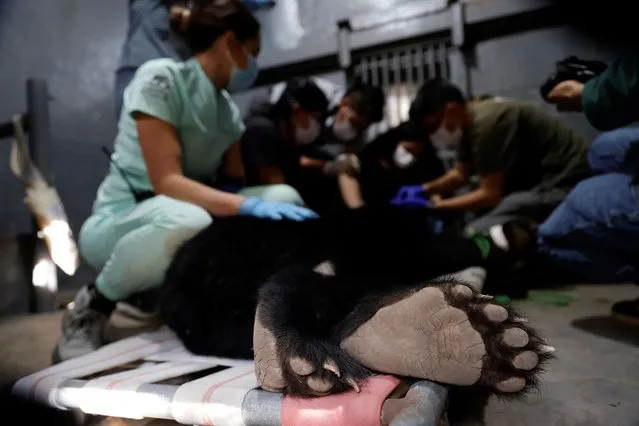
Veterinarians and biologists from the Quito Zoo and the Andean Condor Foundation fit a tracking collar that juvenile Andean bear Tupak will wear for the next four years, prior to his reintroduction into the wild, after the bear's life was deemed in danger due to proximity to humans, in Quito, Ecuador on March 31, 2024. (Photo by Karen Toro/Reuters)