Loading...
Done
Paul Brockmans Collection Of 55,000 Dresses Bought For His Wife

There are many types of collections. Some are formed by purposefully collecting certain objects, such as stamps or coins. However, some collections are only a byproduct of an obsession, a quirk of mind. For example, Paul Brockmann got into the habit of buying his girlfriend and later his wife a dress every time they went ballroom dancing. It might seem excessive to some, but it was his way of showing his affection. Overtime, this collection grew to be enormous, counting 55,000 dresses in total. Basic math tells us that either they went ballroom dancing three times per day for every day of their lives, or he bought them in huge bundles every time.
Details
28 Mar 2015 10:11:00
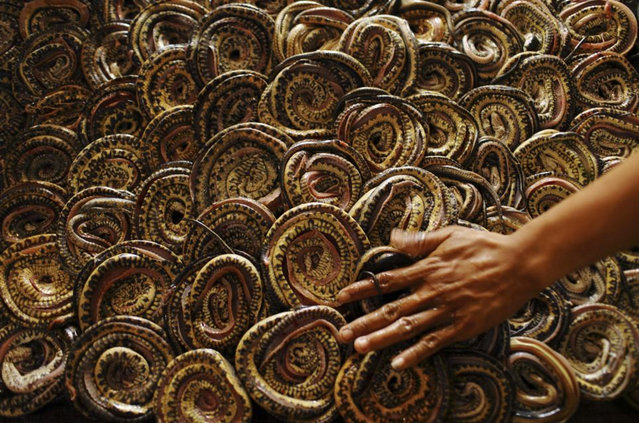
How Snakeskin Handbags Are Made

Images from a snake slaughterhouse at Kapetakan village in Indonesia’s West Java province. Wakira, who is known as “Boss Cobra”, owns the slaughterhouse that produces snake meat and skin. Snake meat is believed by some to be a remedy for skin diseases and asthma, as well as an aid to increase virility. The snake skins, measuring in the hundreds of metres, are sold to bag factories in the West and Central Java provinces on a monthly basis. The price of a bag made from snake skin costs between 150,000 rupiah ($ 15.60) and 300,000 rupiah ($31.20), depending on its size. That snakeskin handbag you’ll buy is costing a hell of a lot more.
Details
20 Feb 2013 12:00:00
Bride to be Lauren Cechak expresses her dislike for a wedding gown after trying it on during Filene's Basement's annual sale

Bride to be Lauren Cechak expresses her dislike for a wedding gown after trying it on during Filene's Basement's annual sale July 30, 2010 in Bethesda, Maryland. Hundreds of brides to be and their shopping teams line up early waiting to buy gowns at drastically low prices during the annual sale, dubbed the “Running of the Brides”. (Photo by Mark Wilson/Getty Images)
Details
16 Sep 2011 11:50:00
A reveler strikes a pose during an unofficial carnival block party referred to as “blocos”, in Rio de Janeiro, Brazil, Saturday, February 26, 2022. (Photo by Silvia Izquierdo/AP Photo)

A reveler strikes a pose during an unofficial carnival block party referred to as “blocos”, in Rio de Janeiro, Brazil, Saturday, February 26, 2022. City Hall banned all blocos, the tightly packed street parties attended by those who cannot or don't want to buy pricey tickets for the official parade at the Sambadrome, due to a wave of the Omicron variant. (Photo by Silvia Izquierdo/AP Photo)
Details
28 Feb 2022 04:52:00
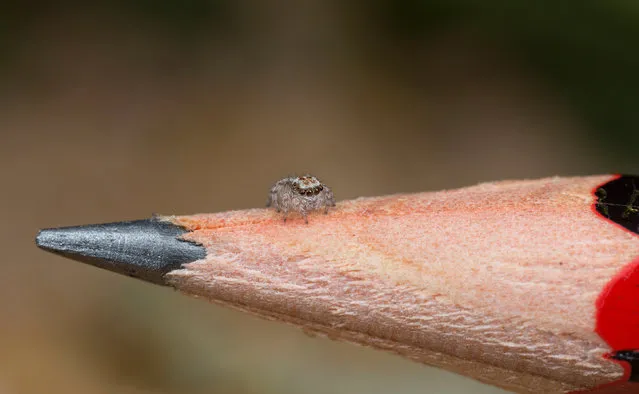
A juvenile specimen of the recently-discovered Australian Peacock spider, Maratus Albus, sits on the nib of a pencil in this undated picture taken in Western Australia's Nuytsland Nature Reserve. (Photo by Jurgen Otto/Reuters)

A juvenile specimen of the recently-discovered Australian Peacock spider, Maratus Albus, sits on the nib of a pencil in this undated picture taken in Western Australia's Nuytsland Nature Reserve. (Photo by Jurgen Otto/Reuters)
Details
09 Jun 2016 09:14:00
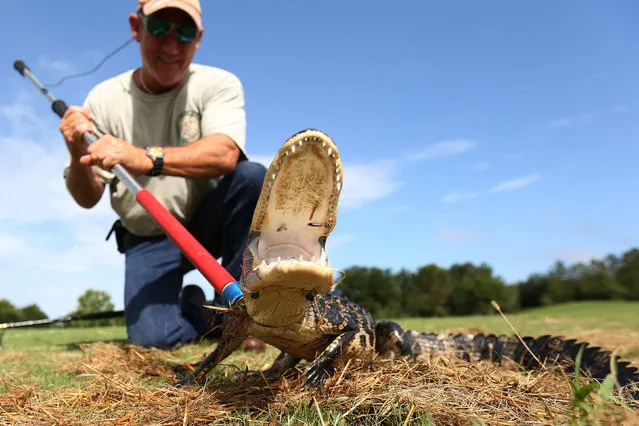
Alligator trapper Mark Whitmire prepares an alligator he caught in a lagoon on a golf course to relocate it to a more natural environment in Orlando, Florida, U.S., June 19, 2016. (Photo by Carlo Allegri/Reuters)

Alligator trapper Mark Whitmire prepares an alligator he caught in a lagoon on a golf course to relocate it to a more natural environment in Orlando, Florida, U.S., June 19, 2016. (Photo by Carlo Allegri/Reuters)
Details
24 Jun 2016 13:55:00
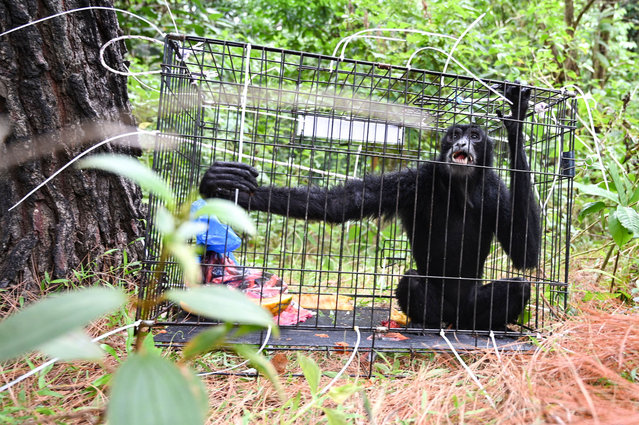
A black gibbon is seen in a cage before being released into the wild by Indonesian nature conservation agency (BKSDA) in Jantho forest, Aceh province on August 26, 2021. (Photo by Chaideer Mahyuddin/AFP Photo)

A black gibbon is seen in a cage before being released into the wild by Indonesian nature conservation agency (BKSDA) in Jantho forest, Aceh province on August 26, 2021. (Photo by Chaideer Mahyuddin/AFP Photo)
Details
04 Sep 2021 08:56:00
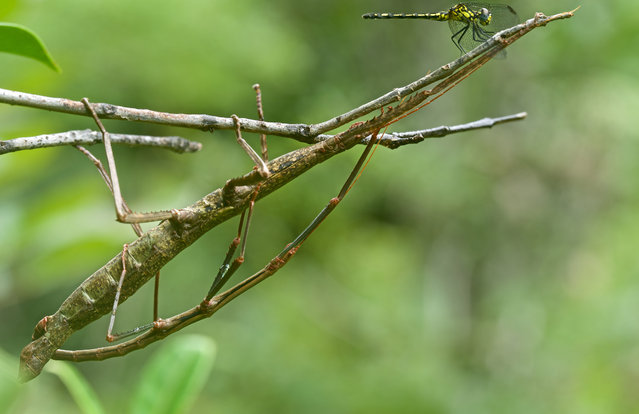
Stick insects. (Photo by Paul Bertner/Caters News)

These tiny insects are so well camouflaged it is nearly impossible to make out their cleverly disguised forms. Canadian photographer and adventurer Paul Bertner attempted to catch the bugs in their natural habitats as part of a hide-and-seek game to show biodiversity in nature. Here: Stick insects. (Photo by Paul Bertner/Caters News)
Details
02 Apr 2016 09:20:00