Loading...
Done
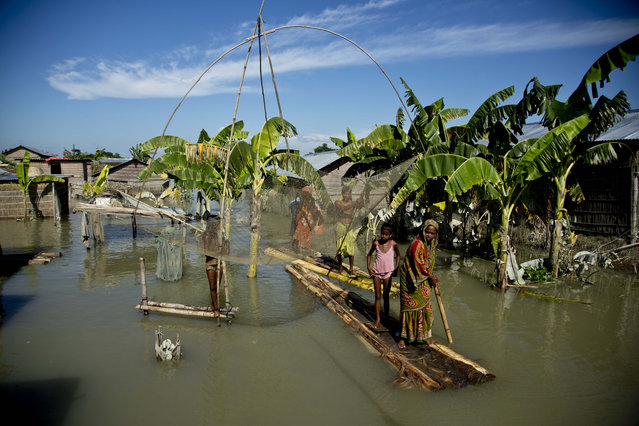
A flood affected family moves on a banana raft past a fishing net in Morigaon district, east of Gauhati, northeastern Assam state, India, Sunday, July 31, 2016. A week of heavy rain has killed dozens of people and uprooted tens of thousands of others from their homes. Floods are an annual occurrence in Assam and many parts of India during the June-September monsoon season. (Photo by Anupam Nath/AP Photo)

A flood affected family moves on a banana raft past a fishing net in Morigaon district, east of Gauhati, northeastern Assam state, India, Sunday, July 31, 2016. A week of heavy rain has killed dozens of people and uprooted tens of thousands of others from their homes. Floods are an annual occurrence in Assam and many parts of India during the June-September monsoon season. (Photo by Anupam Nath/AP Photo)
Details
01 Aug 2016 10:30:00
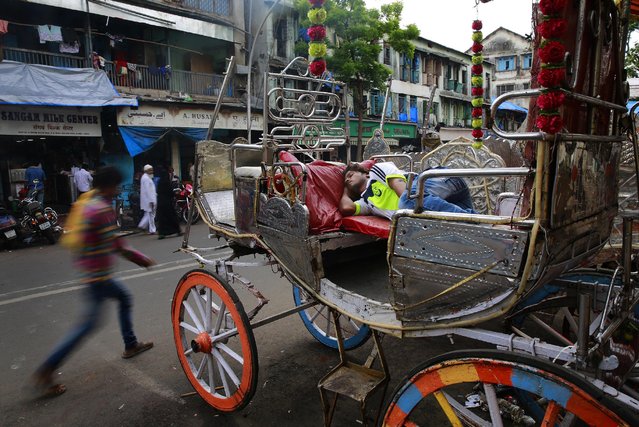
In this June 16, 2015 photo, an Indian coachman sleeps on his Victoria horse-drawn carriage outside a stable in Mumbai, India. Drivers of Mumbai's iconic horse-drawn carriages can't imagine not plying the roads pulling photo-snapping tourists atop their kitsch-covered chariots. Yet that time is coming, thanks to a court order calling such superfluous “joyrides” a form of animal cruelty and banning them in India's financial capital from June 2016. (Photo by Rafiq Maqbool/AP Photo)

In this June 16, 2015 photo, an Indian coachman sleeps on his Victoria horse-drawn carriage outside a stable in Mumbai, India. Drivers of Mumbai's iconic horse-drawn carriages can't imagine not plying the roads pulling photo-snapping tourists atop their kitsch-covered chariots. Yet that time is coming, thanks to a court order calling such superfluous “joyrides” a form of animal cruelty and banning them in India's financial capital from June 2016. (Photo by Rafiq Maqbool/AP Photo)
Details
03 Jul 2015 12:46:00
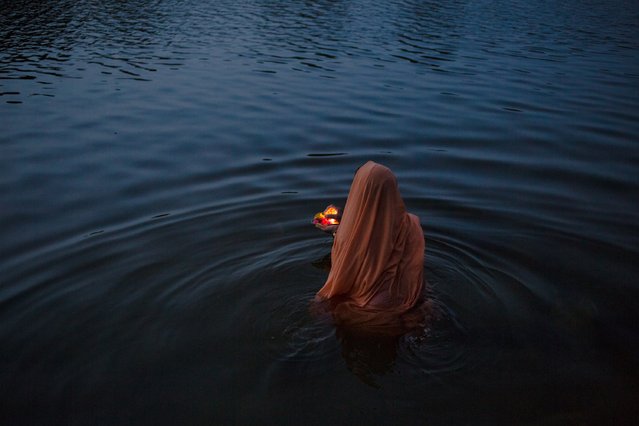
An Indian women offers early-morning prayers or a “puja” at a ghat early in the morning on the banks of the Betawa River in Orchha in the state of Madhya Pradesh on July 5, 2015. (Photo by Rebecca Conway/AFP Photo)

An Indian women offers early-morning prayers or a “puja” at a ghat early in the morning on the banks of the Betawa River in Orchha in the state of Madhya Pradesh on July 5, 2015. (Photo by Rebecca Conway/AFP Photo)
Details
08 Jul 2015 11:56:00
A bride gets ready during a mass wedding ceremony in the old quarters of Delhi February 20, 2015. (Photo by Ahmad Masood/Reuters)

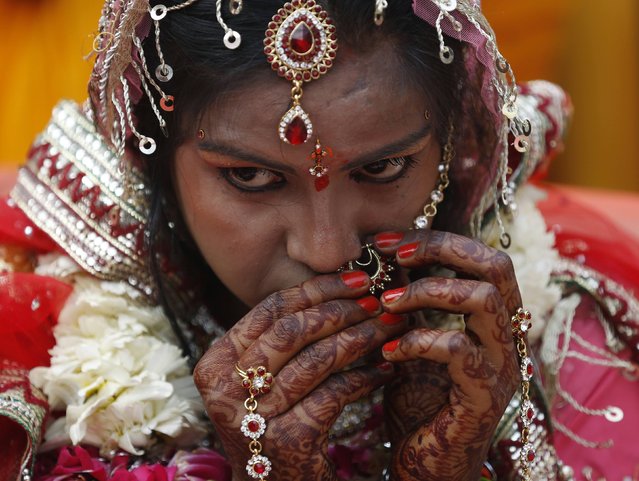
A bride gets ready during a mass wedding ceremony in the old quarters of Delhi February 20, 2015. A total of 12 couples took their wedding vows on Friday during the mass wedding ceremony organised by a Hindu religious organisation, an organiser said. (Photo by Ahmad Masood/Reuters)
Details
22 Feb 2015 11:01:00
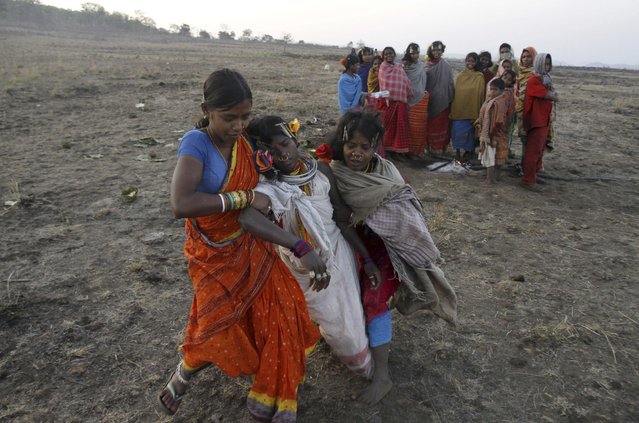
A member of India’s Dongria tribe faints in trance during the two-day long Niyamraja Festival atop the Niyamgiri hills near Lanjigarh in Kalahandi district, Orissa state, India, Sunday, February 22, 2015. Every year, members of this indigenous group celebrate this festival sacrificing animals and birds in worship of their deity. (Photo by Biswaranjan Rout/AP Photo)

A member of India’s Dongria tribe faints in trance during the two-day long Niyamraja Festival atop the Niyamgiri hills near Lanjigarh in Kalahandi district, Orissa state, India, Sunday, February 22, 2015. Every year, members of this indigenous group celebrate this festival sacrificing animals and birds in worship of their deity. (Photo by Biswaranjan Rout/AP Photo)
Details
23 Feb 2015 12:33:00
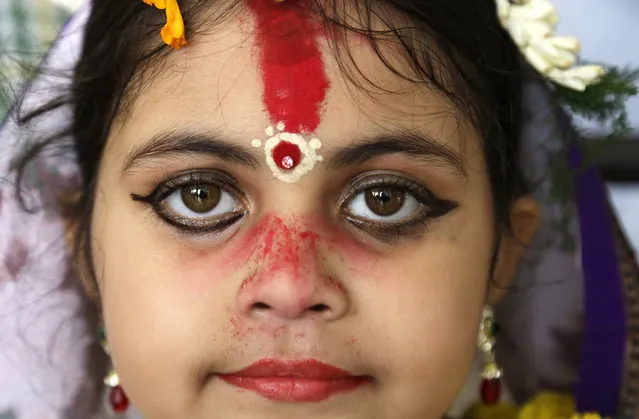
A young Hindu girl sits for a ceremony where she and other girls are worshipped as “Kumari”, or living goddess, during Ram Navami festival, at a temple in Kolkata, India, Saturday, March 28, 2015. (Photo by Bikas Das/AP Photo)

A young Hindu girl sits for a ceremony where she and other girls are worshipped as “Kumari”, or living goddess, during Ram Navami festival, at a temple in Kolkata, India, Saturday, March 28, 2015. Ram Navami marks the birth of Hindu God Rama. (Photo by Bikas Das/AP Photo)
Details
29 Mar 2015 12:23:00
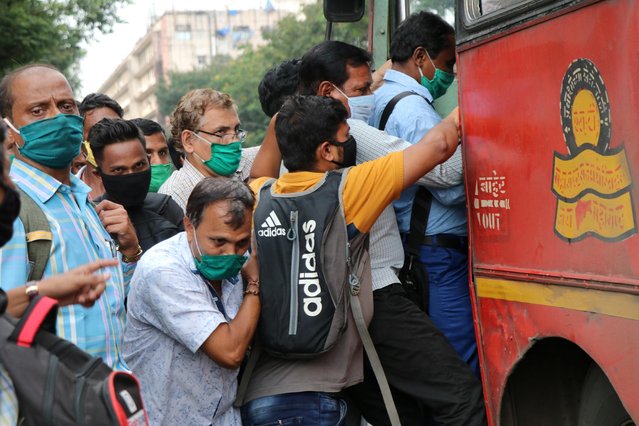
People board a passenger bus during rush hour at a bus terminal, amidst the coronavirus disease (COVID-19) outbreak, in Mumbai, India, September 9, 2020. (Photo by Niharika Kulkarni/Reuters)

People board a passenger bus during rush hour at a bus terminal, amidst the coronavirus disease (COVID-19) outbreak, in Mumbai, India, September 9, 2020. (Photo by Niharika Kulkarni/Reuters)
Details
15 Sep 2020 00:05:00
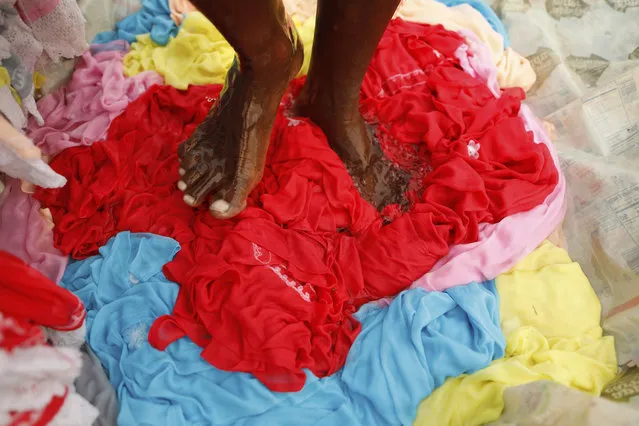
A dhobi, or a washerman washes cloths on the banks of the River Gomti in Lucknow, India, Saturday, September 12, 2020. Dhobis are traditional laundry workers who wash clothes by hand and dry them in the sun, an occupation which has been in existence for generations. Most cities in India have a Dhobi Ghat, or washermen's area, where the city's pile of clothes is laundered. This practice is still popular in India, despite of modern technology. Around 1,000 families work in Lucknow's Dhobi Ghat. However, in light of the novel coronavirus, their wages have decreased drastically. With each family earning around US$100-200 per month. (Photo by Rajesh Kumar Singh/AP Photo)

A dhobi, or a washerman washes cloths on the banks of the River Gomti in Lucknow, India, Saturday, September 12, 2020. Dhobis are traditional laundry workers who wash clothes by hand and dry them in the sun, an occupation which has been in existence for generations. Most cities in India have a Dhobi Ghat, or washermen's area, where the city's pile of clothes is laundered. This practice is still popular in India, despite of modern technology. Around 1,000 families work in Lucknow's Dhobi Ghat. However, in light of the novel coronavirus, their wages have decreased drastically. With each family earning around US$100-200 per month. (Photo by Rajesh Kumar Singh/AP Photo)
Details
25 Sep 2020 00:03:00