Loading...
Done
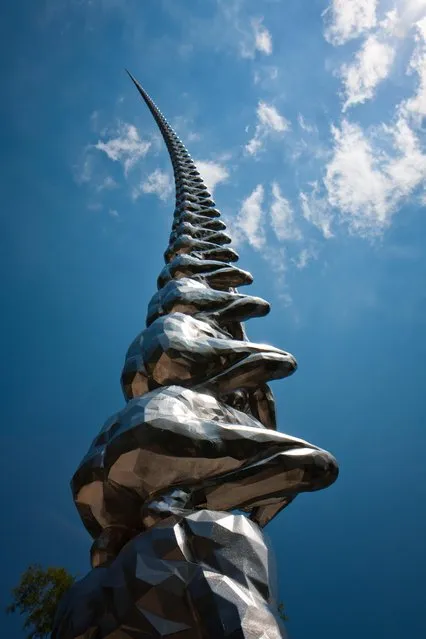
“Karma” by Do-Ho Suh. Sydney and Walda Besthoff Sculpture Garden, New Orleans Museum of Art, New Orleans, LA. (Photo by Alan Teo)

“Do-Ho Suh addresses issues of identity, memory, and relationships. Son of the famous Korean ink-painter Suh Se-Ok, Do-Ho Suh is a leading figure in the transnational avant-garde generation of Korean artists who came of age in the late 1990s, and his work eloquently represents a dual consciousness between East and West”.

Photo: “Karma” by Do-Ho Suh. Sydney and Walda Besthoff Sculpture Garden, New Orleans Museum of Art, New Orleans, LA. (Photo by Alan Teo)


Details
05 Mar 2013 09:37:00
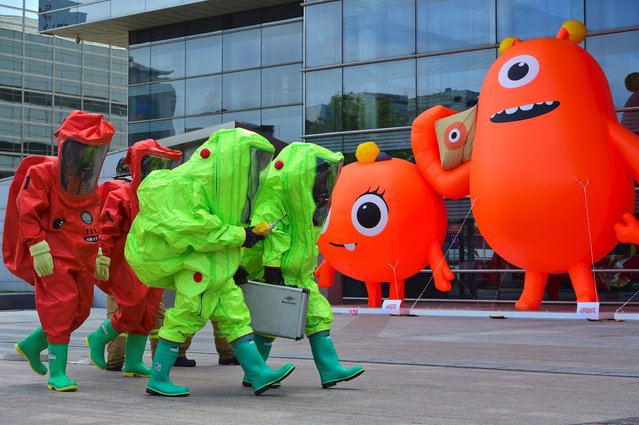
South Korean rescue members wearing chemical protective suits walk past a monster character (R) during an anti-terror drill as part of a disaster management exercise at the COEX shopping and exhibition center in Seoul on May 20, 2016. South Korea is holding its 2016 Safe Korea anti-disaster exercise this week against terrorist threats and natural disasters. (Photo by Jung Yeon-Je/AFP Photo)

South Korean rescue members wearing chemical protective suits walk past a monster character (R) during an anti-terror drill as part of a disaster management exercise at the COEX shopping and exhibition center in Seoul on May 20, 2016. South Korea is holding its 2016 Safe Korea anti-disaster exercise this week against terrorist threats and natural disasters. (Photo by Jung Yeon-Je/AFP Photo)
Details
21 May 2016 11:28:00
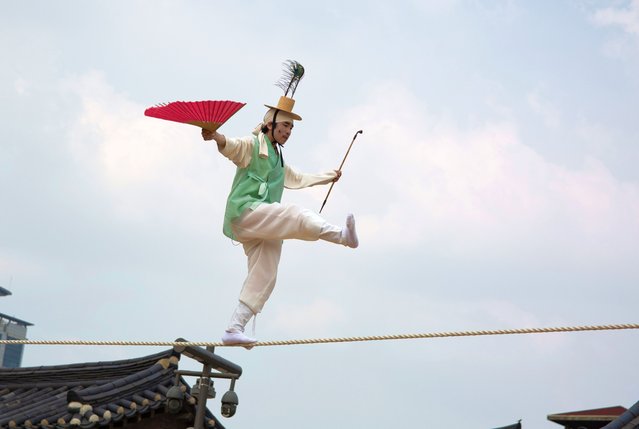
South Korean tightrope walker Nam Chang-dong performs “Jultage” or Tightrope walking during the traditional festival “Dano” at Namsan Hanok village in Seoul, South Korea, 14 June 2021. The festival falls on the fifth day of the fifth month of the lunar calendar. Only 30 audience members were allowed to attend the performance amid the coronavirus COVID-19 pandemic. (Photo by Jeon Heon-Kyun/EPA/EFE)

South Korean tightrope walker Nam Chang-dong performs “Jultage” or Tightrope walking during the traditional festival “Dano” at Namsan Hanok village in Seoul, South Korea, 14 June 2021. The festival falls on the fifth day of the fifth month of the lunar calendar. Only 30 audience members were allowed to attend the performance amid the coronavirus COVID-19 pandemic. (Photo by Jeon Heon-Kyun/EPA/EFE)
Details
18 Jul 2021 06:12:00
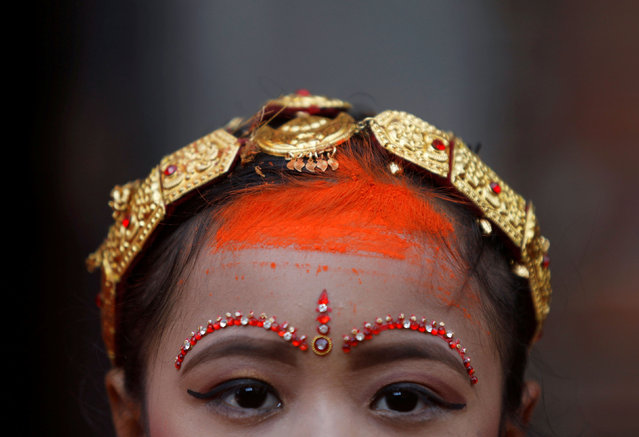
A girl from Newar community is pictured with vermillion powder on her forehead as she takes part at the Ihi ceremony in Bhaktapur, Nepal on December 6, 2019. The two-day ceremony begins with purification rituals and ends with “Kanyadan” (giving away the virgin) of the girl by her father. A Newari girl gets married thrice in her life, first with Bel, the fruit of a wood-apple tree, secondly with the sun, and lastly with her future husband. (Photo by Monika Deupala/Reuters)

A girl from Newar community is pictured with vermillion powder on her forehead as she takes part at the Ihi ceremony in Bhaktapur, Nepal on December 6, 2019. The two-day ceremony begins with purification rituals and ends with “Kanyadan” (giving away the virgin) of the girl by her father. A Newari girl gets married thrice in her life, first with Bel, the fruit of a wood-apple tree, secondly with the sun, and lastly with her future husband. (Photo by Monika Deupala/Reuters)
Details
04 Mar 2020 00:03:00
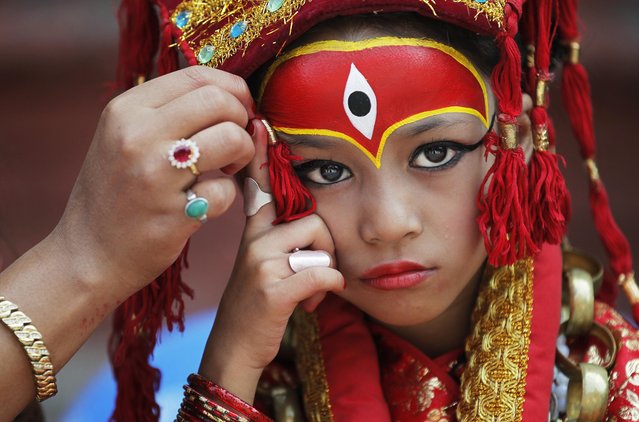
A Nepalese mother applies make up to her daughter dressed as the living goddess Kumari as they wait for Kumari puja to start at Hanuman Dhoka temple, in Kathmandu, Nepal, Wednesday, September 14, 2016. Girls under the age of nine gathered for the Kumari puja, a tradition of worshiping young prepubescent girls as manifestations of the divine female energy. The ritual holds a strong religious significance in the Newar community that seeks divine blessings to save small girls from diseases and bad luck in the years to come. (Photo by Niranjan Shrestha/AP Photo)

A Nepalese mother applies make up to her daughter dressed as the living goddess Kumari as they wait for Kumari puja to start at Hanuman Dhoka temple, in Kathmandu, Nepal, Wednesday, September 14, 2016. Girls under the age of nine gathered for the Kumari puja, a tradition of worshiping young prepubescent girls as manifestations of the divine female energy. The ritual holds a strong religious significance in the Newar community that seeks divine blessings to save small girls from diseases and bad luck in the years to come. (Photo by Niranjan Shrestha/AP Photo)
Details
15 Sep 2016 09:58:00
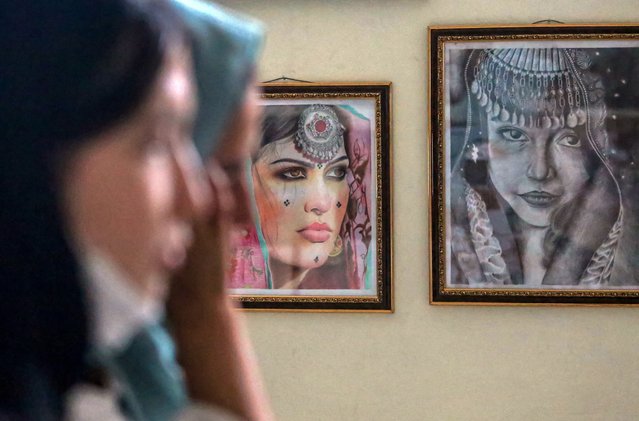
Shakar Rustami (L) and Zulaikha Amini, organizers of the “Smart Way” book and painting exhibition stand in front of painting in Kabul, Afghanistan, 21 August 2023. Young female artists in Kabul held a painting exhibition to express the restrictions imposed by the Taliban on women and girls. The exhibition also featured books displayed by students to promote reading culture. Some of the girls called for the Taliban to lift the restrictions against women and girls. Many female students turned to painting and drawing after schools and universities closed. (Photo by Samiullah Popal/EPA/EFE)

Shakar Rustami (L) and Zulaikha Amini, organizers of the“'Smart Way” book and painting exhibition stand in front of painting in Kabul, Afghanistan, 21 August 2023. Young female artists in Kabul held a painting exhibition to express the restrictions imposed by the Taliban on women and girls. The exhibition also featured books displayed by students to promote reading culture. Some of the girls called for the Taliban to lift the restrictions against women and girls. Many female students turned to painting and drawing after schools and universities closed. (Photo by Samiullah Popal/EPA/EFE)
Details
09 Sep 2023 02:33:00
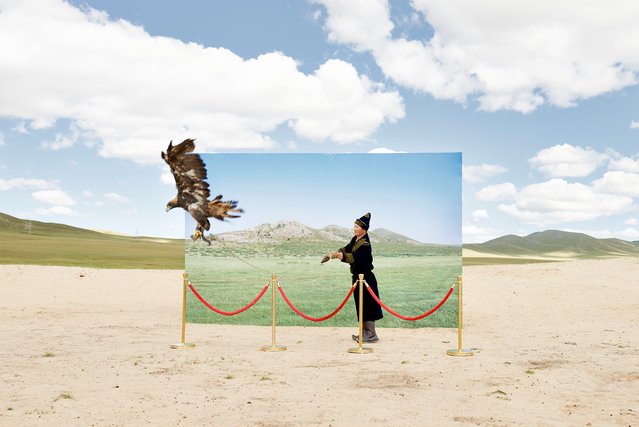
Up to 35% of Mongolians still live a nomadic life, depending on their land to survive. But environmental changes, particularly desertification, means this way of life is under threat. Korean photographer Daesung Lee’s Futuristic Archaeology images show billboard-size backdrops of lush steppe contrasting with actual scenery as former nomads enact scenes of hunting, herding and Mongolian wrestling. (Photo by Daesung Lee)

Up to 35% of Mongolians still live a nomadic life, depending on their land to survive. But environmental changes, particularly desertification, means this way of life is under threat. Korean photographer Daesung Lee’s Futuristic Archaeology images show billboard-size backdrops of lush steppe contrasting with actual scenery as former nomads enact scenes of hunting, herding and Mongolian wrestling. (Photo by Daesung Lee)
Details
24 Nov 2016 08:01:00
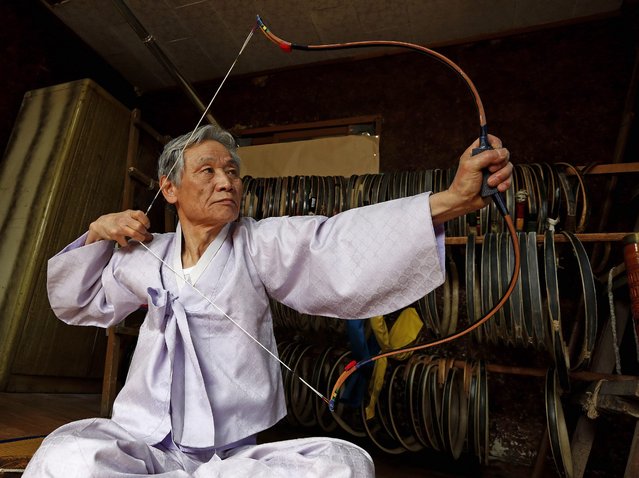
South Korean traditional bow artisan Kwon Yeong-Hak works on a bow in his workshop in Yecheon-gun, Gyeongsangbuk-do, South Korea, 26 February 2015. (Photo by Jeon Heon-Kyun/EPA)

South Korean traditional bow artisan Kwon Yeong-Hak works on a bow in his workshop in Yecheon-gun, Gyeongsangbuk-do, South Korea, 26 February 2015. Kwon Yeong-Hak still crafts his bows in the traditional way, carrying on a four-generation family business. The Gakgung bow, of which Kwon is one of the last remaining artisans, is unique to Korea, and is constructed with a variety of materials, including water buffalo horn, oak, bamboo and cattle spinal sinew. A ban on the import of water buffalo horns has put the Gakgung tradition at risk. (Photo by Jeon Heon-Kyun/EPA)
Details
24 Mar 2015 09:54:00