Turkey and Georgia fans clash before the Euro 2024 Group F match between Turkey and Georgia at the Dortmund BVB Stadion, Dortmund, Germany on June 18, 2024. (Photo by Wolfgang Rattay/Reuters)
A young USA fan smiles ahead of the 2019 Concacaf Gold Cup semifinal football match between USA and Jamaica on July 3, 2019 in Nashville, Tennessee. (Photo by Ricardo Arduengo/AFP Photo)
Madson of Santos reacts during the match between Santos and Palmeiras as part of Brasileirao Series A 2022 at Vila Belmiro Stadium on May 29, 2022 in Santos, Brazil. (Photo by Carla Carniel/Reuters)
A fan cheers during the African Cup of Nations Group F soccer match between DR Congo and Zambia in San Pedro, Ivory Coast, Wednesday, January 17, 2024. (Photo by Themba Hadebe/AP Photo)
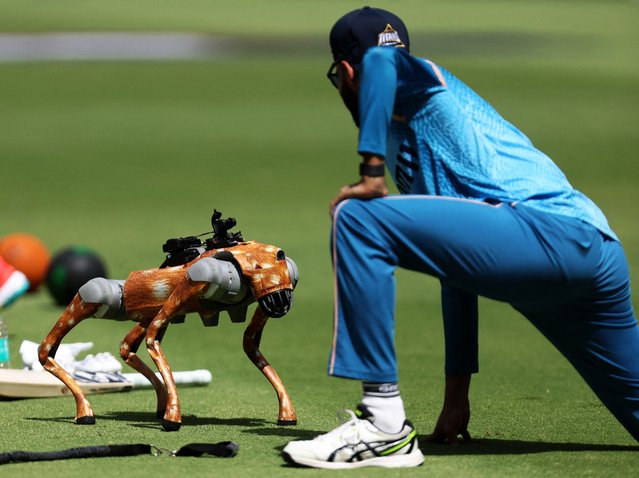
A robot dog is seen before the Gujarat Titans versus Delhi Capitals match in the Indian Premier League in Ahmedabad, India on April 19, 2025. (Photo by Amit Dave/Reuters)
Alex Neal-Bullen during an Adelaide Crows match against Port Adelaide Power at Adelaide Oval in Adelaide, Australia on July 26, 2025. (Photo by Matt Turner/AAP)
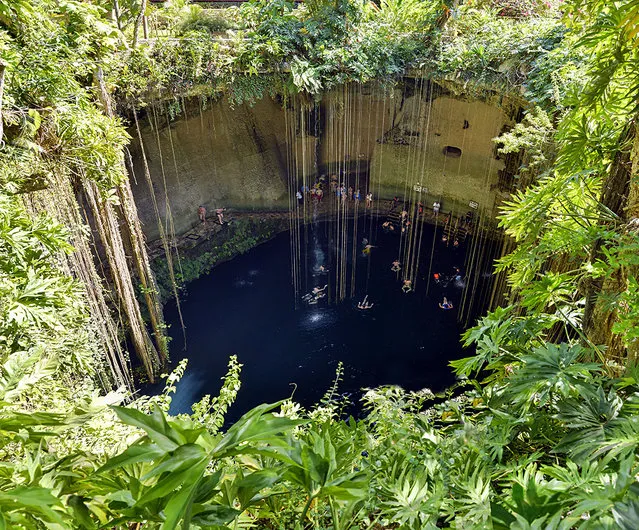
A cenote is a natural phenomenon, a sinkhole in the Earth’s surface. The Yucatan Peninsula in Mexico has an estimated 7,000 cenotes because it is primarily made up of porous limestone. For millions of years, rainfall slowly ate away at the limestone and a huge system of underground caves and caverns was formed. Many filled with water from rain or from the underground water table. When the roof of a water filled cave collapses, a cenote is born. The water found in a cenote may be fresh water, salt water, or both. Structurally it may be completely open, like a lake, almost completely closed with just a small opening at the top, or somewhere in between.