People celebrate the start of the New Year as fireworks illuminate Copacabana Beach in Rio de Janeiro, Brazil, early Monday, January 1, 2024. (Photo by Bruna Prado/AP Photo)
A member of the Grupa Magnifica acrobatics club poses for a photo on the Baltic Sea beach during sunset in the town of Leba, Pomeranian region, on August 6, 2024. (Photo by Sergei Gapon/AFP Photo)
A kite creation is flown and contested in conjunction with the 79th Independence Day of Indonesia at Mertasari beach in Sanur on Indonesia resort island of Bali on Ausgust 18, 2024. (Photo by Sonny Tumbelaka/AFP Photo)
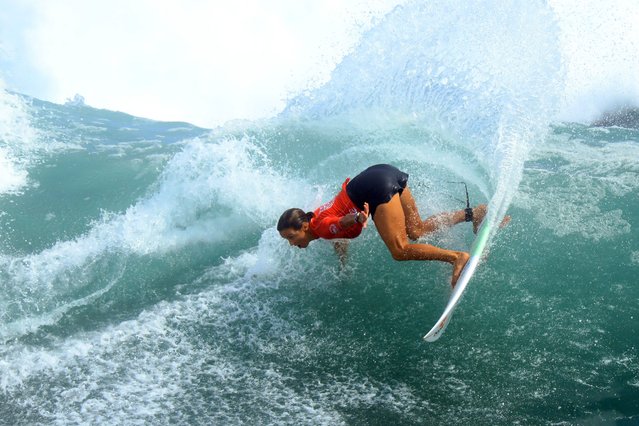
Australian surfer Sally Fitzgibbons rides a wave during the 2023 ISA World Surfing Games at the El Tunco beach in El Salvador on June 6, 2023. (Photo by Marvin Recinos/AFP Photo)
Members of the Coney Island Polar Bear Club warm up before swimming at the beach at Coney Island in New York, December 15, 2013. (Photo by Eric Thayer/Reuters)
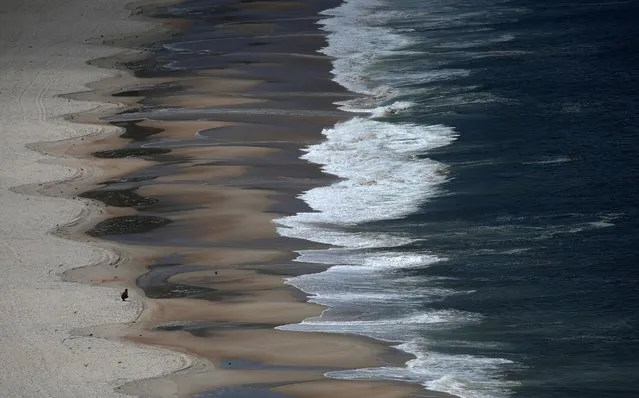
A general view of Copacabana beach during the coronavirus disease (COVID-19) outbreak in Rio de Janeiro, Brazil, March 22, 2020. (Photo by Ricardo Moraes/Reuters)
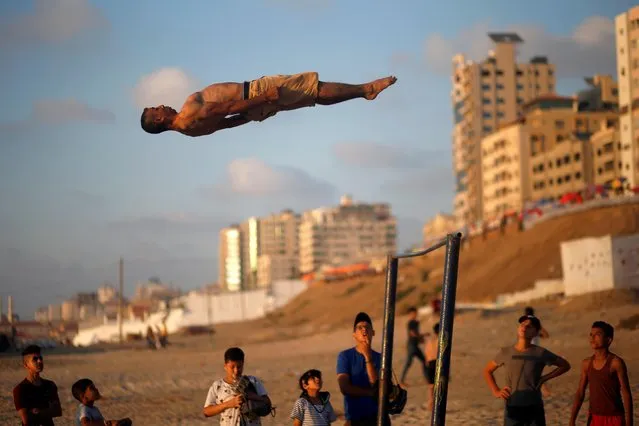
A Palestinian man demonstrates his parkour skills on a beach as the coronavirus disease (COVID-19) restrictions ease in Gaza City on July 10, 2020. (Photo by Mohammed Salem/Reuters)