Loading...
Done
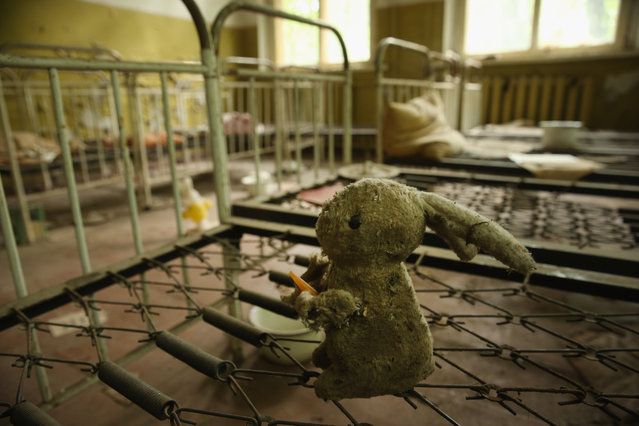
A stuffed rabbit doll sits among children's beds standing in the abandoned kindergarten of Kopachi village located inside the Chernobyl Exclusion Zone on September 29, 2015 near Chornobyl, Ukraine. Kopachi, a village that before 1986 had a population of 1,114, lies only a few kilometers south of the former Chernobyl nuclear power plant, where in 1986 workers inadvertantly caused reactor number four to explode, creating the worst nuclear accident in history. Radiation fallout was so high that authorities bulldozed and buried all of Kopachi's structures except for the kindergarten. (Photo by Sean Gallup/Getty Images)

A stuffed rabbit doll sits among children's beds standing in the abandoned kindergarten of Kopachi village located inside the Chernobyl Exclusion Zone on September 29, 2015 near Chornobyl, Ukraine. Kopachi, a village that before 1986 had a population of 1,114, lies only a few kilometers south of the former Chernobyl nuclear power plant, where in 1986 workers inadvertantly caused reactor number four to explode, creating the worst nuclear accident in history. (Photo by Sean Gallup/Getty Images)
Details
27 Apr 2016 09:28:00
A driverless vehicle runs at Vanke's Building Research Centre testing area in Dongguan, south China's Guangdong province November 2, 2015. The country's largest property developer, China Vanke, is investing in its own robots to do certain jobs in the face of a labor shortage in the world's most populated country. This driverless car is among the robots that Vanke is aiming to bring in. (Photo by Tyrone Siu/Reuters)

A driverless vehicle runs at Vanke's Building Research Centre testing area in Dongguan, south China's Guangdong province November 2, 2015. The country's largest property developer, China Vanke, is investing in its own robots to do certain jobs in the face of a labor shortage in the world's most populated country. This driverless car is among the robots that Vanke is aiming to bring in. (Photo by Tyrone Siu/Reuters)
Details
10 Nov 2015 08:01:00
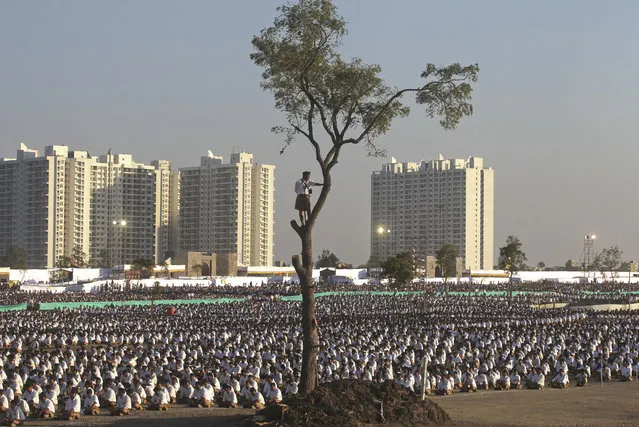
A member of the Hindu nationalist Rashtriya Swayamsevak Sangh (RSS) or the National Volunteers Association keeps watch from the top of a tree as others sit on the ground during their daylong camp on the outskirts of Pune, Maharashtra state, India, Sunday, January 3, 2016. Hindus, make up more than 80 percent of India's population of 1.25 billion. (Photo by Rafiq Maqbool/AP Photo)

A member of the Hindu nationalist Rashtriya Swayamsevak Sangh (RSS) or the National Volunteers Association keeps watch from the top of a tree as others sit on the ground during their daylong camp on the outskirts of Pune, Maharashtra state, India, Sunday, January 3, 2016. Hindus, make up more than 80 percent of India's population of 1.25 billion. (Photo by Rafiq Maqbool/AP Photo)
Details
05 Jan 2016 08:02:00
Isabel Schmalenbach, an environmental scientist with the Helgoland Biological Institute (Biologische Anstalt Helgoland), part of the Alfred Wegener Institute for Polar and Marine Research, holds a one-year old baby European lobster (Homarus gammarus) raised at the institute on August 3, 2013 on Helgoland Island, Germany. (Photo by Sean Gallup/Getty Images)

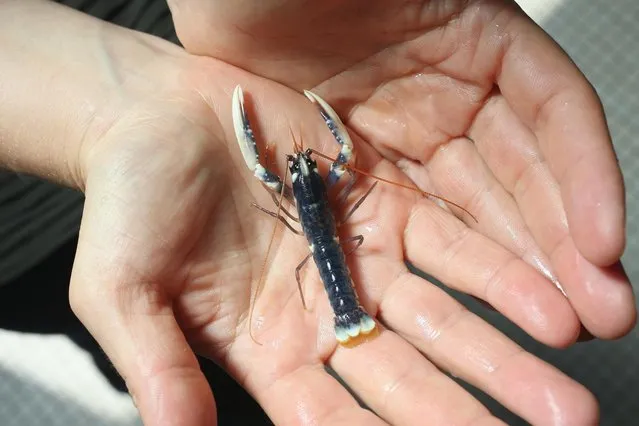
Isabel Schmalenbach, an environmental scientist with the Helgoland Biological Institute (Biologische Anstalt Helgoland), part of the Alfred Wegener Institute for Polar and Marine Research, holds a one-year old baby European lobster (Homarus gammarus) raised at the institute on August 3, 2013 on Helgoland Island, Germany. Later in the day Schmalenbach and her colleagues released a total of 415 one-year old lobsters into the North Sea as part of an effort to repopulate the lobster population around Helgoland (also called Heligoland). In the 19th century local fishermen caught up to 80,000 lobsters a year in the surrounding waters, combined with the heavy allied bombing of the island during and after World War II, as well as other environmental factors, decimated the lobster population. (Photo by Sean Gallup)
Details
05 Aug 2013 08:39:00
Asia, Mongolia, March 27, 2011. A view of Ulaan Baator over the shoulder of a slumbering drunk. Alcoholism is a huge problem in the city, home to almost half of Mongolia's people. The capital's population has doubled in the past two years, expanding outward in a haphazard sprawl, and many inhabitants live in slums known as the “Gher District”. (Photo by Alessandro Grassani)

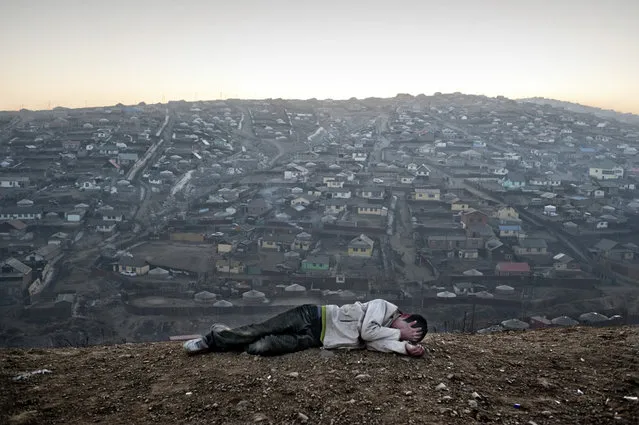
“Environmental Migrants: The Last Illusion” by photographer Alessandro Grassani, documents the life of people in Kenya, Mongolia and Bangladesh who migrate to escape environmental stresses to the city of their own countries in hopes for a better life. Here: Asia, Mongolia, March 27, 2011. A view of Ulaan Baator over the shoulder of a slumbering drunk. Alcoholism is a huge problem in the city, home to almost half of Mongolia's people. The capital's population has doubled in the past two years. High levels of unemployment and poverty await herders who abandon rural areas and arrive in the city, illiterate and untrained in any skills necessary for urban jobs. (Photo by Alessandro Grassani)
Details
21 Jul 2015 10:10:00
The maned wolf is among the large mammals in the Brazilian Cerrado that are threatened by the increasing conversion of grasslands into farmland for grazing and growing crops. (Photo by Ben Cranke/Nature Picture Library/Alamy Stock Photo)

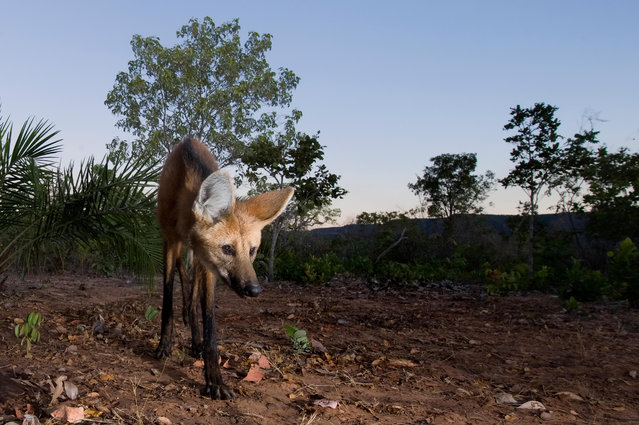
Global wildlife populations will decline by 67% by 2020 unless urgent action is taken to reduce human impact on species and ecosystems, warns the biennial Living Planet Index report from WWF (World Wide Fund for Nature) and ZSL (Zoological Society of London). From elephants to eels, here are some of the wildlife populations most affected by human activity. Here: The maned wolf is among the large mammals in the Brazilian Cerrado that are threatened by the increasing conversion of grasslands into farmland for grazing and growing crops. (Photo by Ben Cranke/Nature Picture Library/Alamy Stock Photo)
Details
28 Oct 2016 10:47:00
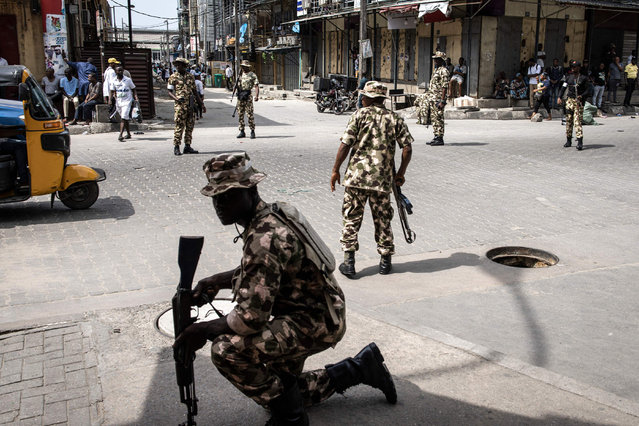
Soldiers from the Nigerian Armed Forces take position and secure the streets in Lagos Island, Lagos, on February 27, 2023, after hoodlums had harassed market owners. Nigeria slowly counted more results on Monday after a tight election for the presidency of Africa's most populous nation as delays and accusations of manipulation fuelled tensions Nearly 90 million were eligible to vote on Saturday for a successor to President Muhammadu Buhari, with many hoping for a new leader to tackle insecurity, economic malaise and widening poverty. (Photo by John Wessels/AFP Photo)

Soldiers from the Nigerian Armed Forces take position and secure the streets in Lagos Island, Lagos, on February 27, 2023, after hoodlums had harassed market owners. Nigeria slowly counted more results on Monday after a tight election for the presidency of Africa's most populous nation as delays and accusations of manipulation fuelled tensions Nearly 90 million were eligible to vote on Saturday for a successor to President Muhammadu Buhari, with many hoping for a new leader to tackle insecurity, economic malaise and widening poverty. (Photo by John Wessels/AFP Photo)
Details
03 Mar 2023 03:14:00
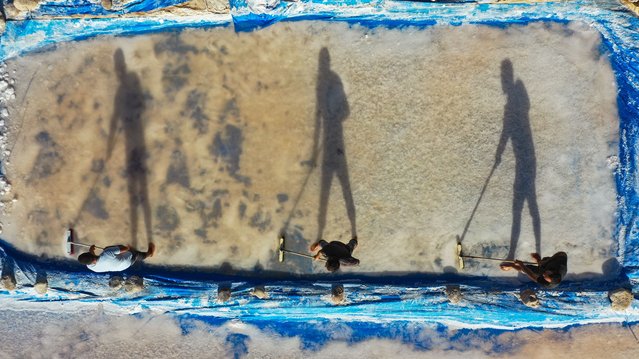
An aerial view of rock salt collection pool made of tarpaulin, where rock salt is obtained by collecting the natural spring water in the mountains and evaporating the water, in Kozluk District of Batman, Turkiye on August 22, 2022. The production of rock salt, passed down from generation to generation, became the sole source of income for 45 households in the village of Derince, with a population of about 400 of Batman. (Photo by Omer Yasin Ergin/Anadolu Agency via Getty Images)

An aerial view of rock salt collection pool made of tarpaulin, where rock salt is obtained by collecting the natural spring water in the mountains and evaporating the water, in Kozluk District of Batman, Turkiye on August 22, 2022. The production of rock salt, passed down from generation to generation, became the sole source of income for 45 households in the village of Derince, with a population of about 400 of Batman. (Photo by Omer Yasin Ergin/Anadolu Agency via Getty Images)
Details
18 Mar 2023 04:24:00