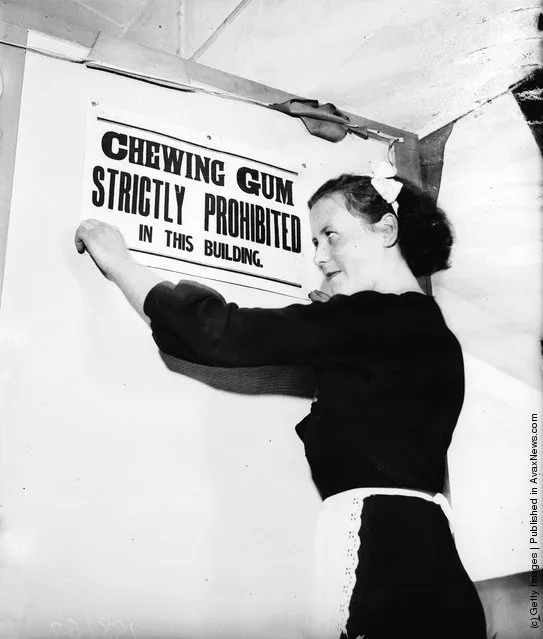
A Penarth dance hall has banned chewing gum on the premises because dancers have complained that their feet keep sticking to the floor. (Photo by Richards/Fox Photos/Getty Images). 16th July 1936
The team from France performs their Free Routine during the Synchronized Swimming Olympic Games Qualification Tournament at the Maria Lenk Aquatics Center in Rio de Janeiro, Brazil on March 6, 2016. The tournament is also a test event for the Rio 2016 Olympics. (Photo by Sergio Moraes/Reuters)
A follower of the Afro-Brazilian religion Umbanda pays tribute for Iemanja, goddess of the sea, in Copacabana Beach in Rio de Janeiro, Brazil December 29, 2017. Hundreds of practitioners of Brazil's Afro-Brazilian Candomble and Umbanda faiths have gathered at Rio de Janeiro's Copacabana beach to honor Yemanja. Worshippers were mostly dressed in white as they launched their offerings to Iemanja: small boats with flowers and bowls with candles and fruits. (Photo by Ricardo Moraes/Reuters)
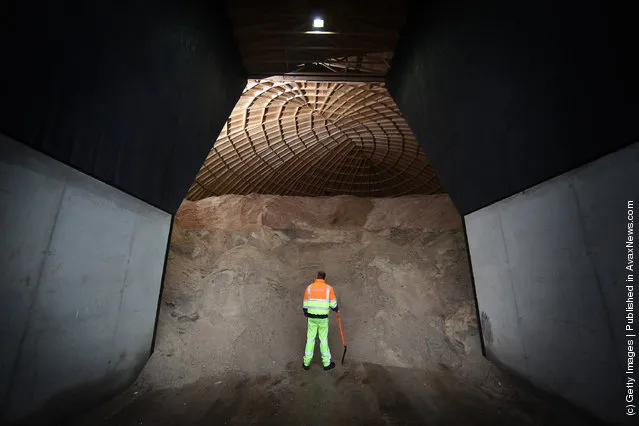
Route engineer Richard Winter stands in front of a pile of road salt at the Birchanger Depot on November 8, 2011 near Bishop's Stortford, England. (Photo by Peter Macdiarmid/Getty Images)
A Guarani boy pets a puppy in the Mata Verde Bonita village, in Marica, Rio de Janeiro state, Brazil, Thursday, February 25, 2020, where healthcare workers are making the rounds with coolers containing doses of China's Sinovac COVID-19 vaccine as part of a mass immunization program aimed at inoculating all of Rio's 16 million residents by the end of the year. (Photo by Bruna Prado/AP Photo)
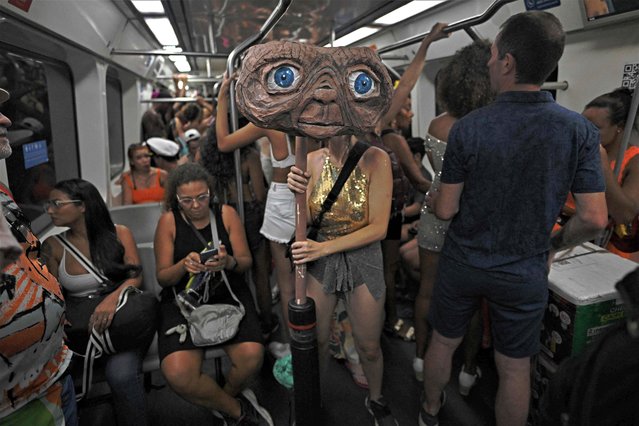
Carnival revellers take the metro in Rio de Janeiro, Brazil on February 19, 2023. Shaking the ground to the beat of their drums, Rio de Janeiro's famed carnival parades returned Sunday in a swirl of glitter, sequins and samba, the festival's first full-on edition since Covid-19 and Brazil's bitterly divisive elections. (Photo by Carl de Souza/AFP Photo)
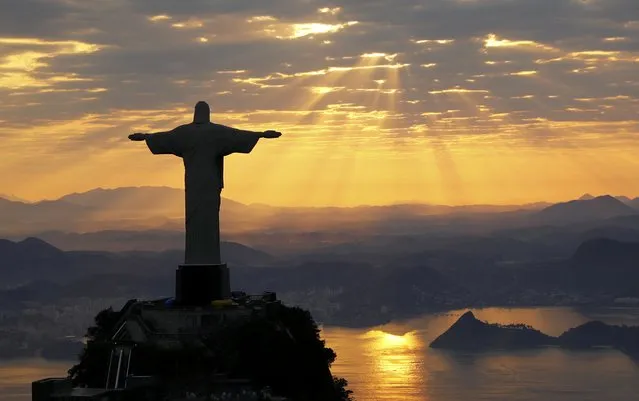
Jesus Christ The Redeemer is seen during sunrise in Rio de Janeiro, Brazil August 2, 2016. Christ the Redeemer is an Art Deco statue of Jesus Christ in Rio de Janeiro, Brazil, created by Polish-French sculptor Paul Landowski and built by the Brazilian engineer Heitor da Silva Costa, in collaboration with the French engineer Albert Caquot. The face was created by the Romanian artist Gheorghe Leonida1. (Photo by Kai Pfaffenbach/Reuters)
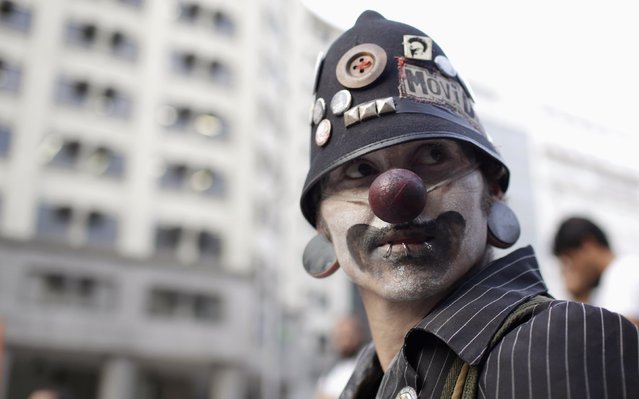
A demonstrator attends a protest against fare hikes for city buses in Rio de Janeiro January 16, 2015. Amid a marked economic downturn and high inflation, bus fares went up in Sao Paulo, Brazil's largest city, from 3 to 3.50 reais, and in Rio, the former capital, from 3.0 to 3.40 reais. (Photo by Mauro Pimentel/Reuters)