Loading...
Done
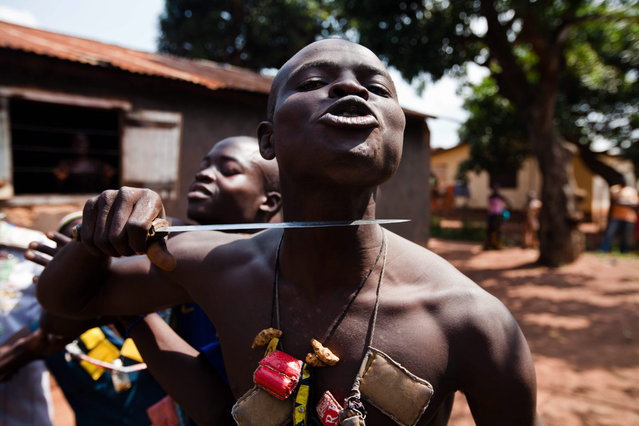
An Anti-Balaka fighter, member of a militia opposed to the Seleka rebel group, puts a knife to his throat showing what he would do to any Seleka, on the outskirts of the Boy-Rabe neighborhood in Bangui on December 14, 2013. France raised alarm on December 13 over worsening violence in the Central African Republic, as UN chief Ban Ki-moon urged warring Christians and Muslims to stop the bloodshed that has left more than 600 dead in the past week. (Photo by Ivan Lieman/AFP Photo)

An Anti-Balaka fighter, member of a militia opposed to the Seleka rebel group, puts a knife to his throat showing what he would do to any Seleka, on the outskirts of the Boy-Rabe neighborhood in Bangui on December 14, 2013. France raised alarm on December 13 over worsening violence in the Central African Republic, as UN chief Ban Ki-moon urged warring Christians and Muslims to stop the bloodshed that has left more than 600 dead in the past week. (Photo by Ivan Lieman/AFP Photo)
Details
18 Dec 2013 10:36:00
Merit: A Night at Deadvlei. The night before returning to Windhoek, we spent several hours at Deadveli. The moon was bright enough to illuminate the sand dunes in the distance, but the skies were still dark enough to clearly see the milky way and magellanic clouds. Deadveli means “dead marsh. (Photo and caption by Beth McCarley/National Geographic Traveler Photo Contest)

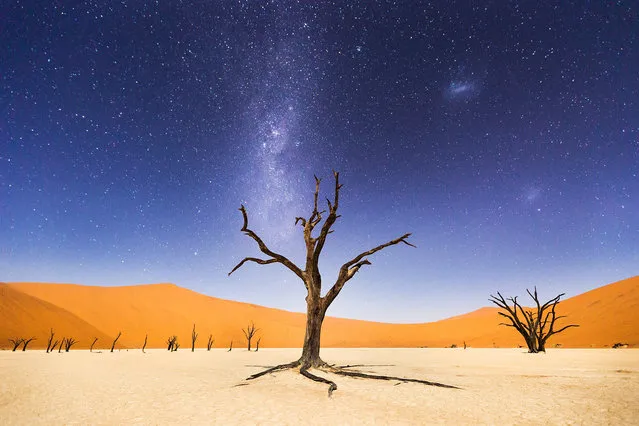
Merit: A Night at Deadvlei. The night before returning to Windhoek, we spent several hours at Deadveli. The moon was bright enough to illuminate the sand dunes in the distance, but the skies were still dark enough to clearly see the milky way and magellanic clouds. Deadveli means “dead marsh. The camelthorn trees are believed to be about 900 years old, but have not decomposed because the environment is so dry. (Photo and caption by Beth McCarley/National Geographic Traveler Photo Contest)
Details
04 Aug 2015 11:50:00
An Indian labourer sifts coloured powder, known as “gulal”, to be used during the forthcoming spring festival of Holi, inside a factory at Fulbari village on the outskirts of Siliguri on March 6, 2017. Holi, the popular Hindu spring festival of colours is observed in India at the end of the winter season on the last full moon of the lunar month, and will be celebrated on March 13 this year. (Photo by Diptendu Dutta/AFP Photo)

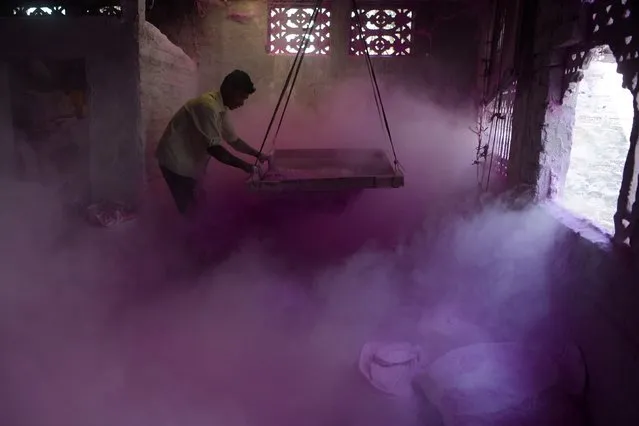
An Indian labourer sifts coloured powder, known as “gulal”, to be used during the forthcoming spring festival of Holi, inside a factory at Fulbari village on the outskirts of Siliguri on March 6, 2017. Holi, the popular Hindu spring festival of colours is observed in India at the end of the winter season on the last full moon of the lunar month, and will be celebrated on March 13 this year. (Photo by Diptendu Dutta/AFP Photo)
Details
08 Mar 2017 00:04:00
A Nepalese army solder stand next to a horse during the “Ghodejatra” Horse Race festival, which is organised by the Nepal Army, in Kathmandu, Nepal, April 7, 2016. Ghode Jatra, the horse racing festival of Nepal, celebrated on the New Moon day of mid March or early April is among the important celebrations of the Kathmandu Valley. exists a tree in the South-East part of the Tundikhel where Gurumapa supposed to be resides. (Photo by Navesh Chitrakar/Reuters)

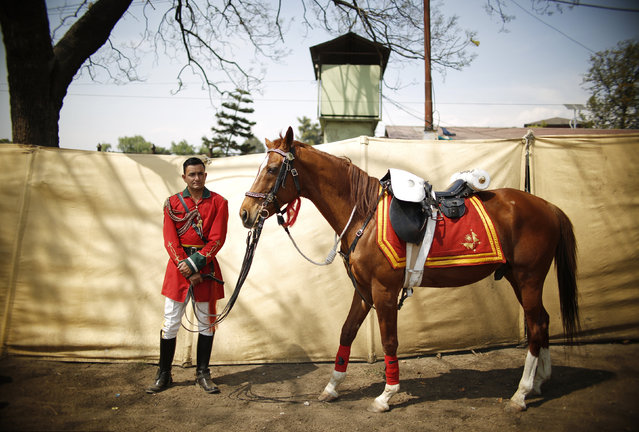
A Nepalese army solder stand next to a horse during the “Ghodejatra” Horse Race festival, which is organised by the Nepal Army, in Kathmandu, Nepal, April 7, 2016. Ghode Jatra, the horse racing festival of Nepal, celebrated on the New Moon day of mid March or early April is among the important celebrations of the Kathmandu Valley. Grand horse parade including various acrobatic style of shows are performed by Nepal military at Tundikhel-a fenced parade ground located in the heart of Kathmandu city. (Photo by Navesh Chitrakar/Reuters)
Details
08 Apr 2016 14:33:00
In this Wednesday, July 23, 2014 file photo, Omaha photographer Lane Hickenbottom photographs the night sky in a pasture near Callaway, Neb. With no moon in the sky, the Milky Way was visible to the naked eye. More than one-third of the world’s population can no longer see the Milky Way because of man-made lights, according to a scientific paper by Light Pollution Science and Technology Institute's Fabio Falchi and his team members, published on Friday, June 10, 2016. (Photo by Travis Heying/The Wichita Eagle via AP Photo)

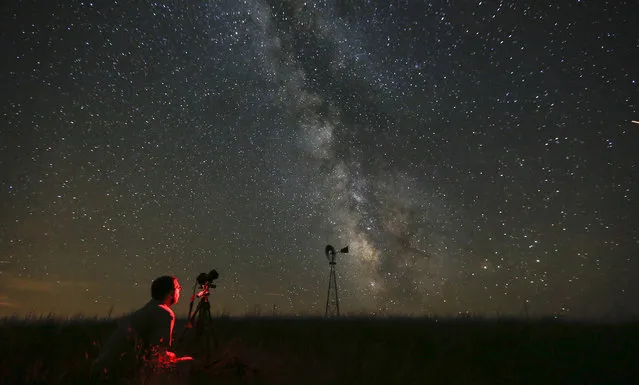
In this Wednesday, July 23, 2014 file photo, Omaha photographer Lane Hickenbottom photographs the night sky in a pasture near Callaway, Neb. With no moon in the sky, the Milky Way was visible to the naked eye. More than one-third of the world’s population can no longer see the Milky Way because of man-made lights, according to a scientific paper by Light Pollution Science and Technology Institute's Fabio Falchi and his team members, published on Friday, June 10, 2016. (Photo by Travis Heying/The Wichita Eagle via AP Photo)
Details
11 Jun 2016 12:37:00
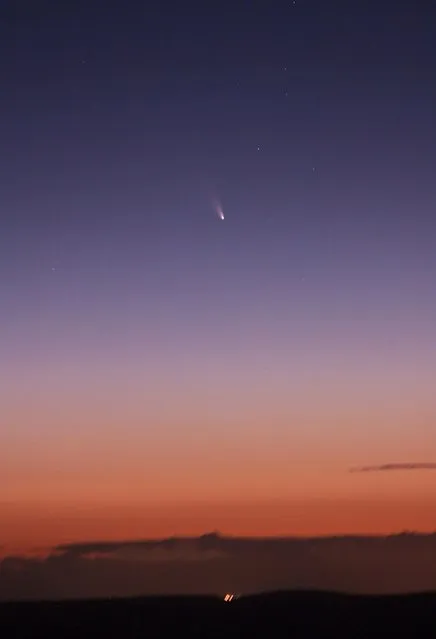
This image provided by NASA shoaws the comet PANSTARRS as seen from Mount Dale, Western Australia on March 5, 2013. According to NASA on March 10, it will make its closest approach to the sun about 28 million miles (45 million kilometers) away. As it continues its nightly trek across the sky, the comet may get lost in the sun's glare but should return and be visible to the naked eye by March 12. (Photo by AP Photo/NASA)

It’s time to start watching for Comet PANSTARRS, one of two comets to get excited about in 2013. Photo: This image provided by NASA shoaws the comet PANSTARRS as seen from Mount Dale, Western Australia on March 5, 2013. According to NASA on March 10, it will make its closest approach to the sun about 28 million miles (45 million kilometers) away. As it continues its nightly trek across the sky, the comet may get lost in the sun's glare but should return and be visible to the naked eye by March 12. (Photo by AP Photo/NASA)
Details
13 Mar 2013 08:03:00
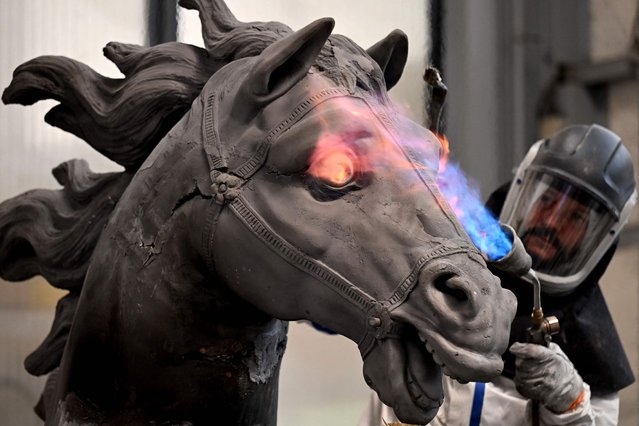
A worker restores the lead of one of the sculptures forming the Apollo's Chariot Fountain by Jean-Baptiste Tuby depicting Louis XIV, the god of the sun, driving his four-horse chariot full pelt, symbolising the ascent of the rising sun, at The Coubertin Foundry in Saint-Remy-les-Chevreuse, southwestern Paris, on July 10, 2023. This 18-month project will involve a wide range of skills and will enable the rebirth of this fountain at the Versailles' castle. (Photo by Emmanuel Dunand/AFP Photo)

A worker restores the lead of one of the sculptures forming the Apollo's Chariot Fountain by Jean-Baptiste Tuby depicting Louis XIV, the god of the sun, driving his four-horse chariot full pelt, symbolising the ascent of the rising sun, at The Coubertin Foundry in Saint-Remy-les-Chevreuse, southwestern Paris, on July 10, 2023. This 18-month project will involve a wide range of skills and will enable the rebirth of this fountain at the Versailles' castle. (Photo by Emmanuel Dunand/AFP Photo)
Details
10 Aug 2023 04:29:00
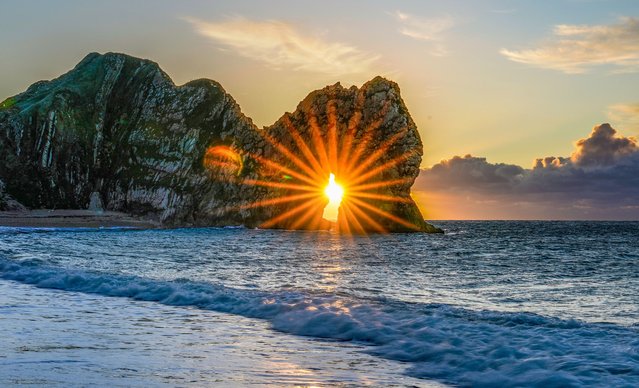
The calm before storm Bert, with the sunrise on November 22, 2024 through Durdle Door in Dorset, UK, the sun beams through the famous rock arch on the Jurassic Coastline, a shot known as “Through the Keyhole”. It only happens from the end of November to early January and not that often as clear skies are needed on the horizon for the sun to shine through. (Photo by Steve Hogan/Picture Exclusive)

The calm before storm Bert, with the sunrise on November 22, 2024 through Durdle Door in Dorset, UK, the sun beams through the famous rock arch on the Jurassic Coastline, a shot known as “Through the Keyhole”. It only happens from the end of November to early January and not that often as clear skies are needed on the horizon for the sun to shine through. (Photo by Steve Hogan/Picture Exclusive)
Details
14 Jan 2025 05:39:00