Cardi B accepts the top rap song award for “I Like It” at the Billboard Music Awards on Wednesday, May 1, 2019, at the MGM Grand Garden Arena in Las Vegas. (Photo by Chris Pizzello/Invision/AP Photo)
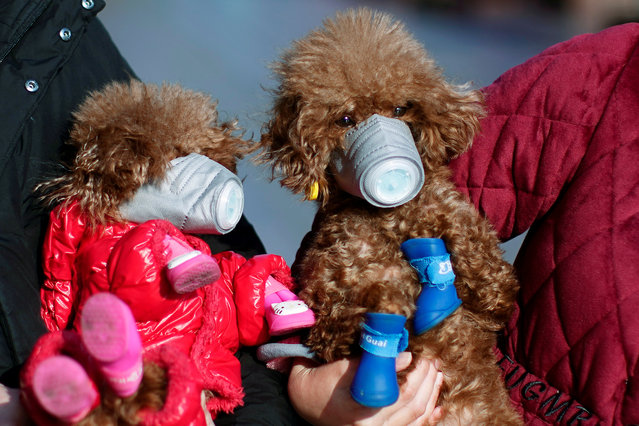
Dogs wearing masks are seen at a main shopping area, in downtown Shanghai, China, as the country is hit by an outbreak of a new coronavirus, February 16, 2020. (Photo by Aly Song/Reuters)
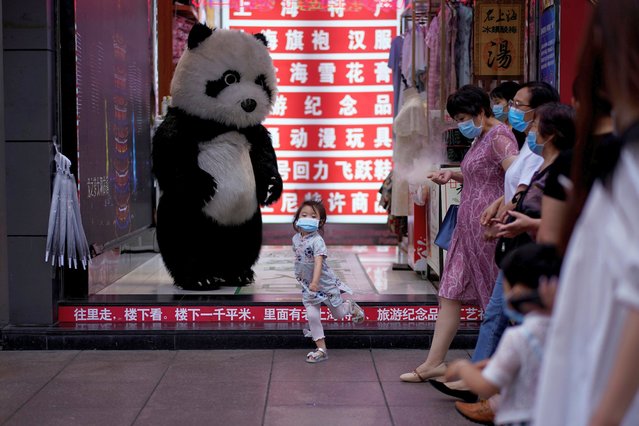
A little girl wearing a face mask dances in front of a toy panda at a shopping area in Shanghai, following the coronavirus disease (COVID-19) outbreak, China on June 16, 2020. (Photo by Aly Song/Reuters)
A staff member, wearing a face mask following the coronavirus disease (COVID-19) outbreak, looks at a robot at the venue for the World Artificial Intelligence Conference (WAIC) in Shanghai, China on July 9, 2020. (Photo by Aly Song/Reuters)
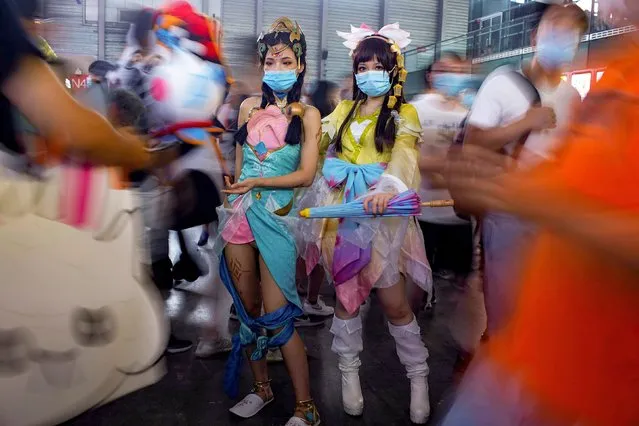
Cosplayers wearing face masks pose for a picture at the China Digital Entertainment Expo and Conference (ChinaJoy) in Shanghai, following the coronavirus disease (COVID-19) outbreak, China on July 31, 2020. (Photo by Aly Song/Reuters)
Moroccan athlete Soufiane El Bakkali participates in the men's 3000m steeplechase final at the Xiamen Diamond League in China on September 2, 2023. (Photo by Aly Song/Reuters)
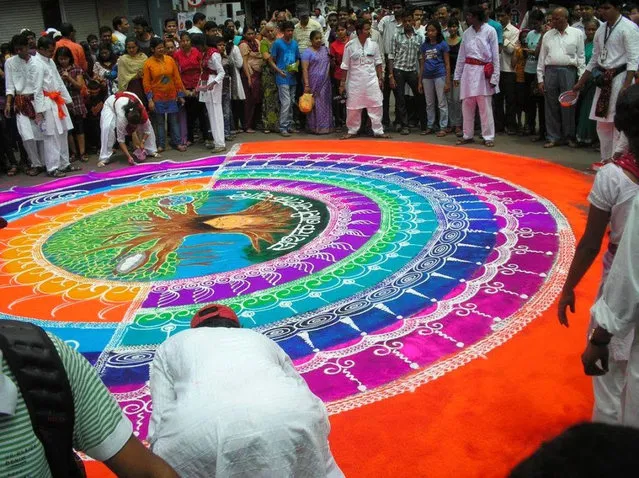
Rangoli, also known as kolam or Muggu, is a folk art from India in which patterns are created on the floor in living rooms or courtyards using materials such as colored rice, dry flour, colored sand or flower petals. It is usually made during Diwali, Onam, Pongal and other Indian festivals. They are meant to be sacred welcoming areas for the Hindu deities. The ancient symbols have been passed down through the ages, from each generation to the next, keeping both the art form and the tradition alive. Similar practices are followed in different Indian states: in Tamil Nadu, there is Kolam in Tamil Nadu; Mandana in Rajasthan; Chaookpurna in Chhattisgarh; Alpana in West Bengal; Aripana in Bihar; Chowk pujan in Uttar Pradesh; Muggu in Andhra Pradesh and others.