Loading...
Done
Free for Editorial Use Ballerinas from The Royal Ballet School perform on December 2, 2025 under Covent Garden's first festive snowfall to launch the destination's daily December snow flurries. (Photo by Paul Grover/Covent Garden)

Free for Editorial Use Ballerinas from The Royal Ballet School perform on December 2, 2025 under Covent Garden's first festive snowfall to launch the destination's daily December snow flurries. (Photo by Paul Grover/Covent Garden)
Details
21 Dec 2025 10:12:00
Renowned aerobatic pilots Sean D. Tucker, flying the Oracle Challenger III, and Jeff Boerboon, flying the Jack Link's Screamin' Sasquatch, take to the skies over EAA's 2015 AirVenture Oshkosh, on Monday, July 20, 2015 in Oshkosh, Wis. (Photo by Matt Ludtke/AP Images for Jack Link's)

Renowned aerobatic pilots Sean D. Tucker, flying the Oracle Challenger III, and Jeff Boerboon, flying the Jack Link's Screamin' Sasquatch, take to the skies over EAA's 2015 AirVenture Oshkosh, on Monday, July 20, 2015 in Oshkosh, Wis. (Photo by Matt Ludtke/AP Images for Jack Link's)
Details
31 Aug 2015 12:04:00
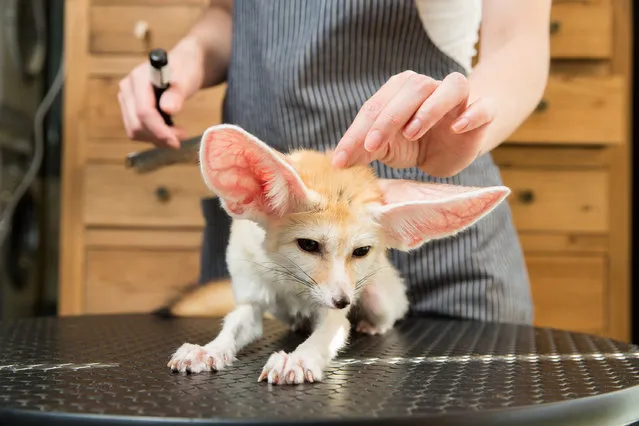
A fennec fox (Vulpes zerda) is groomed in a pet store in central Beijing. Native to the Sahara in North Africa, the species became a popular pet after being depicted as a character in Disney’s 2016 animated movie Zootopia. Individuals can cost between $2,000–$3,000. (Photo by Sean Gallagher/The Guardian)

A dramatic rise in owning exotic pets in China is fuelling global demand for threatened species. The growing trade in alligators, snakes, monkeys, crocodiles and spiders is directly linked to species loss in some of the world’s most threatened ecosystems. Here: A fennec fox (Vulpes zerda) is groomed in a pet store in central Beijing. Native to the Sahara in North Africa, the species became a popular pet after being depicted as a character in Disney’s 2016 animated movie Zootopia. Individuals can cost between $2,000–$3,000. (Photo by Sean Gallagher/The Guardian)
Details
23 Sep 2017 08:04:00
Isabel Schmalenbach, an environmental scientist with the Helgoland Biological Institute (Biologische Anstalt Helgoland), part of the Alfred Wegener Institute for Polar and Marine Research, holds a one-year old baby European lobster (Homarus gammarus) raised at the institute on August 3, 2013 on Helgoland Island, Germany. (Photo by Sean Gallup/Getty Images)

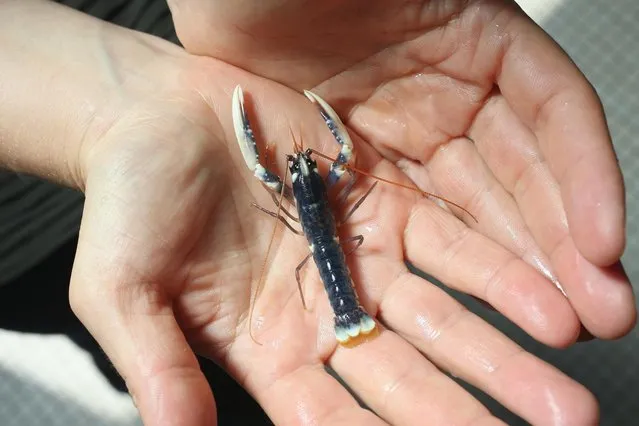
Isabel Schmalenbach, an environmental scientist with the Helgoland Biological Institute (Biologische Anstalt Helgoland), part of the Alfred Wegener Institute for Polar and Marine Research, holds a one-year old baby European lobster (Homarus gammarus) raised at the institute on August 3, 2013 on Helgoland Island, Germany. Later in the day Schmalenbach and her colleagues released a total of 415 one-year old lobsters into the North Sea as part of an effort to repopulate the lobster population around Helgoland (also called Heligoland). In the 19th century local fishermen caught up to 80,000 lobsters a year in the surrounding waters, combined with the heavy allied bombing of the island during and after World War II, as well as other environmental factors, decimated the lobster population. (Photo by Sean Gallup)

Details
05 Aug 2013 08:39:00
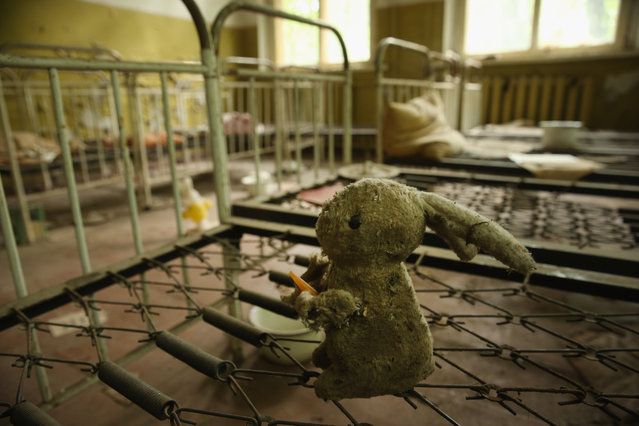
A stuffed rabbit doll sits among children's beds standing in the abandoned kindergarten of Kopachi village located inside the Chernobyl Exclusion Zone on September 29, 2015 near Chornobyl, Ukraine. Kopachi, a village that before 1986 had a population of 1,114, lies only a few kilometers south of the former Chernobyl nuclear power plant, where in 1986 workers inadvertantly caused reactor number four to explode, creating the worst nuclear accident in history. Radiation fallout was so high that authorities bulldozed and buried all of Kopachi's structures except for the kindergarten. (Photo by Sean Gallup/Getty Images)

A stuffed rabbit doll sits among children's beds standing in the abandoned kindergarten of Kopachi village located inside the Chernobyl Exclusion Zone on September 29, 2015 near Chornobyl, Ukraine. Kopachi, a village that before 1986 had a population of 1,114, lies only a few kilometers south of the former Chernobyl nuclear power plant, where in 1986 workers inadvertantly caused reactor number four to explode, creating the worst nuclear accident in history. (Photo by Sean Gallup/Getty Images)
Details
27 Apr 2016 09:28:00
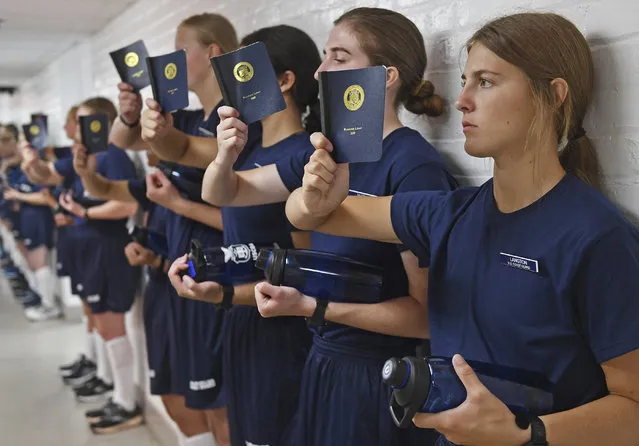
Swab Cadet Langton reads the Running Light guidebook as members of the US Coast Guard academy class of 2026 report for the first day of Swab Summer, a seven-week training programme designed to transform civilian students into military members, in Connecticut on June 27, 2022. The Swabs, as the new cadets are called, cycle through haircuts, uniform issue, drill practice and various administrative in-processing over the course of the day. (Photo by Sean D. Elliot/AP Photo)

Swab Cadet Langton reads the Running Light guidebook as members of the US Coast Guard academy class of 2026 report for the first day of Swab Summer, a seven-week training programme designed to transform civilian students into military members, in Connecticut on June 27, 2022. The Swabs, as the new cadets are called, cycle through haircuts, uniform issue, drill practice and various administrative in-processing over the course of the day. (Photo by Sean D. Elliot/AP Photo)
Details
06 Jul 2022 05:55:00
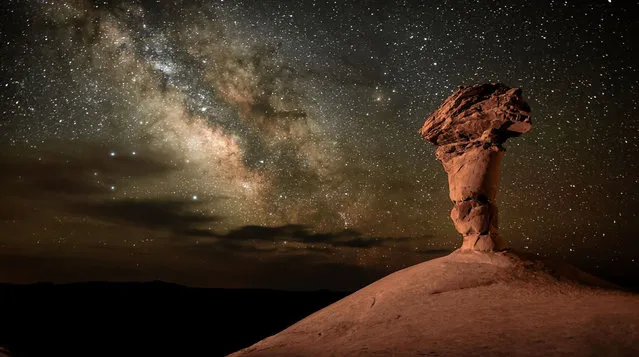
These stunning photos act as postcards for one photographer, who has traveled all over the globe, braving freezing temperatures to create the ultimate time lapse video. Photographer Dustin Farrell, 36, spent four years perfecting his technique and traveling all over the world in his quest to capture the most beautiful time lapses of nature. (Photo by Dustin Farrell/Caters News)

These stunning photos act as postcards for one photographer, who has traveled all over the globe, braving freezing temperatures to create the ultimate time lapse video. Photographer Dustin Farrell, 36, spent four years perfecting his technique and traveling all over the world in his quest to capture the most beautiful time lapses of nature. (Photo by Dustin Farrell/Caters News)
Details
30 Dec 2014 11:51:00
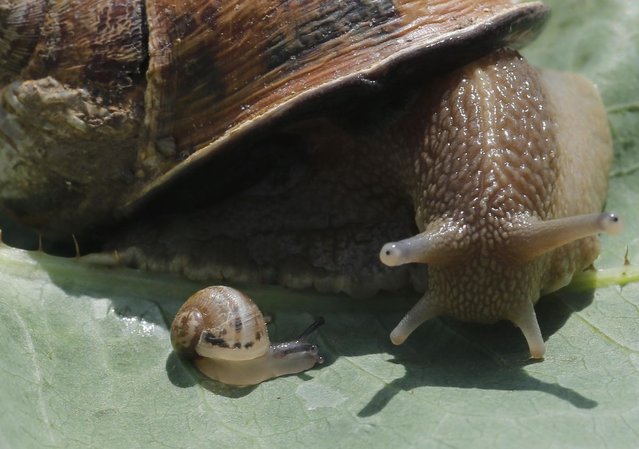
A snail (Helix Aspersa) and a baby snail sit on a leave in a farm in Vienna June 12, 2013. Andreas Gugumuck owns Vienna's largest snail farm, exporting snails, snail-caviar and snail-liver all over the world. The gourmet snails are processed using old traditional cooking techniques and some are sold locally to Austrian gourmet restaurants. (Photo by Leonhard Foeger/Reuters)

A snail (Helix Aspersa) and a baby snail sit on a leave in a farm in Vienna June 12, 2013. Andreas Gugumuck owns Vienna's largest snail farm, exporting snails, snail-caviar and snail-liver all over the world. The gourmet snails are processed using old traditional cooking techniques and some are sold locally to Austrian gourmet restaurants. (Photo by Leonhard Foeger/Reuters)
Details
31 Jul 2013 07:19:00