Loading...
Done
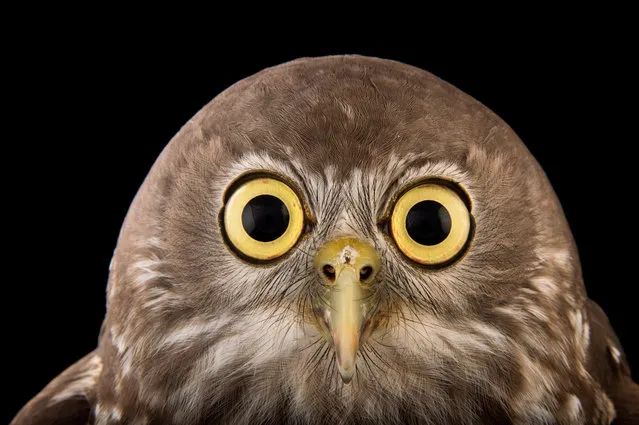
The National Geographic Photo Ark is a travelling exhibition of photographer Joel Sartore’s quest to create a photo archive of biodiversity around the world. So far, Sartore has captured studio portraits of more than 6,000 species – a number that he hopes to double. On 1 July, the ark will open at Melbourne zoo – the first time it has been exhibited in the southern hemisphere. More than 50 portraits will be on display, including many of Australian endangered animals being protected by programs at the zoo itself. These captions have been edited from text supplied by Melbourne zoo. Here: Barking owl. So-named because its call sounds like a barking dog, these birds are native to Australia, Indonesia and Papua New Guinea. In Victoria they are listed as an endangered species, and in 2003 there were estimated to be fewer than 50 breeding pairs. The main threat to the species in Victoria is loss of habitat, especially large trees with hollows in which they can nest and on which many of their prey depend. Apart from a bark, they may utter a chilling scream when they feel threatened. (Photo by Joel Sartore/National Geographic Photo Ark/The Guardian)

The National Geographic Photo Ark is a travelling exhibition of photographer Joel Sartore’s quest to create a photo archive of biodiversity around the world. So far, Sartore has captured studio portraits of more than 6,000 species – a number that he hopes to double. On 1 July, the ark will open at Melbourne zoo – the first time it has been exhibited in the southern hemisphere. More than 50 portraits will be on display, including many of Australian endangered animals being protected by programs at the zoo itself. These captions have been edited from text supplied by Melbourne zoo. Here: Barking owl. (Photo by Joel Sartore/National Geographic Photo Ark/The Guardian)
Details
01 Jul 2017 07:45:00
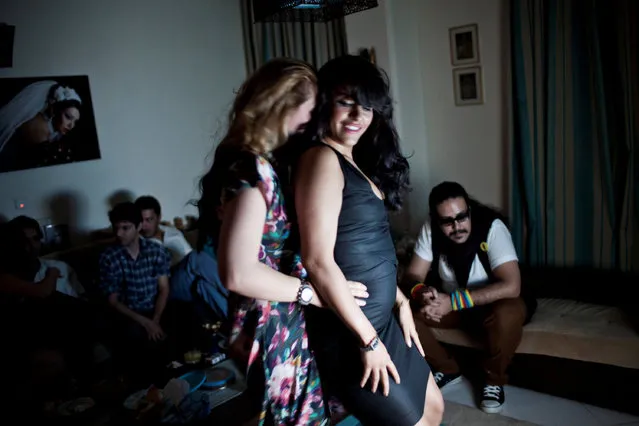
Two young women, having enjoyed a drink at a party, dance together in Tehran, Iran. Although unrelated men and women are forbidden to socialise together many people ignore these strictures in the privacy of their own homes. (Photo by Hossein Fatemi/Reuters/Panos Pictures/Courtesy of World Press Photo Foundation)

Two young women, having enjoyed a drink at a party, dance together in Tehran, Iran. Although unrelated men and women are forbidden to socialise together many people ignore these strictures in the privacy of their own homes. (Photo by Hossein Fatemi/Reuters/Panos Pictures/Courtesy of World Press Photo Foundation)
Details
15 Feb 2017 00:04:00
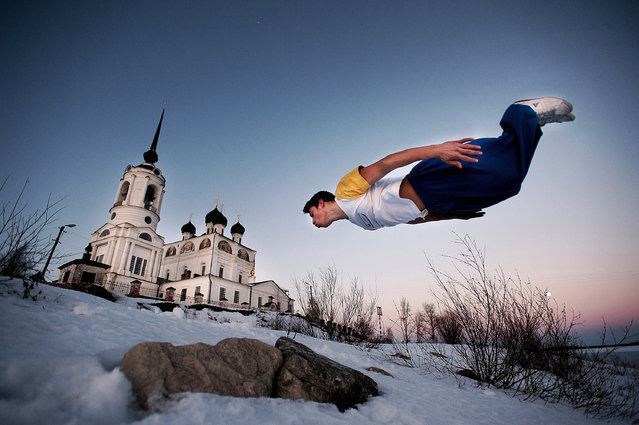
Anton Unitsyn, Russia. Shortlist, Professional , Daily Life. Parkour jumpers on their daily training. On the background – one of the main Solvychegodsk sights – Blagoveshchensky Cathedral. This church is among 3 churches, that survived soviet times. At the begining of 20th century there were 13 churches in Solvichegodsk. After breakdown of the communism, Solvichegodsk as many small towns in russia is stuck in it's past. Despite everything, people in Solvichegodsk still belive in their positive future, and wait for wind of change. (Photo by Anton Unitsyn/Sony World Photography Awards)

Anton Unitsyn, Russia. Shortlist, Professional , Daily Life. Parkour jumpers on their daily training. On the background – one of the main Solvychegodsk sights – Blagoveshchensky Cathedral. This church is among 3 churches, that survived soviet times. At the begining of 20th century there were 13 churches in Solvichegodsk. After breakdown of the communism, Solvichegodsk as many small towns in russia is stuck in it's past. Despite everything, people in Solvichegodsk still belive in their positive future, and wait for wind of change. (Photo by Anton Unitsyn/Sony World Photography Awards)
Details
25 Feb 2016 12:16:00
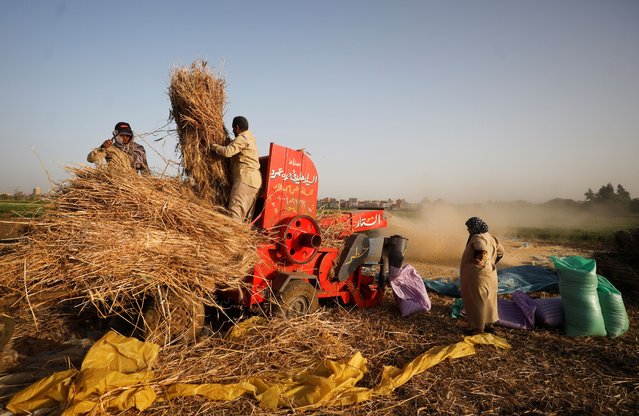
A farmer carries a bundle of wheat after harvesting it from a field in the Gharbia Governorate, as Egypt ramps up efforts to slow the spread of the coronavirus disease (COVID-19), Egypt on May 14, 2020. (Photo by Mohamed Abd El Ghany/Reuters)

A farmer carries a bundle of wheat after harvesting it from a field in the Gharbia Governorate, as Egypt ramps up efforts to slow the spread of the coronavirus disease (COVID-19), Egypt on May 14, 2020. (Photo by Mohamed Abd El Ghany/Reuters)
Details
21 May 2020 00:01:00
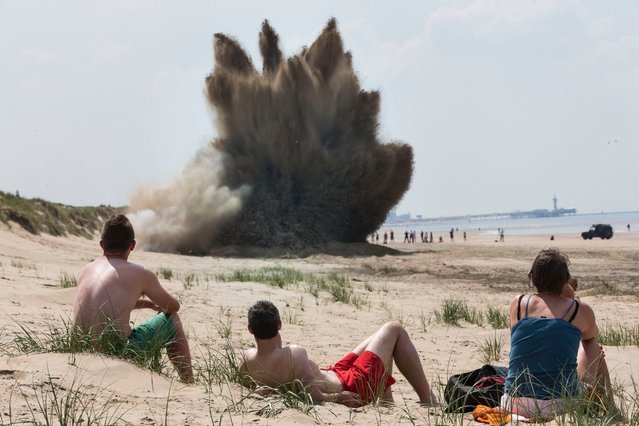
Beachgoers watch the detonation of a 500 pound British bomb on the beach on May 19, 2014 in Wassenaar, Netherlands. The bomb was dropped by the British allied forces during the second world war over nearby Leiden where it was found on a building site. (Photo by Michel Porro/Getty Images)

Beachgoers watch the detonation of a 500 pound British bomb on the beach on May 19, 2014 in Wassenaar, Netherlands. The bomb was dropped by the British allied forces during the second world war over nearby Leiden where it was found on a building site. (Photo by Michel Porro/Getty Images)
Details
24 May 2014 12:51:00
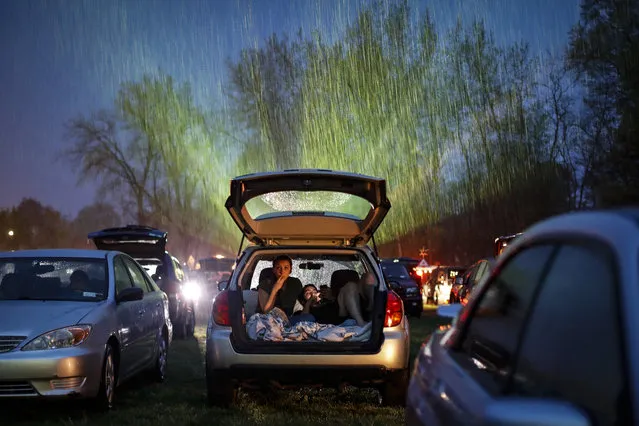
Guests watch “Trolls World Tour”, in the rain at the Four Brothers Drive In Theatre amid the coronavirus pandemic, Friday, May 15, 2020, in Amenia, N.Y. (Photo by John Minchillo/AP Photo)

Guests watch “Trolls World Tour”, in the rain at the Four Brothers Drive In Theatre amid the coronavirus pandemic, Friday, May 15, 2020, in Amenia, N.Y. (Photo by John Minchillo/AP Photo)
Details
17 May 2020 00:07:00
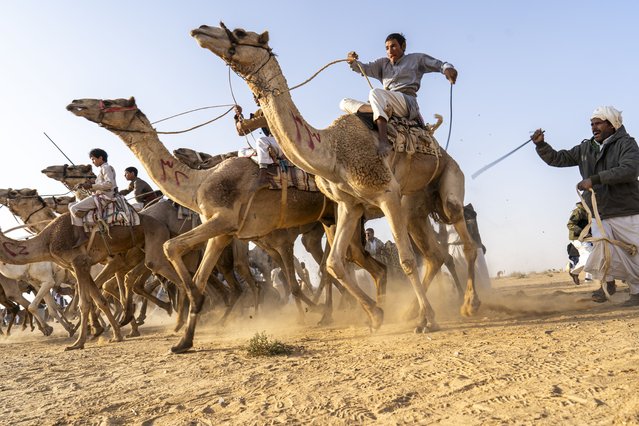
The start of the Al-Sirr camel race on November 19, 2025 in El Hassana, Egypt. The Al-Sirr camel race is one of the most culturally significant and widely celebrated sporting events among the Bedouin communities of Sinai. Every year, Bedouin tribes gather here to hold this traditional race, an event that preserves its authentic heritage. Unlike modern camel races elsewhere, the Bedouin here do not use robotic jockeys or advanced racing technologies. Instead, the camels are ridden by young boys aged approximately 5 to 16, maintaining a long-standing cultural practice. (Photo by Ali Moustafa/Getty Images)

The start of the Al-Sirr camel race on November 19, 2025 in El Hassana, Egypt. The Al-Sirr camel race is one of the most culturally significant and widely celebrated sporting events among the Bedouin communities of Sinai. Every year, Bedouin tribes gather here to hold this traditional race, an event that preserves its authentic heritage. Unlike modern camel races elsewhere, the Bedouin here do not use robotic jockeys or advanced racing technologies. Instead, the camels are ridden by young boys aged approximately 5 to 16, maintaining a long-standing cultural practice. (Photo by Ali Moustafa/Getty Images)
Details
03 Jan 2026 12:49:00
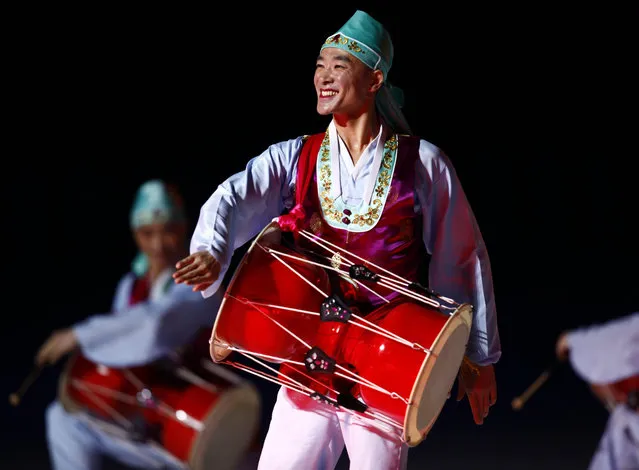
North Koreans perform during a mass game of “The Land of the People” at the May Day Stadium in Pyongyang, North Korea, Tuesday, June 25, 2019. (Photo by Jon Chol Jin/AP Photo)

North Koreans perform during a mass game of “The Land of the People” at the May Day Stadium in Pyongyang, North Korea, Tuesday, June 25, 2019. (Photo by Jon Chol Jin/AP Photo)
Details
16 Oct 2019 00:03:00