Loading...
Done
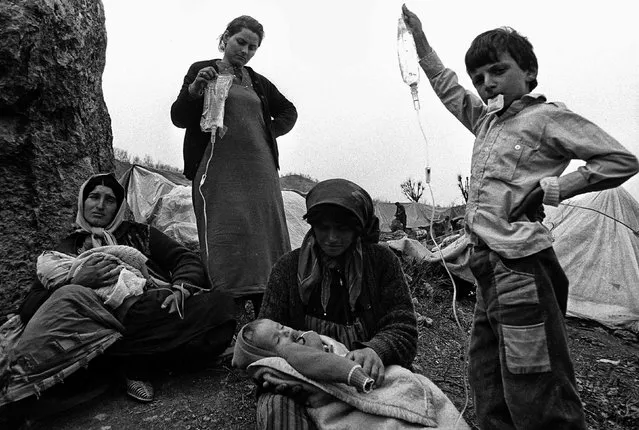
Iraqi Kurdish refugees wait with children in Cukurca refugee camp in Turkey April 8, 1991. Reuters photographers have chronicled Kurdish refugee crises over the years. In 1991 Srdjan Zivulovic documented refugees in Cukurca who had escaped a military operation by Saddam Hussein's government in Iraq aimed at “Arabising” Kurdish areas in the north. (Photo by Srdjan Zivulovic/Reuters)

Iraqi Kurdish refugees wait with children in Cukurca refugee camp in Turkey April 8, 1991. Reuters photographers have chronicled Kurdish refugee crises over the years. In 1991 Srdjan Zivulovic documented refugees in Cukurca who had escaped a military operation by Saddam Hussein's government in Iraq aimed at “Arabising” Kurdish areas in the north. Hundreds of thousands fled into Turkey and Iran. Images shot in recent months show familiar scenes as crowds of people flee Islamic State militants in Syria. There are as many as 30 million Kurds, spread through Turkey, Iraq, Syria and Iran. Most Kurds are Sunni Muslims, but tend to feel more loyalty to their Kurdishness, rather than their religion. (Photo by Srdjan Zivulovic/Reuters)
Details
14 Nov 2014 14:09:00
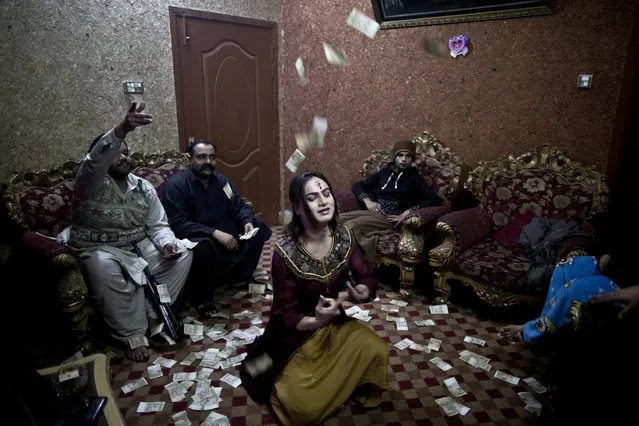
Pakistani Waseem Akram, 27, dances during a private party in Rawalpindi, Pakistan. By day, Akram sells mobile phone accessories from an alleyway shop in an old neighborhood of this Pakistani city, Thursday, January 15, 2015. (Photo by Muhammed Muheisen/AP Photo)

Pakistani Waseem Akram, 27, dances during a private party in Rawalpindi, Pakistan. By day, Akram sells mobile phone accessories from an alleyway shop in an old neighborhood of this Pakistani city, Thursday, January 15, 2015. Across conservative Pakistan, where Islamic extremists launch near-daily attacks and many follow a strict interpretation of their Muslim faith, male cross-dressers and the transgendered face a challenge of balancing two identities. Some left their villages for the anonymity of a big city, fearing the reactions of their families while still concealing their identity from neighbors and co-workers. (Photo by Muhammed Muheisen/AP Photo)
Details
21 Jan 2015 13:27:00
Masooma Alizada (L) and Frozan Rasooli (R), members of Afghanistan's Women's National Cycling Team prepare a bicycle before training on the outskirts of Kabul February 20, 2015. (Photo by Mohammad Ismail/Reuters)

Masooma Alizada (L) and Frozan Rasooli (R), members of Afghanistan's Women's National Cycling Team prepare a bicycle before training on the outskirts of Kabul February 20, 2015. Afghanistan's Women's National Cycling Team has been breaking new ground for women's sports and pushing the boundaries of what is – and is not – acceptable for young women in the conservative Muslim country. (Photo by Mohammad Ismail/Reuters)
Details
15 Mar 2015 05:58:00
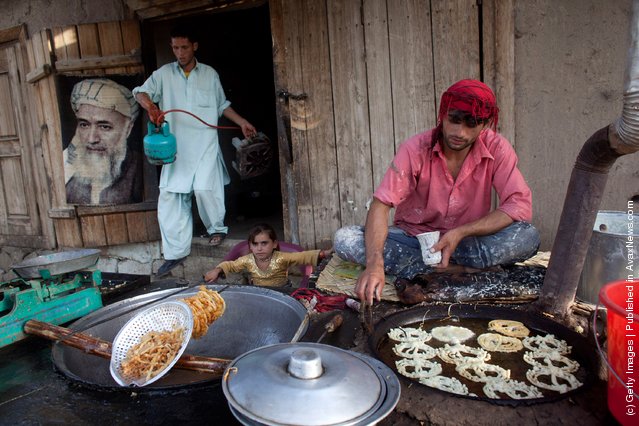
Afghans Prepare For Eid ul-Fitr

“Eid ul-Fitr, Eid al-Fitr, Id-ul-Fitr, or Id al-Fitr, often abbreviated to Eid, is a Muslim holiday that marks the end of Ramadan, the Islamic holy month of fasting (sawm). Eid is an Arabic word meaning “festivity”, while Fiṭr means “breaking (the fast)”. The holiday celebrates the conclusion of the twenty nine or thirty days of dawn-to-sunset fasting during the entire month of Ramadan. The first day of Eid, therefore, falls on the first day of the month Shawwal”. – Wikipedia
Details
30 Aug 2011 12:05:00
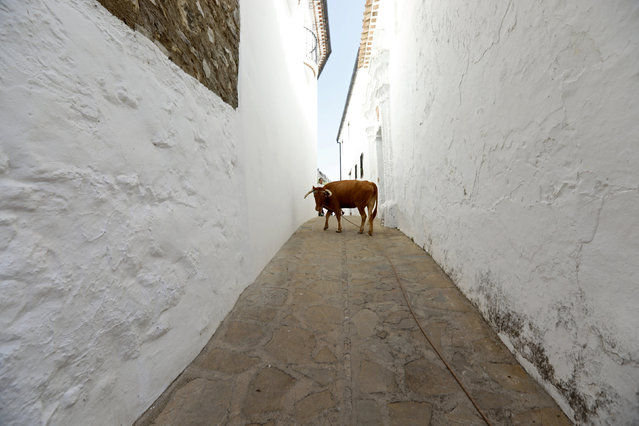
A heifer, tied with a rope, turns during “Toro de Cuerda” in the white village of Villaluenga del Rosario, southern Spain September 3, 2016. Dazzling clusters of cube-shaped houses perched on top of Andalusia's olive tree-studded mountains, the “Pueblos Blancos”, or white villages, of southern Spain are named for the lime wash the buildings are painted with to keep the interiors cool. The labyrinths of narrow alleyways are a throwback to when this region was known as Al-Andalus and was part of a medieval Muslim territory. While this region is stunningly beautiful and a big draw to tourists visiting the south of Spain, it is also one of the poorest areas in the country and has one of the highest unemployment rates in the European Union. (Photo by Marcelo del Pozo/Reuters)

A heifer, tied with a rope, turns during “Toro de Cuerda” in the white village of Villaluenga del Rosario, southern Spain September 3, 2016. Dazzling clusters of cube-shaped houses perched on top of Andalusia's olive tree-studded mountains, the “Pueblos Blancos”, or white villages, of southern Spain are named for the lime wash the buildings are painted with to keep the interiors cool. The labyrinths of narrow alleyways are a throwback to when this region was known as Al-Andalus and was part of a medieval Muslim territory. While this region is stunningly beautiful and a big draw to tourists visiting the south of Spain, it is also one of the poorest areas in the country and has one of the highest unemployment rates in the European Union. (Photo by Marcelo del Pozo/Reuters)
Details
20 Oct 2016 11:09:00
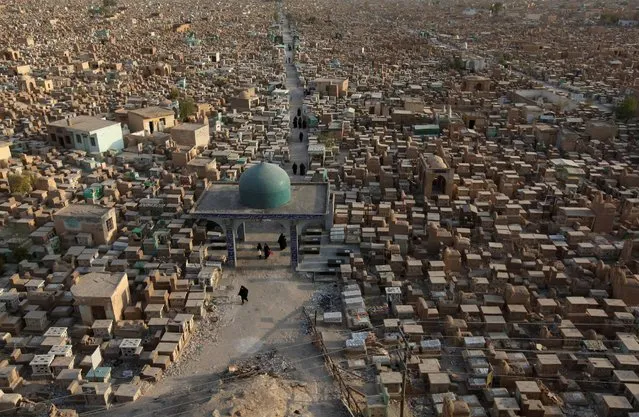
The Wadi al-Salam cemetery, Arabic for “Peace Valley”, is seen in Najaf, south of Baghdad, Iraq August 3, 2016. The world's largest cemetery, in Iraq's Shi'ite holy city of Najaf, is expanding at double its usual rate as Shi'ite militias bury their dead from the war against Islamic State. The Wadi al-Salam cemetery, Arabic for “Peace Valley” has a special place in the hearts of Shi'ite Muslims as it surrounds the Mausoleum of their first imam, Ali Bin Abi Talib, a cousin and son-in-law of Prophet Mohammad. (Photo by Alaa Al-Marjani/Reuters)

The Wadi al-Salam cemetery, Arabic for “Peace Valley”, is seen in Najaf, south of Baghdad, Iraq August 3, 2016. The world's largest cemetery, in Iraq's Shi'ite holy city of Najaf, is expanding at double its usual rate as Shi'ite militias bury their dead from the war against Islamic State. The Wadi al-Salam cemetery, Arabic for “Peace Valley” has a special place in the hearts of Shi'ite Muslims as it surrounds the Mausoleum of their first imam, Ali Bin Abi Talib, a cousin and son-in-law of Prophet Mohammad. (Photo by Alaa Al-Marjani/Reuters)
Details
24 Aug 2016 11:38:00
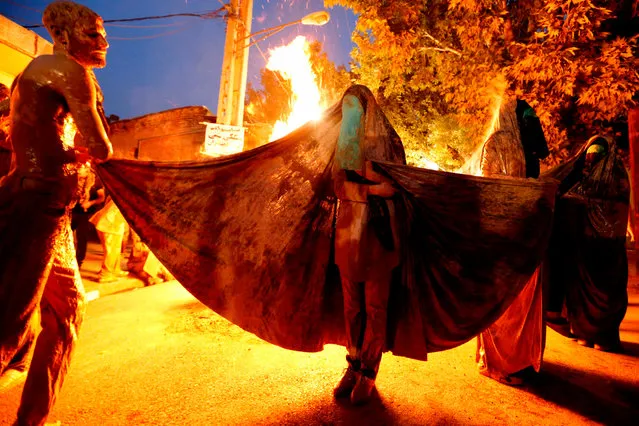
Iranian Shiite Muslim women gather around a bonfire after rubbing mud on their body during the “Kharrah Mali” (Mud Rubbing) ritual to mark the Ashura religious ceremony in the city of Khorramabad, some 470 kms southwest of Tehran, early in the morning on October 1, 2017. “Khrreh Mali” or “Mud Rubbing” is a ritual that is held in the city of Khorramabad every year to commemorate the seventh century slaying of Prophet Mohammed' s grandson Imam Hussein, in which Iranian men roll over in mud and dry themselves by gathering around the bonfires before flagellating themselves. (Photo by Atta Kenare/AFP Photo)

Iranian Shiite Muslim women gather around a bonfire after rubbing mud on their body during the “Kharrah Mali” (Mud Rubbing) ritual to mark the Ashura religious ceremony in the city of Khorramabad, some 470 kms southwest of Tehran, early in the morning on October 1, 2017. “Khrreh Mali” or “Mud Rubbing” is a ritual that is held in the city of Khorramabad every year to commemorate the seventh century slaying of Prophet Mohammed' s grandson Imam Hussein, in which Iranian men roll over in mud and dry themselves by gathering around the bonfires before flagellating themselves. (Photo by Atta Kenare/AFP Photo)
Details
02 Oct 2017 08:38:00
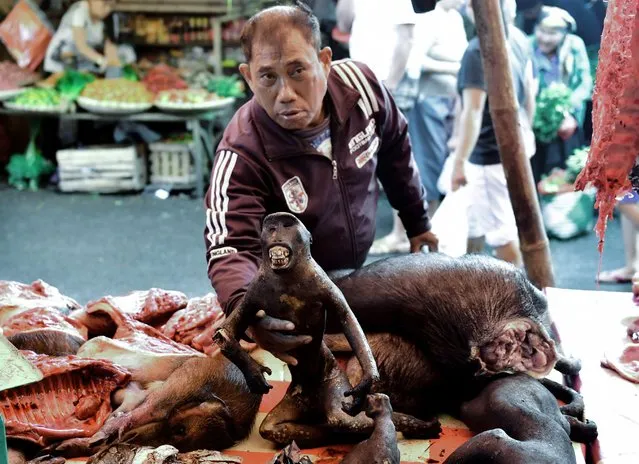
This picture taken on February 18, 2017 shows a customer holding a crested black macaque in Tomohon market in northern Sulawesi, Indonesia. (Photo by Bay Ismoyo/AFP Photo)

This picture taken on February 18, 2017 shows a customer holding a crested black macaque in Tomohon market in northern Sulawesi, Indonesia. Authorities and activists are stepping up efforts to persuade villagers on Sulawesi island to stop consuming the critically endangered crested black macaques, one of many exotic creatures that form part of the local indigenous community' s diet. The macaque' s meat is prized by the ethnic Minahasan people, a largely Christian group in the world' s most populous Muslim- majority country, who have no reservation about eating exotic animals, unlike Indonesia' s Islamic communities. (Photo by Bay Ismoyo/AFP Photo)
Details
04 Apr 2017 10:01:00