Loading...
Done
Sand-Washing Operation Of Yellow River Held At Xiaolangdi Reservoir

Water gushes out from the Xiaolangdi Reservoir on the Yellow River during a sand-washing operation on June 20, 2012 in Luoyang, China. The sand-washing operation, which started on June 19 and will last for about 20 days, is conducted to clear out the silt deposits at the dam. (Photo by China Foto Press)
Details
23 Jun 2012 09:04:00
Water War in Tel-Aviv 2012

“The 8th annual Water War on Friday in the center of Tel-Aviv, Israel turned into a battlefield, quite literally. As two thousand people were having fun in the square, some water-fighters took to more radical behavior, targeting passing cars, motorcycles and public buses”. – iReport.cnn.com (Photo by Sergey Demyanchuk)
Details
08 Jul 2012 08:46:00
“A Head For Business And A Bod For Sin”. Karlie Kloss by Roe Ethridge (Acne Paper #14 Fall 2012)

“A Head For Business And A Bod For Sin”. Publication: “Acne Paper”, Issue #14 Fall 2012. Model: Karlie Kloss; Styling: Marie Chaix; Hair: Didier Malige; Make-up: Virginia Young. (Photo by Roe Ethridge)
Details
14 Nov 2012 11:26:00
Murad Osmann: Follow Me Part2

This photographer has promised to his girlfriend Belmar that he will follow her all over the world. The Russian photographer has realized this photo collection from various places all over the world. staying always behind his girlfriend. We don’t see the face of her, but he loved her so much dedicating this photography set.
Details
08 Aug 2013 11:14:00
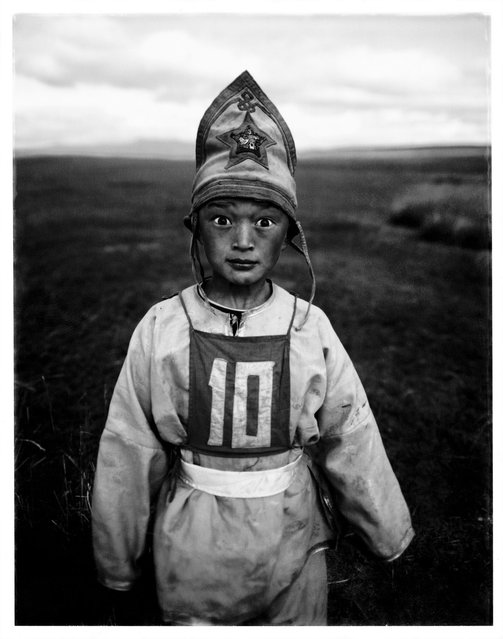
Mongolian Child Jockeys

Horse racing is part of Naadam, a festival organized every July in Mongolia to celebrate the People’s Revolution. Using children as jockeys in such races has a centuries-long tradition. Boys and girls as young as 5 (although the law imposes a minimum age limit of 7) ride in races that can be dangerous, with hundreds of horses running across the steppe at distances of 12 to 28 kilometres at great speeds. (Photo by Tomasz Gudzowaty)
Details
30 Apr 2012 11:02:00


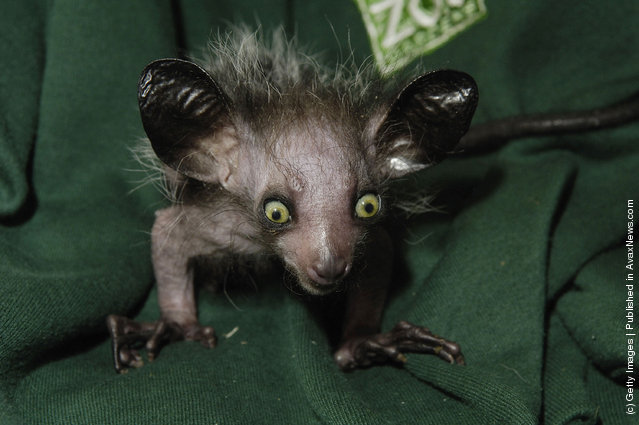
“The aye-aye (Daubentonia madagascariensis) is a lemur, a strepsirrhine primate native to Madagascar that combines rodent-like teeth and a special thin middle finger to fill the same ecological niche as a woodpecker. It is the world's largest nocturnal primate, and is characterized by its unusual method of finding food; it taps on trees to find grubs, then gnaws holes in the wood and inserts its narrow middle finger to pull the grubs out. The only other animal species known to find food in this way is the striped possum. From an ecological point of view the aye-aye fills the niche of a woodpecker as it is capable of penetrating wood to extract the invertebrates within”. – Wikipedia

Photo: In this handout image from Bristol Zoo is seen the first captive bred aye-aye in the UK named “Kintana” (meaning star in Malagasy) April 15, 2005 at Bristol Zoo Gardens, England. The zoo announced today only the second baby aye-aye to be hand-reared in the world (the first was in Jersey Zoo) and has now made his first public appearance since his birth on 11 February 2005. (Photo by Rob Cousins/Bristol Zoo via Getty Images)

Details
13 Apr 2011 13:33:00
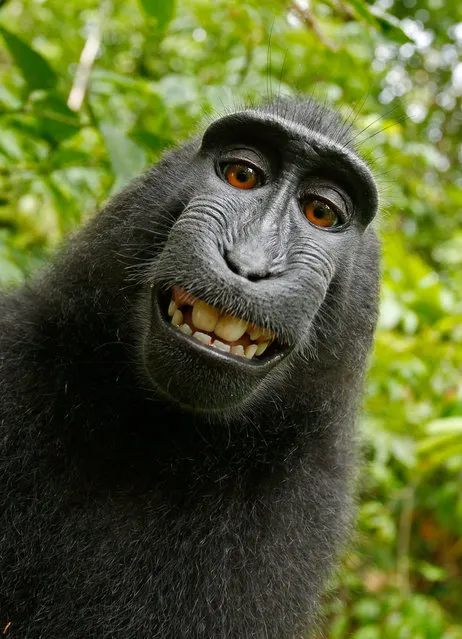
These are the chimp-ly marvellous images captured by a cheeky monkey after turning the tables on a photographer who left his camera unmanned. (Photo by David Slater)

These are the chimp-ly marvellous images captured by a cheeky monkey after turning the tables on a photographer who left his camera unmanned. The inquisitive scamp playfully went to investigate the equipment before becoming fascinated with his own reflection in the lens. And it wasnt long before the crested black macaque hijacked the camera and started snapping away sending award-winning photographer David Slater bananas. David, from Coleford, Gloucestershire, was on a trip to a small national park north of the Indonesian island of Sulawesi when he met the incredibly friendly bunch. (Photo by David Slater/Caters News)
Details
10 Aug 2014 11:04:00
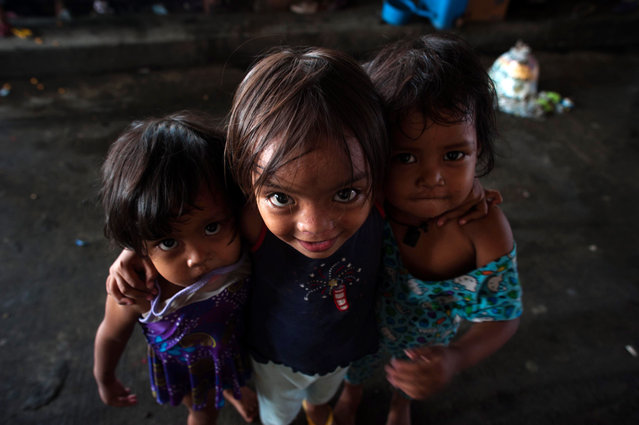
Children beg for alms in a street on August 11, 2014 in Manila, Philippines. The Philippines has one of the fastest growing populations in Southeast Asia with around 100 million people. (Photo by Dondi Tawatao/Getty Images)

Children beg for alms in a street on August 11, 2014 in Manila, Philippines. The Philippines has one of the fastest growing populations in Southeast Asia with around 100 million people. At least 12 million people live in the capital city of Manila alone, making it one of the most densely populated and largest cities in the world. Lack of space and economic opportunities has pushed around four million people to live informally along waterways, bridges and even cemeteries further straining the already weak infrastructure and straining the resources of the city. (Photo by Dondi Tawatao/Getty Images)
Details
12 Aug 2014 12:21:00