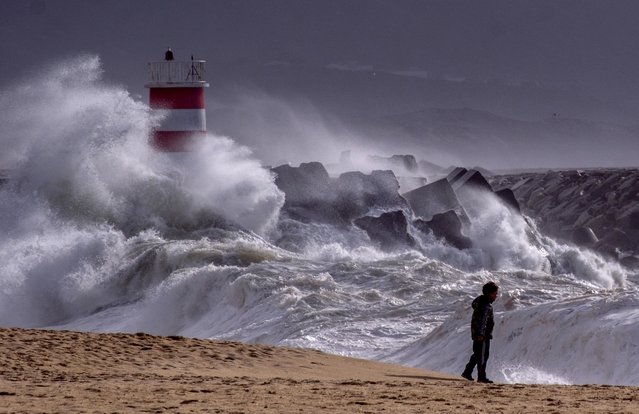
Big waves approach the beach of Nazare, Portugal, Tuesday, March 26, 2024. The high waves were caused by strong winds at one of the world's most popular surf spots. (Photo by Michael Probst/AP Photo)
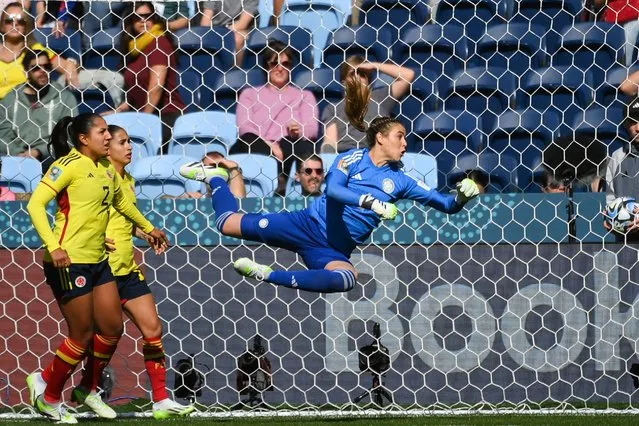
Colombia's goalkeeper #01 Catalina Perez (R) makes a save during the Australia and New Zealand 2023 Women's World Cup Group H football match between Colombia and South Korea at Sydney Football Stadium in Sydney on July 25, 2023. (Photo by Franck Fife/AFP Photo)
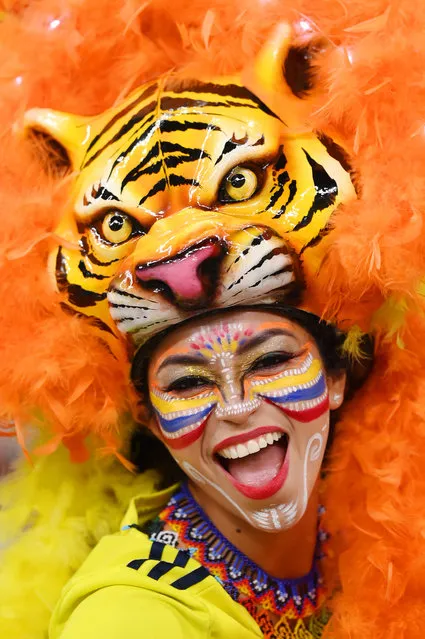
A fan of Colombia wears a tiger costume prior to the FIFA Women's World Cup Australia & New Zealand 2023 Group H match between Germany and Colombia at Sydney Football Stadium on July 30, 2023 in Sydney, Australia. (Photo by Justin Setterfield/Getty Images)
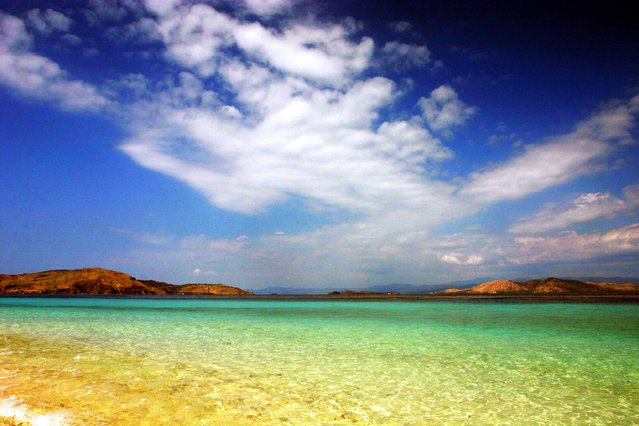
The Komodo National Park is a national park in Indonesia located within the Lesser Sunda Islands in the border region between the provinces of East Nusa Tenggara and West Nusa Tenggara. The park includes the three larger islands Komodo, Padar and Rinca, and 26 smaller ones, with a total area of 1,733 km² (603 km² of it land). The national park was founded in 1980 to protect the Komodo dragon, the world's largest lizard. Later it was dedicated to protecting other species, including marine species. In 1991 the national park was declared a UNESCO World Heritage Site and later as Man and Biosphere Reserve.
Animal rights activists covered with fake blood sit on the floor during a protest against the use of animals in research to mark World Day for Animals in Laboratories in central Madrid April 24, 2014. The sign reads, “How many rabbits do your shampoo kill?”. (Photo by Andrea Comas/Reuters)
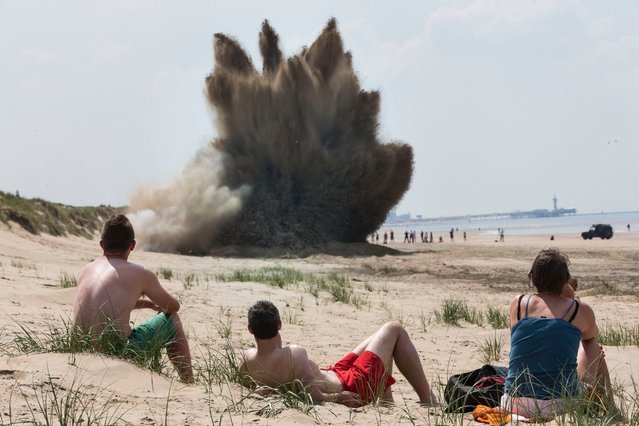
Beachgoers watch the detonation of a 500 pound British bomb on the beach on May 19, 2014 in Wassenaar, Netherlands. The bomb was dropped by the British allied forces during the second world war over nearby Leiden where it was found on a building site. (Photo by Michel Porro/Getty Images)
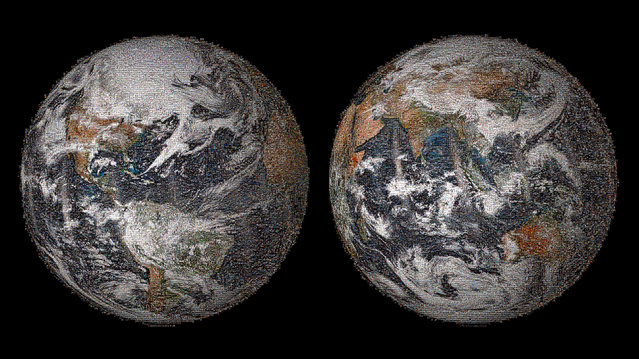
On Earth Day this year, NASA asked people all around the world a question: “Where are you on Earth Right Now?” To answer this question people were asked to post their selfie on social media. The goal was to use each picture as a pixel in the creation of a “Global Selfie” – a mosaic image that would look like Earth appeared from the space. The 3.2 gigapixel “Global Selfie”, was made the with 36,422 individual images.
Players battle for the ball during their match at the swamp soccer China tournament in Beijing, June 26, 2014. The 32 teams from across the country participated in the soccer event to celebrate the 2014 World Cup in Brazil. (Photo by Kim Kyung-Hoon/Reuters)