Loading...
Done
Inmates sleep on the steps of a ladder inside the Quezon City jail at night in Manila in this picture taken on July 21, 2016. (Photo by Noel Celis/AFP Photo)

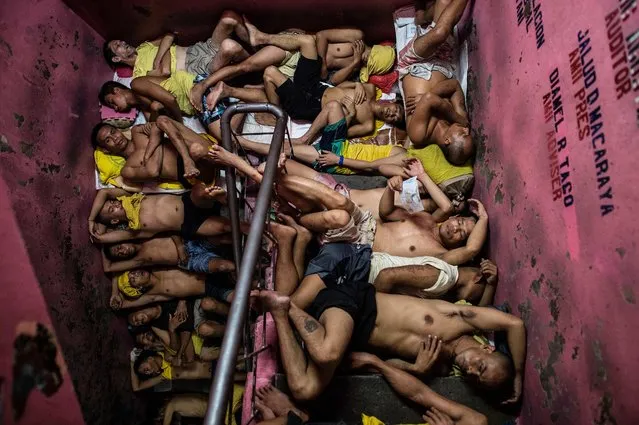
Inmates sleep on the steps of a ladder inside the Quezon City jail at night in Manila in this picture taken on July 21, 2016. There are 3,800 inmates at the jail, which was built six decades ago to house 800, and they engage in a relentless contest for space. Men take turns to sleep on the cracked cement floor of an open-air basketball court, the steps of staircases, underneath beds and hammocks made out of old blankets. (Photo by Noel Celis/AFP Photo)
Details
06 Aug 2016 13:24:00
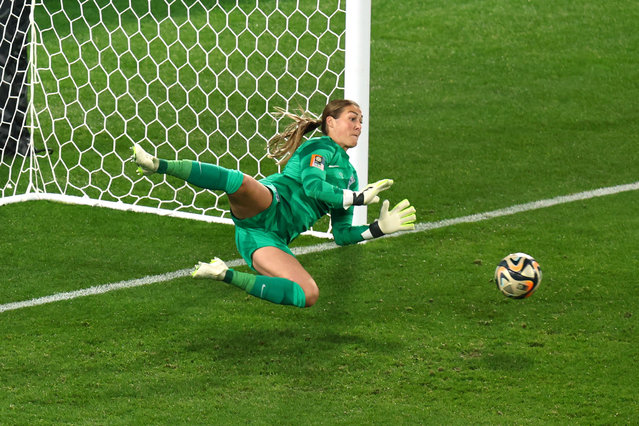
England goalkeeper Mary Earps saves a penalty from Jennifer Hermoso of Spain during the FIFA Women's World Cup Australia & New Zealand 2023 Final match between Spain and England at Stadium Australia on August 20, 2023 in Sydney, Australia. (Photo by Charlotte Wilson/Offside/Offside via Getty Images)

England goalkeeper Mary Earps saves a penalty from Jennifer Hermoso of Spain during the FIFA Women's World Cup Australia & New Zealand 2023 Final match between Spain and England at Stadium Australia on August 20, 2023 in Sydney, Australia. (Photo by Charlotte Wilson/Offside/Offside via Getty Images)
Details
15 Dec 2025 06:33:00
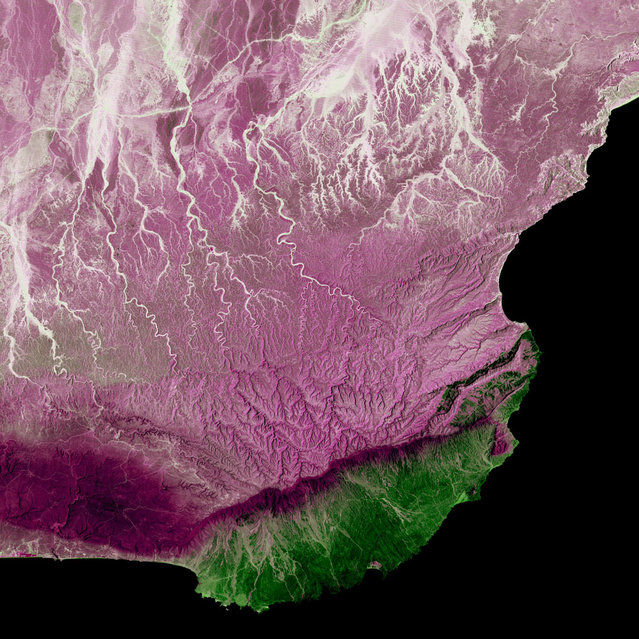
Dhofar Region, Oman. Much of Oman is desert, but the Arabian Sea coast in the Dhofar region represents a startling difference in climate. This coastal region catches the monsoon rains, or khareef, during the summer months. Drenching rains fall primarily on the mountainous ridge that separates the lush, fertile areas along the coast from the arid interior, recharging streams, waterfalls and springs that provide plentiful water supplies in the fertile lowlands for the remainder of the year. Image taken by Landsat 5 on April 2, 2005. (Photo by USGS/NASA)

Dhofar Region, Oman. Much of Oman is desert, but the Arabian Sea coast in the Dhofar region represents a startling difference in climate. This coastal region catches the monsoon rains, or khareef, during the summer months. Drenching rains fall primarily on the mountainous ridge that separates the lush, fertile areas along the coast from the arid interior, recharging streams, waterfalls and springs that provide plentiful water supplies in the fertile lowlands for the remainder of the year. Image taken by Landsat 5 on April 2, 2005. (Photo by USGS/NASA)
Details
25 Dec 2012 11:13:00
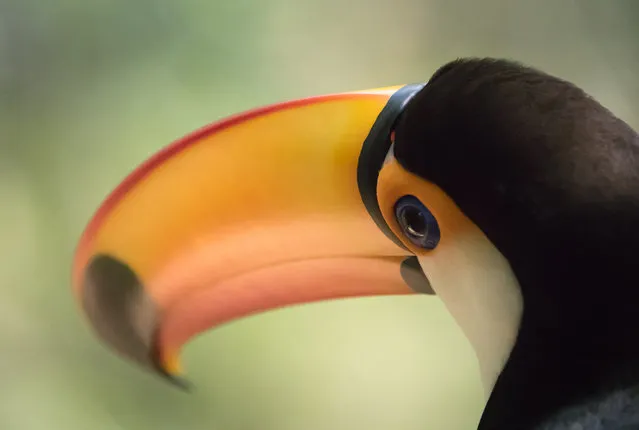
Overall runner-up: Toucan, Mark Tatchell. (Photo by Mark Tatchell/British Ecological Society)

The British Ecological Society has announced the winners of its annual photography competition, Capturing Ecology. Taken by international ecologists and students, the winning images will be exhibited at the society’s joint annual meeting in Ghent in December. Here: Overall runner-up; Toucan, Mark Tatchell. (Photo by Mark Tatchell/British Ecological Society)
Details
05 Dec 2017 08:05:00
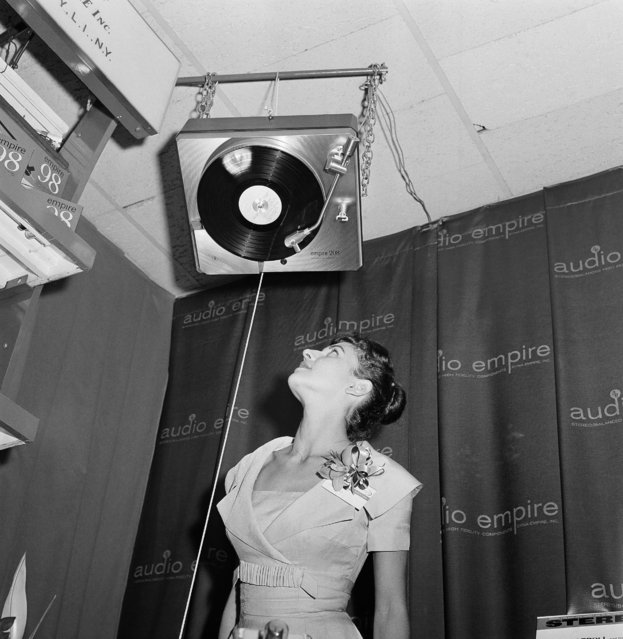
Even upside down, a stereophonic turntable continues to play and  hold the interest of Helen Sorowitz, a visitor to the New York High Fidelity Show in New York, September 9, 1960. (Photo by Ruben Goldberg/AP Photo)

Even upside down, a stereophonic turntable continues to play and hold the interest of Helen Sorowitz, a visitor to the New York High Fidelity Show in New York, September 9, 1960. (Photo by Ruben Goldberg/AP Photo)
Details
14 Mar 2018 00:05:00
“One in Eight Hundred” by Mario Wezel, from Germany, is the winner of the “People” category. The title refers to the odds given to Martin and Karina at their prenatal screening before their daughter, Emmy, was born. The five-year-old from Denmark has Down's Syndrome. (Photo by Mario Wezel/Sony World Photography Awards)

“One in Eight Hundred” by Mario Wezel, from Germany, is the winner of the “People” category. The title refers to the odds given to Martin and Karina at their prenatal screening before their daughter, Emmy, was born. The five-year-old from Denmark has Down's Syndrome. (Photo by Mario Wezel/Sony World Photography Awards)
Details
02 May 2014 10:53:00
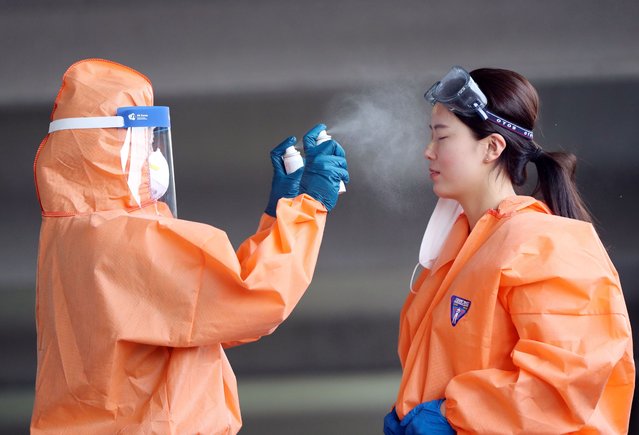
A medical worker in protective gear sprays mist on her colleague during a hot day at an outdoor clinic for coronavirus tests at a public health facility in the southwestern city of Gwangju, South Korea, 05 June 2020. (Photo by Yonhap/EPA/EFE)

A medical worker in protective gear sprays mist on her colleague during a hot day at an outdoor clinic for coronavirus tests at a public health facility in the southwestern city of Gwangju, South Korea, 05 June 2020. (Photo by Yonhap/EPA/EFE)
Details
17 Jan 2021 00:05:00
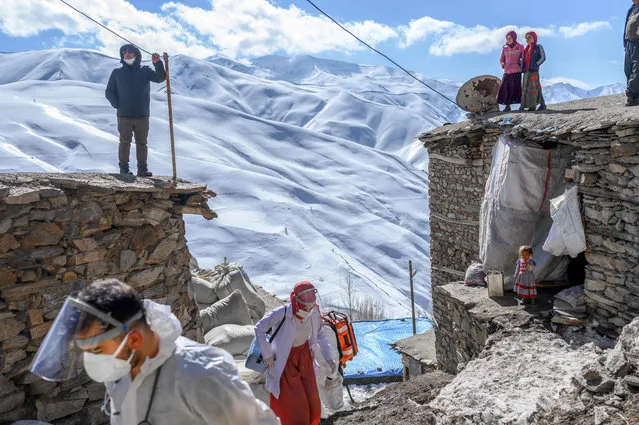
In this photograph taken on February 15, 2021, doctor Sergen Saracoglu (L) and nurse Yilzdiz Ayten (C) from the Bahcesaray public hospital vaccination team, arrive at the village of Guneyyamac in eastern Turkey, as part of an expedition to vaccinate residents of 65 years old or above with Sinovac's CoronaVac Covid-19 vaccine. Turkey's population of more than 83 million is spread out across Europe and Asia and covers some seemingly impregnable terrain. The vaccination effort with China's CoronaVac jab kicked off with a bang in mid-January when Turkey inoculated more than half a million people in the first few days. But it slowed down considerably when doctors left the big cities and tried to reach remote places such as Imamli and Ozbeyli – two ethnically Kurdish hamlets of a few hundred herders and farmers each. (Photo by Bulent Kilic/AFP Photo)

In this photograph taken on February 15, 2021, doctor Sergen Saracoglu (L) and nurse Yilzdiz Ayten (C) from the Bahcesaray public hospital vaccination team, arrive at the village of Guneyyamac in eastern Turkey, as part of an expedition to vaccinate residents of 65 years old or above with Sinovac's CoronaVac Covid-19 vaccine. (Photo by Bulent Kilic/AFP Photo)
Details
18 Mar 2021 09:32:00