Loading...
Done
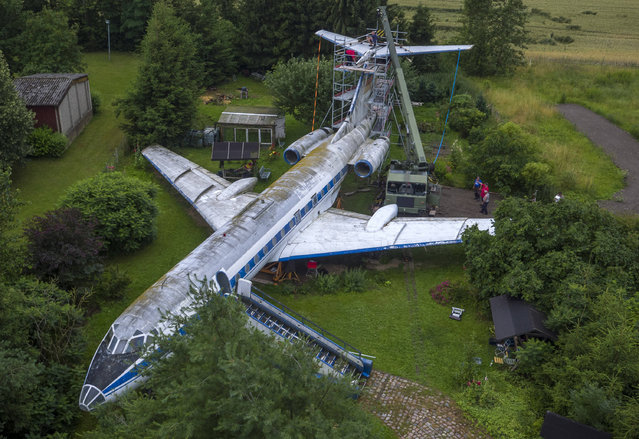
Cottbus Aviation Museum specialists prepare a Soviet Tupolev 134 A passenger plane for dismantlement in Gruenz, Germany, 10 July 2017. The team is preparing the 29 ton plane for transport from a garden in Gruenz to the Aviation Museum in Cottbus. The plane' s owner acquired it in 1991 and transported it with nine tractors and numerous helpers to his vegetable garden where he planned to open a cafe. The plane, formerly used by the East German Stasi for anti- terror operations training, is 30 metres long. (Photo by Jens Büttner/Zentralbild/DPA)

Cottbus Aviation Museum specialists prepare a Soviet Tupolev 134 A passenger plane for dismantlement in Gruenz, Germany, 10 July 2017. The team is preparing the 29 ton plane for transport from a garden in Gruenz to the Aviation Museum in Cottbus. The plane' s owner acquired it in 1991 and transported it with nine tractors and numerous helpers to his vegetable garden where he planned to open a cafe. The plane, formerly used by the East German Stasi for anti- terror operations training, is 30 metres long. (Photo by Jens Büttner/Zentralbild/DPA)
Details
12 Jul 2017 07:50:00
Fantastic Illustration by Frank Melech

Frank Melech is a german artist that works with illustration and digital compositing. What we’re bringing you here today is a slice of such work that we thought, besides remarkably talended, highly creative, because Frank Melech starts with a light bulb, a universal symbol of Idea but also a metaphor for an enclosed but transparent world, and inserts in them precisely other worlds and ideas.
Details
23 Jul 2013 16:26:00
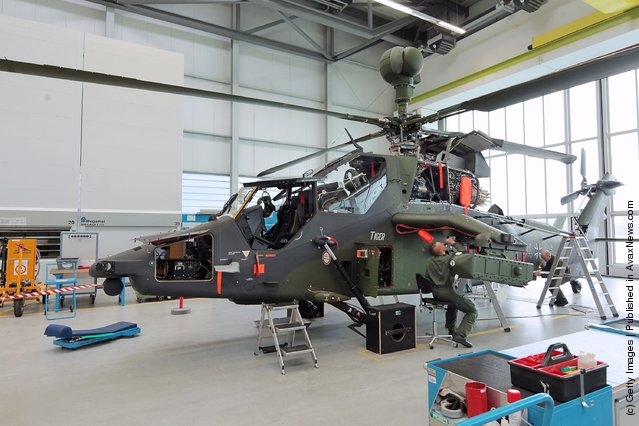
Workers assemble a Eurocopter Tiger military attack helicopter at the Eurocopter plant

Military staff members of the German Bundeswehr check an Eurocopter Tiger military attack helicopter at the Eurocopter plant on March 8, 2012 in Donauworth, Germany. EADS, the parent company of Eurocopter as well as airplane manufacturer Airbus, is scheduled to announce financial results for 2011 today. (Photo by Johannes Simon/Getty Images)
Details
09 Mar 2012 12:34:00


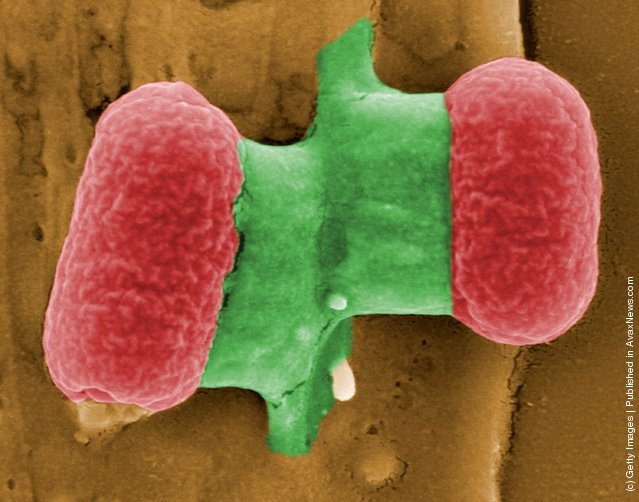
In this handout photo provided by the Helmholtz Center for Research on Infectious Diseases an EHEC bacteria is visible on May 30, 2011 in Berlin, Germany. German health authorities have attributed at least 14 deaths within the last two weeks to an outbreak of enterohemorrhagic E. coli, also known as the EHEC bacteria. (Photo Courtesay Manfred Rohde, Helmholtz-Zentrum fuer Infektionsforschung (HZI)/Getty Images)
Details
31 May 2011 06:43:00
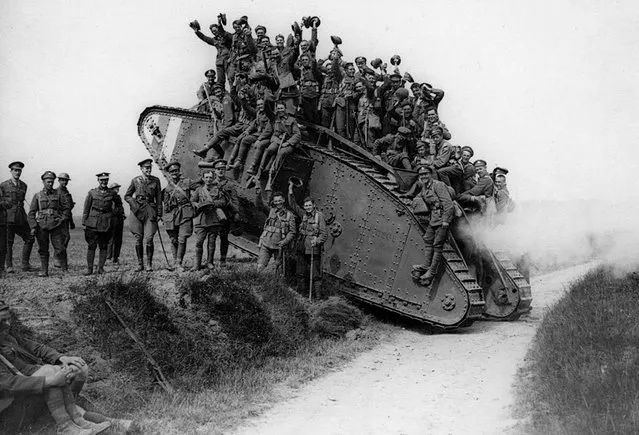
These black-and-white photos are taken from the new book “Armoured Warfare in the First World War 1916 – 1918” by Anthony Tucker-Jones and published by Pen & Sword Military. “Interestingly the British, French and Germans took completely different approaches with varying results”. The British military produced “Little Willie” in Autumn 1915 weighing 18 tonnes, which had a crew of two plus four gunners. “Inspired by a tracked artillery tractor “Little Willie” was referred to as a water tank – hence the name tank – to ensure secrecy”, said Anthony. “This led to the strange looking Mark I with its peculiar rhomboid shape, designed to cross trenches with guns in sponsons on either side. The Germans saw the tank as unchivalrous and were slow to grasp its utility. They favoured the Stormtrooper (specialist soldiers used to infiltrate enemy trenches) and artillery, not the tank”, said Anthony. “However, they didn’t hesitate to make use of captured British tanks. Although the tank helped secure victory and German soldiers dubbed it “Germany’s Downfall” the country was ultimately brought to its knees by the Allies blockade”. Here: British troops hitch a ride on a Mark IV after the massed tank fleet spearheading attack at Cambrai on November 20, 1917. (Photo by Anthony Tucker-Jones/Mediadrumworld.com)

These black-and-white photos are taken from the new book “Armoured Warfare in the First World War 1916 – 1918” by Anthony Tucker-Jones and published by Pen & Sword Military. Here: British troops hitch a ride on a Mark IV after the massed tank fleet spearheading attack at Cambrai on November 20, 1917. (Photo by Anthony Tucker-Jones/Mediadrumworld.com)
Details
23 Feb 2017 00:02:00
A woman poses as she has her picture taken amid 1600 panda bear sculptures in Berlin August 5, 2013. Marking the 50th anniversary of its existence, on Monday the German branch of the World Wide Fund for Nature  (WWF) environmental conservation organisation placed 1600 panda bear sculptures on front of Berlin's main train station to draw attention to the plight of the endangered species that serves as the NGO's mascot. There are currently 1600 panda bears alive in the wild, the organisation said in a press release. (Photo by Thomas Peter/Reuters)

A woman poses as she has her picture taken amid 1600 panda bear sculptures in Berlin August 5, 2013. Marking the 50th anniversary of its existence, on Monday the German branch of the World Wide Fund for Nature (WWF) environmental conservation organisation placed 1600 panda bear sculptures on front of Berlin's main train station to draw attention to the plight of the endangered species that serves as the NGO's mascot. There are currently 1600 panda bears alive in the wild, the organisation said in a press release. (Photo by Thomas Peter/Reuters)
Details
06 Aug 2013 08:28:00
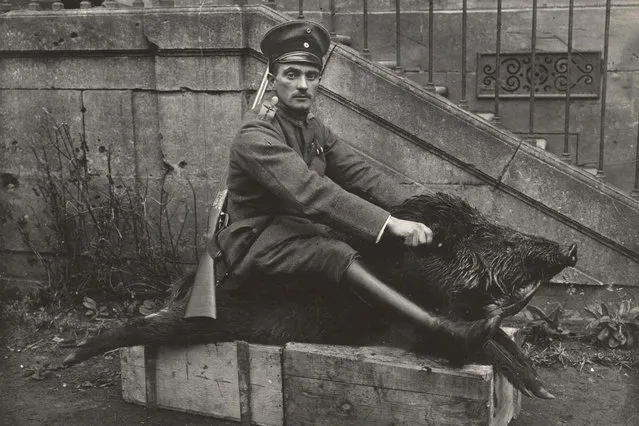
A German Air Force Officer sits astride a dead boar outside a house where he is stationed near the Western Front, in this 1918 handout picture. This picture is part of a previously unpublished set of World War One (WWI) images from a private collection. The pictures offer an unusual view of varied and contrasting aspects of the conflict, from high tech artillery to mobile pigeon lofts, and from officers partying in their headquarters to the grim reality of life and death in the trenches. The year 2014 marks the centenary of the start of the war. (Photo by Reuters/Archive of Modern Conflict London)

A German Air Force Officer sits astride a dead boar outside a house where he is stationed near the Western Front, in this 1918 handout picture. This picture is part of a previously unpublished set of World War One (WWI) images from a private collection. The pictures offer an unusual view of varied and contrasting aspects of the conflict, from high tech artillery to mobile pigeon lofts, and from officers partying in their headquarters to the grim reality of life and death in the trenches. The year 2014 marks the centenary of the start of the war. (Photo by Reuters/Archive of Modern Conflict London)
Details
26 Jun 2014 12:13:00
A doctor examines a child after he disembarked from the German Navy ship Schleswig Holstein at the Reggio Calabria harbor, Italy, Tuesday, June 16, 2015. European Union nations failed to bridge differences Tuesday over an emergency plan to share the burden of the thousands of refugees crossing the Mediterranean, while on the French-Italian border, police in riot gear forcibly removed dozens of migrants. (AP Photo/Adriana Sapone)

A doctor examines a child after he disembarked from the German Navy ship Schleswig Holstein at the Reggio Calabria harbor, Italy, Tuesday, June 16, 2015. European Union nations failed to bridge differences Tuesday over an emergency plan to share the burden of the thousands of refugees crossing the Mediterranean, while on the French-Italian border, police in riot gear forcibly removed dozens of migrants. (AP Photo/Adriana Sapone)
Details
22 Jun 2015 10:20:00