Loading...
Done
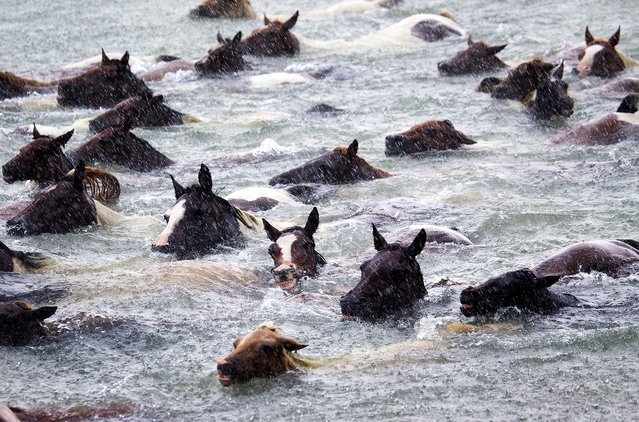
During a storm with heavy rain, wild ponies swim towards the shore in the annual Chincoteague Pony Swim. (Photo by Jay Diem/Eastern Shore News)

Chincoteague Ponies swim across Assateague Channel in a heavy downpour on Wednesday, July 24, 2013 during the 88th Annual Chincoteague Pony Swim. A portion of the herd will be auctioned on Thursday. (Photo by Jay Diem/Eastern Shore News)
Details
26 Jul 2013 05:29:00
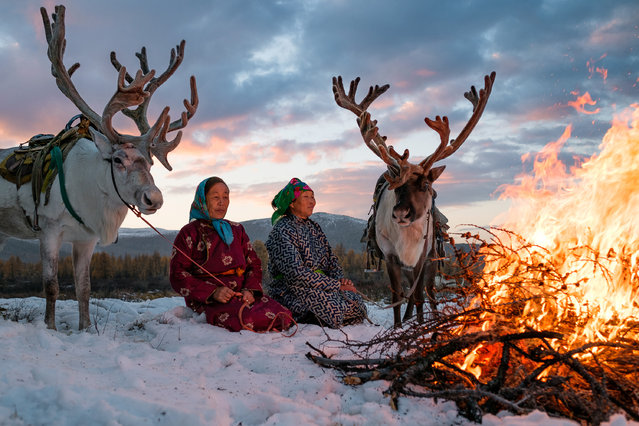
Purev and Buyantogtokh enjoy the warmth of the fire in the snow in Altai Mountains, Mongolia, September 2016. (Photo by Joel Santos/Barcroft Images)

Purev and Buyantogtokh enjoy the warmth of the fire in the snow in Altai Mountains, Mongolia, September 2016. Navigate the snowy wilds of Mongolia with this nomadic reindeer herding family. Photographer Joel Santos dived 1000km into the depths of Northern Mongolia to visit the Ganbaa family near Khovsgol Lake. (Photo by Joel Santos/Barcroft Images)
Details
17 Dec 2016 08:05:00
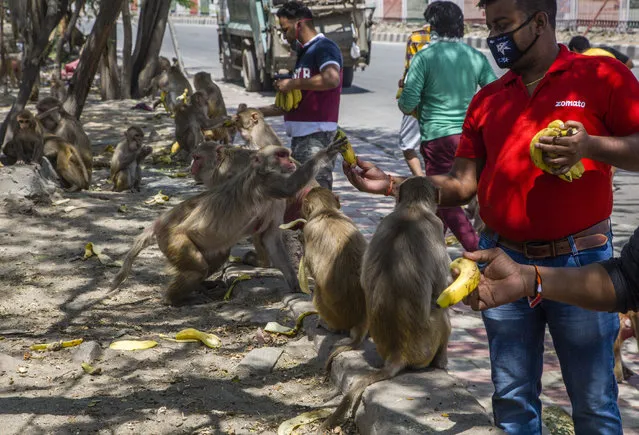
Men give bananas to monkeys gathered on the side of the road as India remains under an unprecedented lockdown over the highly contagious coronavirus (COVID-19) on April 08, 2020 in New Delhi, India. Wild animals, including monkeys, are roaming human settlements in India as people are staying indoors due to the 21-day lockdown. With India's 1.3 billion population and tens of millions of cars off the roads, wildlife is moving towards areas inhabited by humans. Wild animals in many countries have been seen roaming streets. A study says some 60 percent of the new diseases found around the globe every year are zoonotic, meaning they originate in animals and are passed on to humans. COVID-19 is a zoonotic disease that is suspected to have come from the wet markets of Wuhan, China. (Photo by Yawar Nazir/Getty Images)

Men give bananas to monkeys gathered on the side of the road as India remains under an unprecedented lockdown over the highly contagious coronavirus (COVID-19) on April 08, 2020 in New Delhi, India. Wild animals, including monkeys, are roaming human settlements in India as people are staying indoors due to the 21-day lockdown. (Photo by Yawar Nazir/Getty Images)
Details
12 Apr 2020 00:05:00
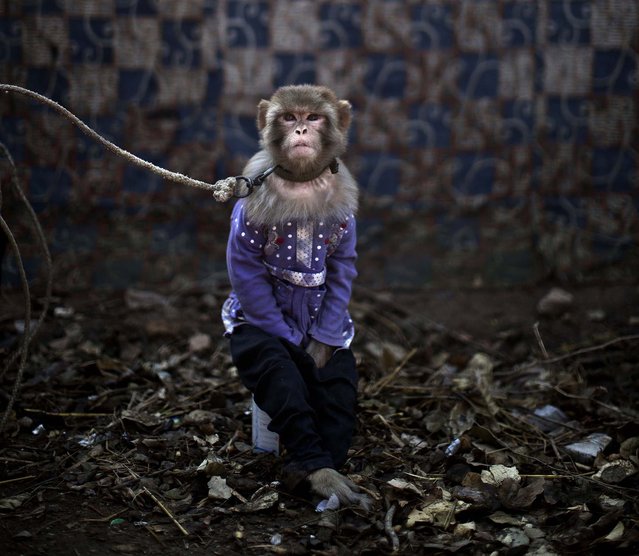
In this Tuesday, February 11, 2014, photo, a trained monkey, that makes a living for her Pakistani owner by performing to a crowd in public and private places, sits held by a leash, in Rawalpindi, Pakistan. For Pakistanis who raise and train the monkeys they are an important source of income in an impoverished country, and they form a strong bond with the animals. The monkeys are usually captured in the wild when they are babies and then trained. A trained monkey can fetch 20,000 to 30,000 rupees ($190 to $285). (Photo by Muhammed Muheisen/Associated Press)

In this Tuesday, February 11, 2014, photo, a trained monkey, that makes a living for her Pakistani owner by performing to a crowd in public and private places, sits held by a leash, in Rawalpindi, Pakistan. For Pakistanis who raise and train the monkeys they are an important source of income in an impoverished country, and they form a strong bond with the animals. The monkeys are usually captured in the wild when they are babies and then trained. A trained monkey can fetch 20,000 to 30,000 rupees ($190 to $285). (Photo by Muhammed Muheisen/Associated Press)
Details
23 Feb 2014 09:50:00
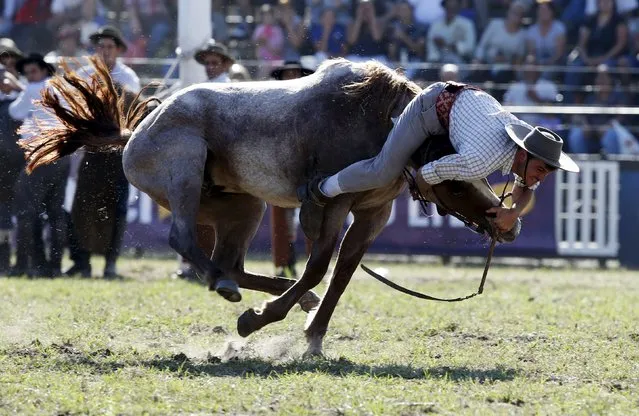
A gaucho is unseat by a wild horse during the annual celebration of Criolla Week in Montevideo, March 30, 2015. Throughout Easter Week, “gauchos”, the Latin American equivalent of the North American cowboy, from all over Uruguay and neighboring Argentina and Brazil will visit Montevideo to participate in the Criolla Week to win the best rider award. The competition is held from March 29 to April 5 this year. (Photo by Andres Stapff/Reuters)

A gaucho is unseat by a wild horse during the annual celebration of Criolla Week in Montevideo, March 30, 2015. Throughout Easter Week, “gauchos”, the Latin American equivalent of the North American cowboy, from all over Uruguay and neighboring Argentina and Brazil will visit Montevideo to participate in the Criolla Week to win the best rider award. The competition is held from March 29 to April 5 this year. (Photo by Andres Stapff/Reuters)
Details
01 Apr 2015 12:22:00
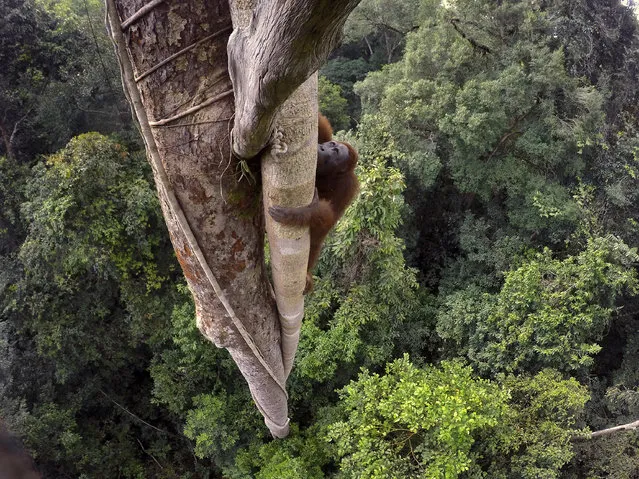
“Tough Times for Orangutans”. Nature, first prize stories. Tim Laman, USA. Location: West Kalimantan, Indonesia. A Bornean orangutan climbs over 30 meters up a tree in the rain forest of Gunung Palung National Park, West Kalimantan, Indonesia, August 12, 2015. The lives of wild orangutans are brought to light. Threats to these orangutans from fires, the illegal animal trade and loss of habitat due to deforestation have resulted in many orphan orangutans ending up at rehabilitation centers. (Photo by Tim Laman/World Press Photo Contest)

“Tough Times for Orangutans”. Nature, first prize stories. Tim Laman, USA. Location: West Kalimantan, Indonesia. A Bornean orangutan climbs over 30 meters up a tree in the rain forest of Gunung Palung National Park, West Kalimantan, Indonesia, August 12, 2015. The lives of wild orangutans are brought to light. Threats to these orangutans from fires, the illegal animal trade and loss of habitat due to deforestation have resulted in many orphan orangutans ending up at rehabilitation centers. (Photo by Tim Laman/World Press Photo Contest)
Details
19 Feb 2016 13:06:00
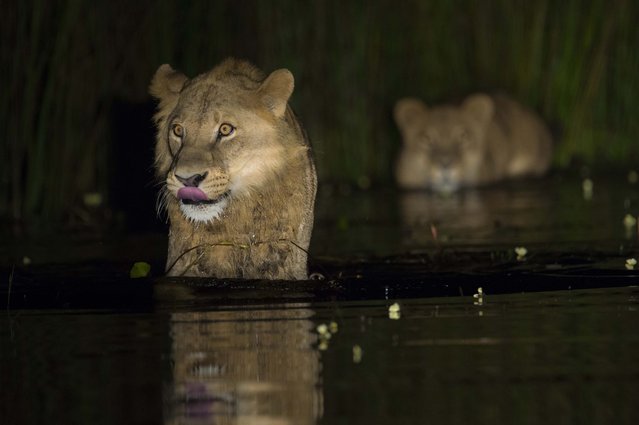
Lions submerged in water. (Photo by Wim van den Heever/Caters News)

These breath-taking photographs reveal the everyday lives of animals living in the wild. The incredible images were taken by wildlife photographer Wim van dan Heever, from Pretoria, South Africa, during trips to locations including Japan, Botswana and Svalbard. The 43-year-old has been photographing wildlife since he was a young boy and turned his passion for animals into a career and set up ODP Safaris. He has travelled across the globe to photograph wild animals – from lions and tigers, to elephants, dolphins and eagles – as they hunt, give birth and graze in their natural habitats. Here: Lions submerged in water. (Photo by Wim van den Heever/Caters News)
Details
07 Aug 2015 11:43:00
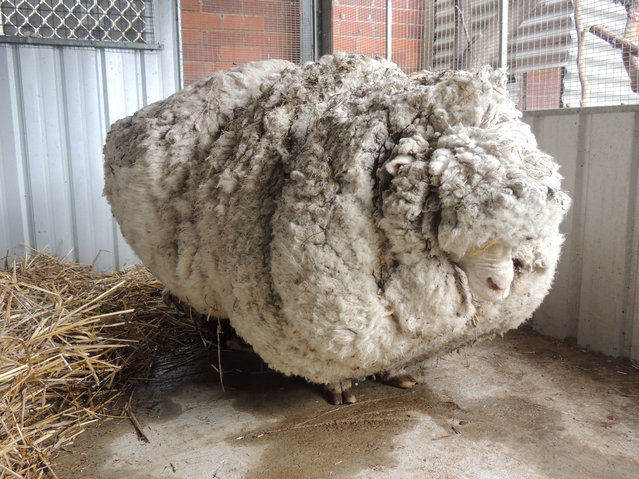
In this photo provided by the RSPCA/Australian Capital Territory, an overgrown sheep found in Australian scrubland is prepared to be shorn in Canberra, Australia, Thursday, September 3, 2015. The wild, castrated merino ram named Chris, yielded 40 kilograms (89 pounds) of wool – the equivalent of 30 sweaters – and sheded almost half his body weight. (Photo by RSPCA ACTvia AP Photo)

In this photo provided by the RSPCA/Australian Capital Territory, an overgrown sheep found in Australian scrubland is prepared to be shorn in Canberra, Australia, Thursday, September 3, 2015. The wild, castrated merino ram named Chris, yielded 40 kilograms (89 pounds) of wool – the equivalent of 30 sweaters – and sheded almost half his body weight. (Photo by RSPCA ACTvia AP Photo)
Details
04 Sep 2015 13:50:00