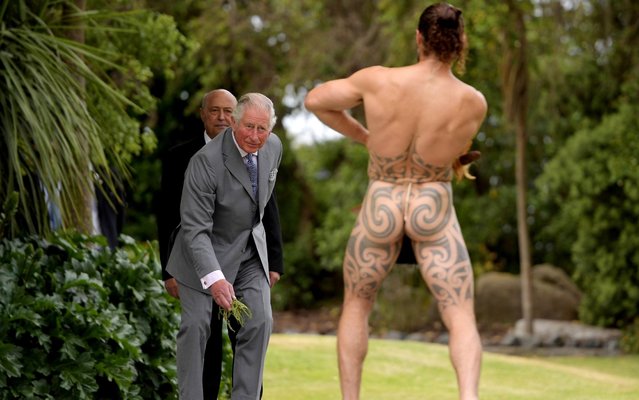
A Maori warrior prepares to challenge Prince Charles during his welcome to Takanhanga Marae in Kaikoura, New Zealand November 23, 2019. (Photo by Tracey Nearmy/Reuters)
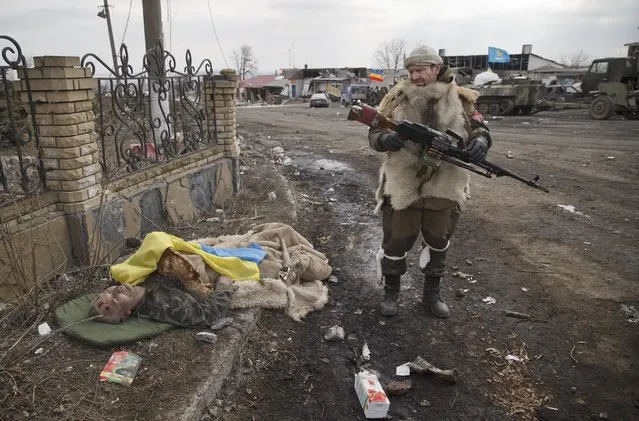
A Russia-backed rebel looks at the flag covered body of an Ukrainian serviceman in Debaltseve, Ukraine, February 20, 2015. The struggle for the strategic rail hub, Debaltseve, a sleepy town with a pre-war population of 25,000 people, left the town in ruins and became one of the darkest pages in the ongoing conflict in eastern Ukraine, which has already killed more than 6,000 people. (Photo by Vadim Ghirda/AP Photo/File)
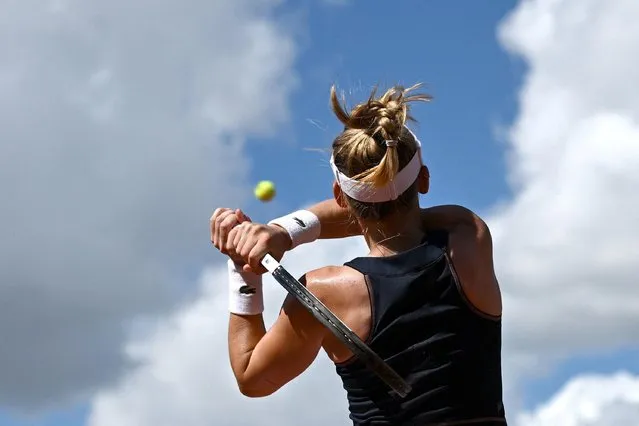
Jil Belen Teichmann of Switzerland in action against Victoria Azarenka of Belarus in her third round match on Day 6 at Roland Garros on May 27, 2022 in Paris, France. (Photo by Dylan Martinez/Reuters)
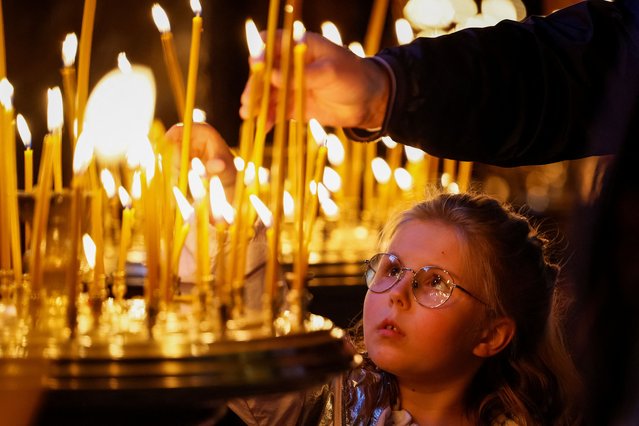
A girl lights a candle during an Easter service in the Volodymyrsky Cathedral, amid Russia's attack on Ukraine, in Kyiv, Ukraine, on May 4, 2024. (Photo by Alina Smutko/Reuters)
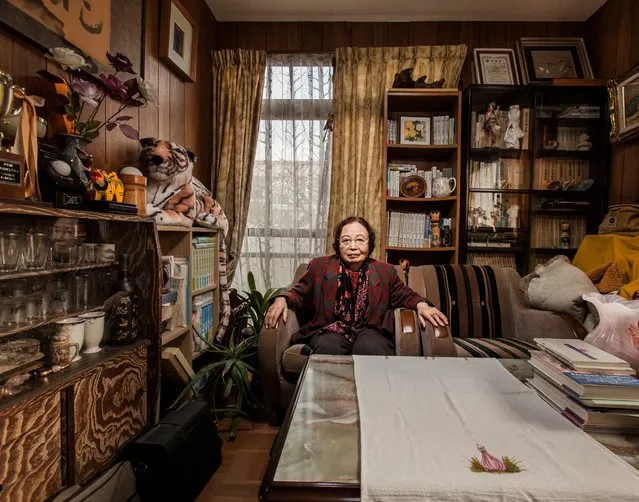
Takeoka Chisaka, Hiroshima, Japan. “One morning in August 1945, I was walking home from the night shift at a factory in Hiroshima. As I reached my door, there was a huge explosion. When I came to, my head was bleeding and I had been blasted 30m away. The atomic bomb had detonated. When I found my mother, her eyes were badly burned. A doctor said they had to come out, but he didn’t have the proper tools so used a knife instead. It was hellish. I became a peace-worker after the war. In the 1960s, at a meeting at the UN, I met one of the people who created the atomic bomb. He apologised”. (Photo and caption by Sasha Maslov)
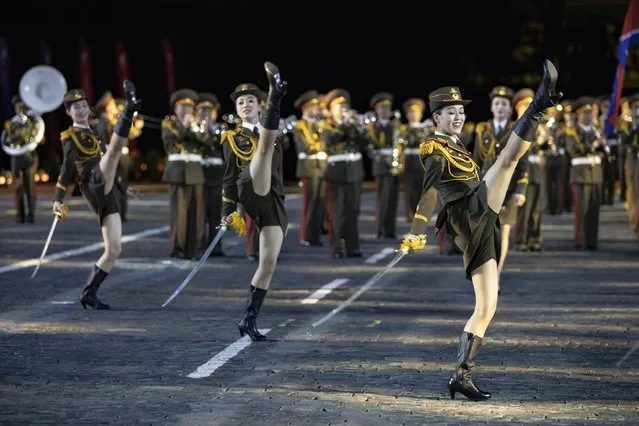
Participants from a North Korea military band perform during the Spasskaya Tower international military music festival in Red Square in Moscow, Russia, Friday, August 23, 2019. (Photo by Alexander Zemlianichenko/AP Photo)
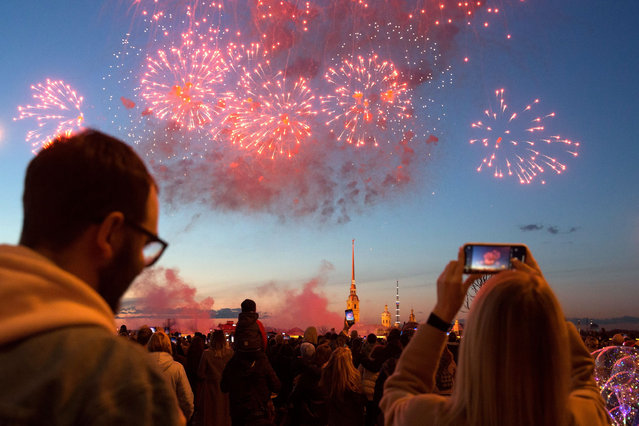
People watch fireworks commemorating the 76th anniversary of the victory in the Great Patriotic War in St. Petersburg, Russia, May 9, 2021. (Photo by Chine Nouvelle/SIPA Press/Rex Features/Shutterstock)