Loading...
Done
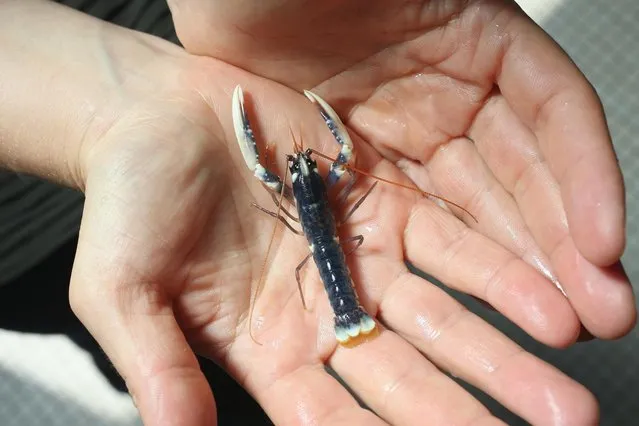
Isabel Schmalenbach, an environmental scientist with the Helgoland Biological Institute (Biologische Anstalt Helgoland), part of the Alfred Wegener Institute for Polar and Marine Research, holds a one-year old baby European lobster (Homarus gammarus) raised at the institute on August 3, 2013 on Helgoland Island, Germany. (Photo by Sean Gallup/Getty Images)

Isabel Schmalenbach, an environmental scientist with the Helgoland Biological Institute (Biologische Anstalt Helgoland), part of the Alfred Wegener Institute for Polar and Marine Research, holds a one-year old baby European lobster (Homarus gammarus) raised at the institute on August 3, 2013 on Helgoland Island, Germany. Later in the day Schmalenbach and her colleagues released a total of 415 one-year old lobsters into the North Sea as part of an effort to repopulate the lobster population around Helgoland (also called Heligoland). In the 19th century local fishermen caught up to 80,000 lobsters a year in the surrounding waters, combined with the heavy allied bombing of the island during and after World War II, as well as other environmental factors, decimated the lobster population. (Photo by Sean Gallup)
Details
05 Aug 2013 08:39:00
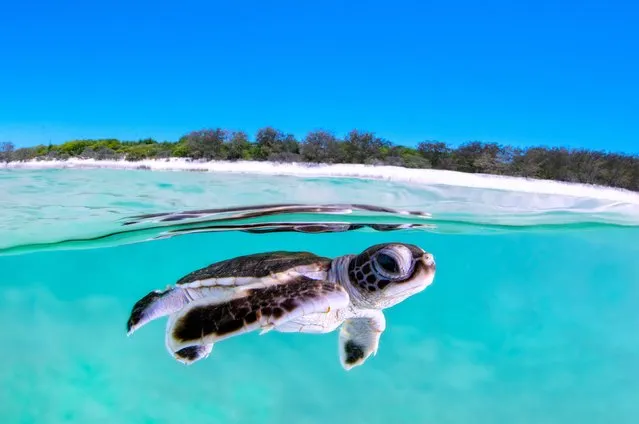
A baby turtle's perilous first moments are captured as it takes to the sea for the first time on Heron Island in Queensland, Australia in July 2022. Predators such as sharks, birds, and pollution mean that approximately only one out of every 1000 turtles that hatch make it to adulthood, with some not even reaching open ocean. Amateur photographer (Photo by Hannah Mitchell/Solent News & Photo Agency)

A baby turtle's perilous first moments are captured as it takes to the sea for the first time on Heron Island in Queensland, Australia in July 2022. Predators such as sharks, birds, and pollution mean that approximately only one out of every 1000 turtles that hatch make it to adulthood, with some not even reaching open ocean. Amateur photographer (Photo by Hannah Mitchell/Solent News & Photo Agency)
Details
06 Oct 2023 04:29:00
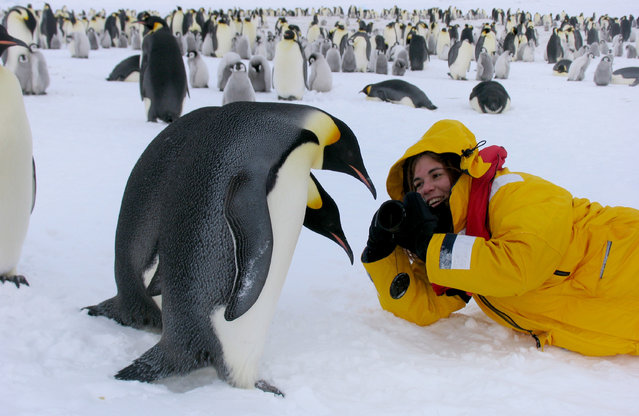
Dafna Ben Nun with the Emperor penguins. (Photo by Dafna Ben Nun/Caters News)

Dafna Ben Nun with the Emperor penguins. Heres the brilliant picture of a cheeky baby penguin playfully winking at a photographer. The adorable snap was taken while a group of mischievous chicks were playing with their parents. (Photo by Dafna Ben Nun/Caters News)
Details
15 Dec 2016 08:53:00
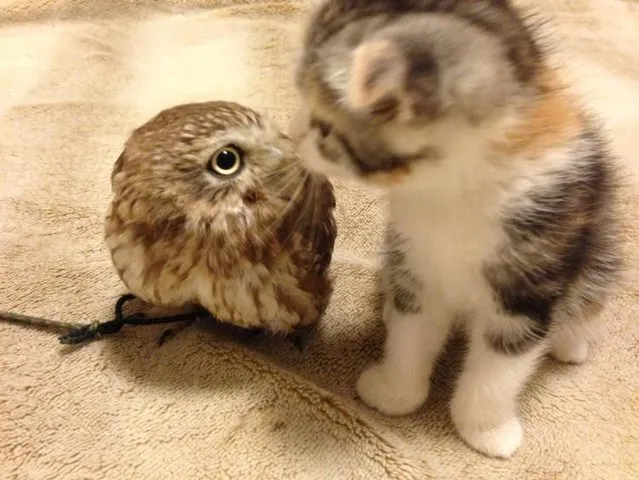
Kitten And Owl Are Best Friends

A tiny calico Scottish Fold kitten named Marimo snuggles and plays with an equally tiny baby owl named Fuku at the Hukulou Coffee House in Osaka, Japan. While the cafe is primarily focused on all things owl, the kitten is certainly getting a great deal of attention, particularly from Fuku.
Details
24 Nov 2016 08:02:00


A rare white kiwi chick is seen only days after being hatched on May 22, 2011 in Wellington, New Zealand. The all-white kiwi, named “Manukura” is suspected to be the first white chick born in captivity. The chick is the thirteenth of fourteen baby kiwis hatched at the wildlife centre this season. (Photo by Mike Heydon/Jet Productions NZ Limited via Getty Images)
Details
24 May 2011 09:07:00
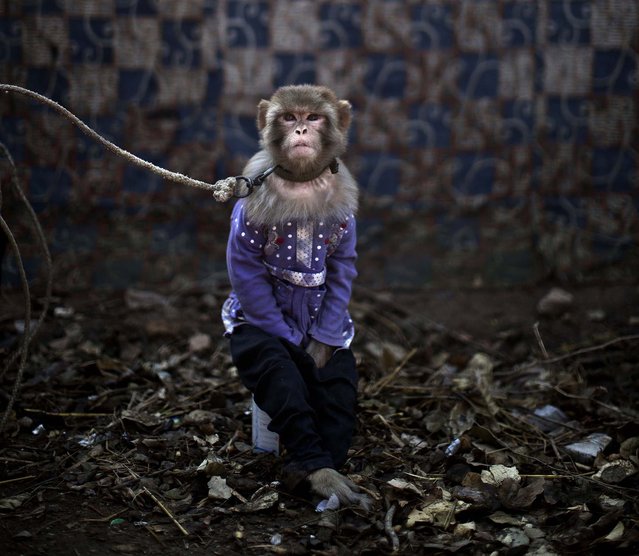
In this Tuesday, February 11, 2014, photo, a trained monkey, that makes a living for her Pakistani owner by performing to a crowd in public and private places, sits held by a leash, in Rawalpindi, Pakistan. For Pakistanis who raise and train the monkeys they are an important source of income in an impoverished country, and they form a strong bond with the animals. The monkeys are usually captured in the wild when they are babies and then trained. A trained monkey can fetch 20,000 to 30,000 rupees ($190 to $285). (Photo by Muhammed Muheisen/Associated Press)

In this Tuesday, February 11, 2014, photo, a trained monkey, that makes a living for her Pakistani owner by performing to a crowd in public and private places, sits held by a leash, in Rawalpindi, Pakistan. For Pakistanis who raise and train the monkeys they are an important source of income in an impoverished country, and they form a strong bond with the animals. The monkeys are usually captured in the wild when they are babies and then trained. A trained monkey can fetch 20,000 to 30,000 rupees ($190 to $285). (Photo by Muhammed Muheisen/Associated Press)
Details
23 Feb 2014 09:50:00
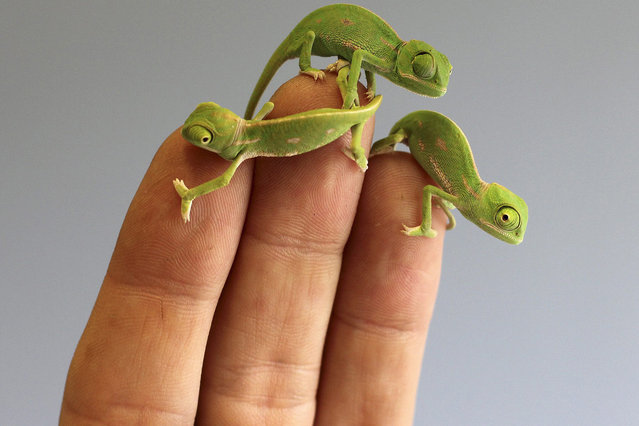
A handout image released by the Taronga Zoo shows Veiled Chameleon hatchlings at Taronga Zoo in Sydney, Australia, 11 March 2015. Taronga has welcomed more than 20 baby chameleons, with the last of three clutches of eggs hatching this week. Veiled Chameleons, or Chamaeleo calyptratus, are native to Saudi Arabia and Yemen and can live up to five years. (Photo by EPA/Taronga Zoo)

A handout image released by the Taronga Zoo shows Veiled Chameleon hatchlings at Taronga Zoo in Sydney, Australia, 11 March 2015. Taronga has welcomed more than 20 baby chameleons, with the last of three clutches of eggs hatching this week. Veiled Chameleons, or Chamaeleo calyptratus, are native to Saudi Arabia and Yemen and can live up to five years. (Photo by EPA/Taronga Zoo)
Details
21 Mar 2015 13:13:00
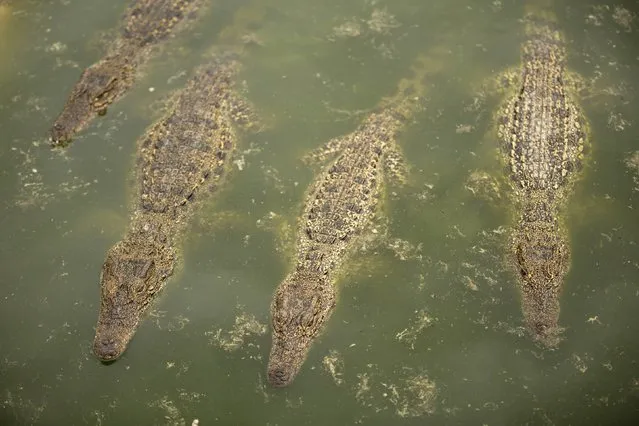
Cuban crocodiles (Crocodylus rhombifer), are seen in a hatchery at Zapata Swamp National Park, June 4, 2015. Ten baby crocodiles have been delivered to a Cuban hatchery in hopes of strengthening the species and extending the bloodlines of a pair of Cuban crocodiles that former President Fidel Castro had given to a Soviet cosmonaut as a gift in the 1970s. Picture taken June 4, 2015. REUTERS/Alexandre Meneghini

Cuban crocodiles (Crocodylus rhombifer), are seen in a hatchery at Zapata Swamp National Park, June 4, 2015. Ten baby crocodiles have been delivered to a Cuban hatchery in hopes of strengthening the species and extending the bloodlines of a pair of Cuban crocodiles that former President Fidel Castro had given to a Soviet cosmonaut as a gift in the 1970s. Picture taken June 4, 2015. REUTERS/Alexandre Meneghini
Details
15 Jun 2015 12:34:00