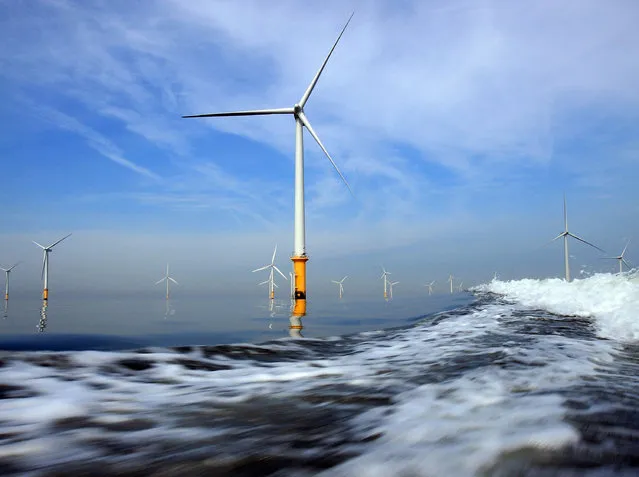
Turbines of the new Burbo Bank off shore wind farm lay in the wake of a maintenance boat in the mouth of the River Mersey on May 12, 2008 in Liverpool, England. (Photo by Christopher Furlong/Getty Images)
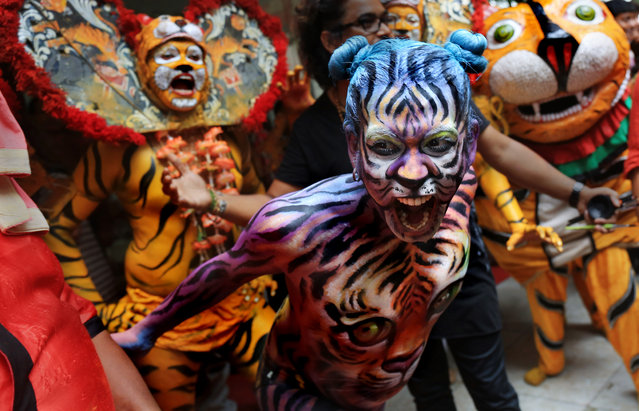
Indian dancers paint their body like tigers as they perform a Tiger dance during the International day of the Tiger in Calcutta, India, July 29, 2015. Students of Calcutta are taking part in an awareness campaign aiming to draw attention to the threats that tigers face due to habitat loss and poaching. (Photo by Piyal Adhikary/EPA)
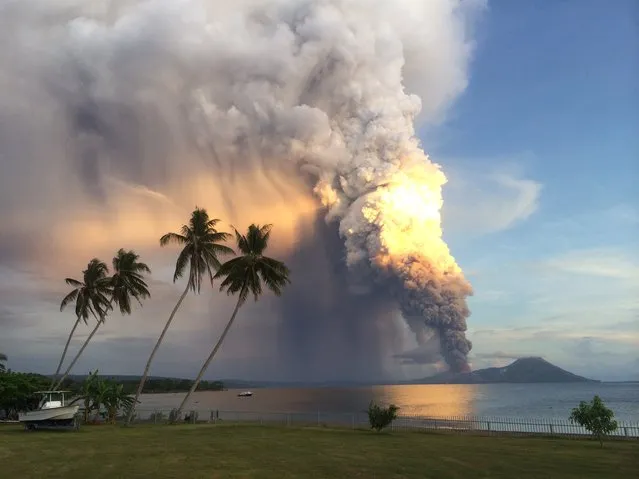
A photo taken on August 29, 2014, shows Mount Tavurvur erupting in eastern Papua New Guinea, spewing rocks and ash into the air, forcing the evacuation of local communities and international flights to be re-routed. Mount Tavurvur, which destroyed the town of Rabaul when it erupted simultaneously with nearby Mount Vulcan in 1994, rumbled to life early in the morning on the tip of the remote island of New Britain. (Photo by Oliver Bluett/AFP Photo)
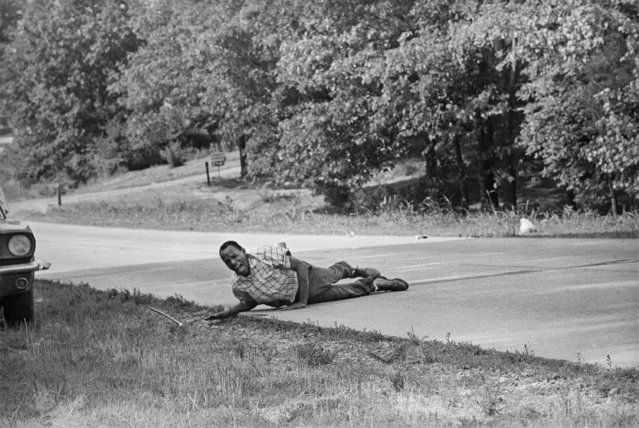
In this June 6, 1966 file photo, civil rights activist James Meredith pulls himself across Highway 51 after being shot in Hernando, Miss. Meredith, who defied segregation to enroll at the University of Mississippi in 1962, completed the march from Memphis, Tenn., to Jackson, Miss., after being treated for his wounds. (Photo by Jack Thornell/AP Photo)
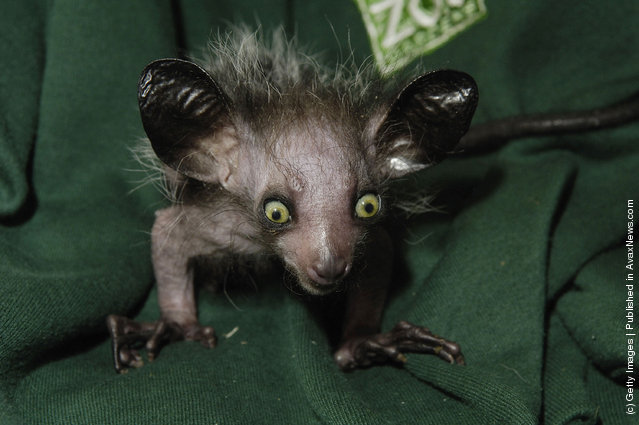
“The aye-aye (Daubentonia madagascariensis) is a lemur, a strepsirrhine primate native to Madagascar that combines rodent-like teeth and a special thin middle finger to fill the same ecological niche as a woodpecker. It is the world's largest nocturnal primate, and is characterized by its unusual method of finding food; it taps on trees to find grubs, then gnaws holes in the wood and inserts its narrow middle finger to pull the grubs out. The only other animal species known to find food in this way is the striped possum. From an ecological point of view the aye-aye fills the niche of a woodpecker as it is capable of penetrating wood to extract the invertebrates within”. – Wikipedia
Photo: In this handout image from Bristol Zoo is seen the first captive bred aye-aye in the UK named “Kintana” (meaning star in Malagasy) April 15, 2005 at Bristol Zoo Gardens, England. The zoo announced today only the second baby aye-aye to be hand-reared in the world (the first was in Jersey Zoo) and has now made his first public appearance since his birth on 11 February 2005. (Photo by Rob Cousins/Bristol Zoo via Getty Images)
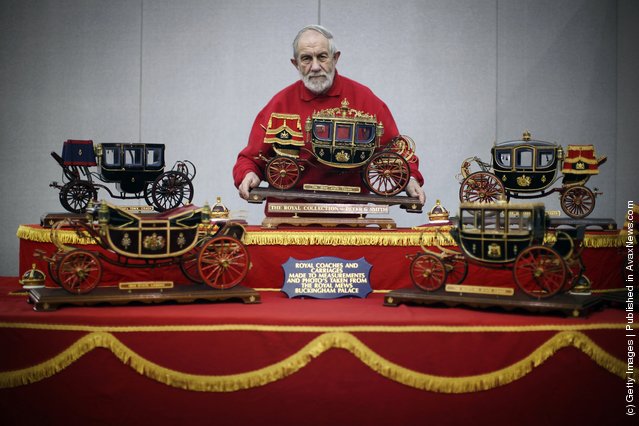
Model enthusiast Peter Smith poses with his collection of handmade scale model coaches at the “London Model Engineering Exhibition” at Alexander Palace on January 20, 2012 in London, England. (Photo by Dan Kitwood/Getty Images)
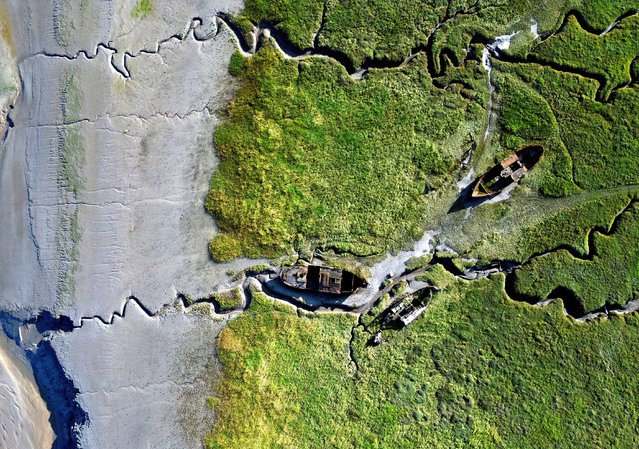
Decaying fishing trawlers known collectively as The Fleetwood Wrecks, are seen at low tide on the banks of the River Wyre in Fleetwood, Britain on September 26, 2023. (Photo by Lee Smith/Reuters)