Loading...
Done
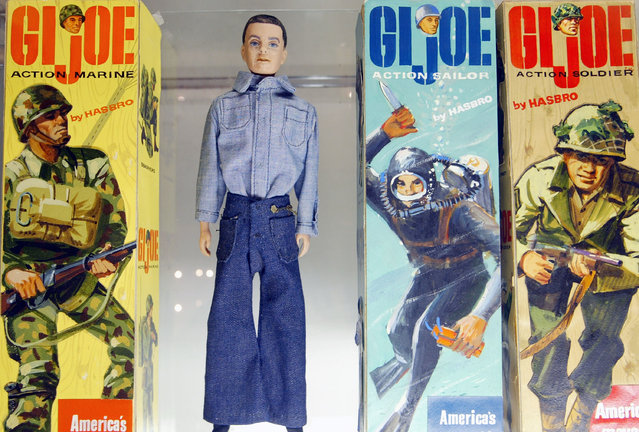
Vintage G.I. Joe figurers are on display at the 2003 Hasbro International G.I. Joe Collectors' Convention June 27, 2003 in Burlingame, California. Hundreds of G.I. Joe fans from around the country are attending the convention to buy, sell and trade G.I. Joe and military action figures. (Photo by Justin Sullivan/Getty Images)

“G.I. Joe is a line of action figures produced by the toy company Hasbro. The term G.I. stands, in popular usage, for Government Issued and after the First World War became a generic term for U.S. soldiers. The origin of the term dates to World War I, when much of the equipment issued to U.S. soldiers was stamped “G.I.”, meaning that it was made from galvanized iron. The development of G.I. Joe led to the coining of the term “action figure”. G.I. Joe's appeal to children has made it an American icon among toys”. – Wikipedia. Photo: Vintage G.I. Joe figurers are on display at the 2003 Hasbro International G.I. Joe Collectors' Convention June 27, 2003 in Burlingame, California. (Photo by Justin Sullivan/Getty Images)
Details
27 Mar 2014 07:46:00
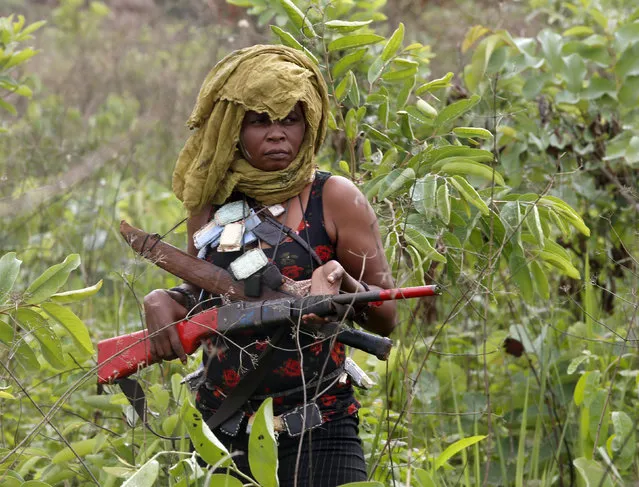
A female member of the anti-balaka, a Christian militia, patrols with other militiamen outside village of Zawa April 8, 2014. (Photo by Goran Tomasevic/Reuters)

Anti-balaka militia originally sprang up to protect the Christian population of the Central African Republic, but now stand accused of human rights abuses themselves. Last month, the African Union branded militia targeting Muslims in Central African Republic as “terrorists” and said they would be treated as enemy combatants, a day after killing a Congolese peacekeeper and amid deepening international frustration at continuing violence in the impoverished and landlocked country. Photo: A female member of the anti-balaka, a Christian militia, patrols with other militiamen outside village of Zawa April 8, 2014. (Photo by Goran Tomasevic/Reuters)
Details
10 Apr 2014 10:26:00
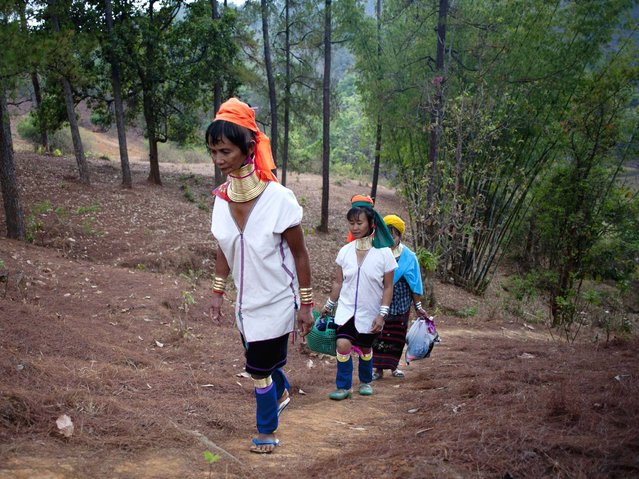
One of the theories says that the coils originate from the desire to look more attractive by exaggerating sexual dimorphism, as women have more slender necks than men. (Photo by Ye Aung Thu/AFP Photo)

This photo taken on April 16, 2014 shows ethnic Kayan women wearing traditional clothes and bronze rings around tbeir neck in Panpet village, Demoso township in Kayah state, eastern Myanmar. Some ethnic Kayan women, also known as Padaung, begin wearing the bronze rings on their neck and legs from a young age. Usually they start wearing six to ten rings when they are five to ten-years-old and then they put on one more ring a year for years after then. (Photo by Ye Aung Thu/AFP Photo)
Details
23 Apr 2014 08:56:00
Everyday Objects Into Cute Characters By Gilbert Legrand Part 3

French artist Gilbert Legrand’s new series takes everyday objects like corkscrews, tape measures, and more and turns them into hilariously cute characters that almost make you forget their original purpose. Skillfully using each object’s natural shape, he crafts a character full of whimsy and personality. Each is painted to detail, with even the tiniest of characters bearing an expression which leaves no doubt as to their feelings about the situation. It truly takes a talented hand and imagination to turn paint brushes and zippers into humorous characters with surprisingly huge personalities.


See Also: Psrt 1 _ Part 2
Details
14 Jul 2014 12:08:00
A scene showing one of the first trench battles is prepared for the opening of the 3D Panorama exhibition “Memory talks. The road through war” in the former Sevcabel port in St. Petersburg, Russia, 16 September 2019. (Photo by Anatoly Maltsev/EPA/EFE)

A scene showing one of the first trench battles is prepared for the opening of the 3D Panorama exhibition “Memory talks. The road through war” in the former Sevcabel port in St. Petersburg, Russia, 16 September 2019. Various 3D dioramas – containing genuine wartime items such as aircraft, tanks and artillery in original size – allow visitors to walk through scenes from the beginning to the end of WWII without any museum barriers. The exhibition opens from 19 September 2019 to May 2020. (Photo by Anatoly Maltsev/EPA/EFE)
Details
19 Sep 2019 00:01:00
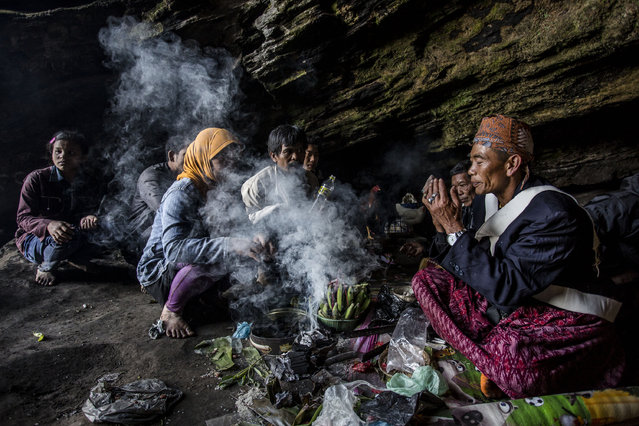
A Tenggerese shaman praying for worshippers at Widodaren cave during the Tenggerese Hindu Yadnya Kasada festival on July 31, 2015 in Probolinggo, East Java, Indonesia. The festival is the main festival of the Tenggerese people and lasts about a month. On the fourteenth day, the Tenggerese make the journey to Mount Bromo to make offerings of rice, fruits, vegetables, flowers and livestock to the mountain gods by throwing them into the volcano's caldera. (Photo by Ulet Ifansasti/Getty Images)

A Tenggerese shaman praying for worshippers at Widodaren cave during the Tenggerese Hindu Yadnya Kasada festival on July 31, 2015 in Probolinggo, East Java, Indonesia. The festival is the main festival of the Tenggerese people and lasts about a month. On the fourteenth day, the Tenggerese make the journey to Mount Bromo to make offerings of rice, fruits, vegetables, flowers and livestock to the mountain gods by throwing them into the volcano's caldera. The origin of the festival lies in the 15th century when a princess named Roro Anteng started the principality of Tengger with her husband Joko Seger, and the childless couple asked the mountain Gods for help in bearing children. The legend says the Gods granted them 24 children but on the provision that the 25th must be tossed into the volcano in sacrifice. The 25th child, Kesuma, was finally sacrificed in this way after initial refusal, and the tradition of throwing sacrifices into the caldera to appease the mountain Gods continues today. (Photo by Ulet Ifansasti/Getty Images)
Details
01 Aug 2015 12:07:00
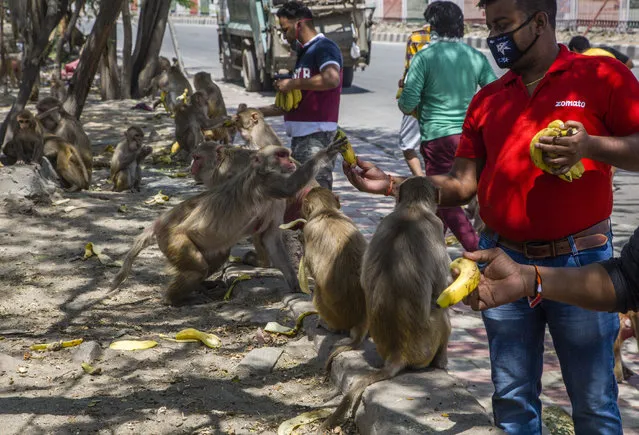
Men give bananas to monkeys gathered on the side of the road as India remains under an unprecedented lockdown over the highly contagious coronavirus (COVID-19) on April 08, 2020 in New Delhi, India. Wild animals, including monkeys, are roaming human settlements in India as people are staying indoors due to the 21-day lockdown. With India's 1.3 billion population and tens of millions of cars off the roads, wildlife is moving towards areas inhabited by humans. Wild animals in many countries have been seen roaming streets. A study says some 60 percent of the new diseases found around the globe every year are zoonotic, meaning they originate in animals and are passed on to humans. COVID-19 is a zoonotic disease that is suspected to have come from the wet markets of Wuhan, China. (Photo by Yawar Nazir/Getty Images)

Men give bananas to monkeys gathered on the side of the road as India remains under an unprecedented lockdown over the highly contagious coronavirus (COVID-19) on April 08, 2020 in New Delhi, India. Wild animals, including monkeys, are roaming human settlements in India as people are staying indoors due to the 21-day lockdown. (Photo by Yawar Nazir/Getty Images)
Details
12 Apr 2020 00:05:00
Jenna carefully watches two giant boa constrictors that their owner, a street performer she barely knows, entrusted to her. She is careful to keep the one snake wrapped around exercise bars to prevent a wound in the animal’s mouth from touching the sand and getting infected. Jenna is a single mom on disability. She suffers from failed back surgery syndrome, acquired from a violent car accident she had as a teenager. She and her young son Jackson can be found most afternoons on the beach. Originally from South Carolina, Jenna came to Venice in 2010 and describes herself as “an open-minded Christian who loves everyone for who they are”. Nowadays Jenna sometimes has trouble reconciling her inclusive progressive values with her family’s conservative political stance, especially in today’s toxic political climate. (Photo by Dotan Saguy)

Over the past three years, Los Angeles-based photographer Dotan Saguy has spent hundreds of hours documenting the diverse culture, people and pageantry of the iconic Venice Beach boardwalk. He was irresistibly drawn to the free-spirited, anti-materialistic and inclusive nature of the world-famous location, which he found to be a breath of fresh air in contrast to Los Angeles’s sometimes homogenized, celebrity-obsessed culture. (Photo by Dotan Saguy)
Details
01 Aug 2018 00:03:00