Loading...
Done
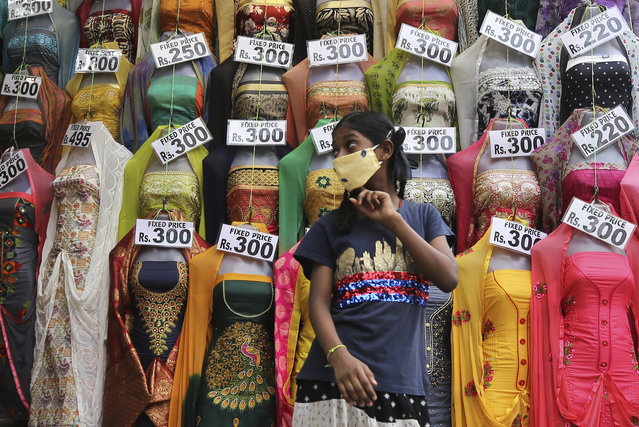
A girl wearing a face mask as a precaution against the coronavirus walks past a display of garments at a market in Bengaluru, India, Saturday, January 9, 2021. India will kick off the coronavirus vaccination drive on Jan. 16 to stem the pandemic in the world's second-most populous country. A Health Ministry statement says that priority will be given to the healthcare workers and the frontline workers, estimated around 30 million. (Photo by Aijaz Rahi/AP Photo)

A girl wearing a face mask as a precaution against the coronavirus walks past a display of garments at a market in Bengaluru, India, Saturday, January 9, 2021. India will kick off the coronavirus vaccination drive on Jan. 16 to stem the pandemic in the world's second-most populous country. A Health Ministry statement says that priority will be given to the healthcare workers and the frontline workers, estimated around 30 million. (Photo by Aijaz Rahi/AP Photo)
Details
19 Jan 2021 00:05:00
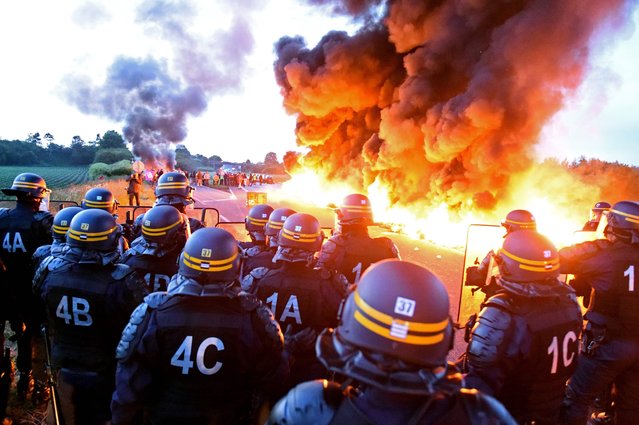
Riot police stand guard behind a fire as refinery workers hold a blockade of the oil depot of Douchy-Les-Mines to protest against the government's proposed labour reforms, on May 25, 2016. Refinery workers stepped up strikes that threaten to paralyse France weeks ahead of the Euro 2016 tournament as the government moved to break their blockades, escalating a three-month tug-of-war over labour reforms. (Photo by François L.O./AFP Photo)

Riot police stand guard behind a fire as refinery workers hold a blockade of the oil depot of Douchy-Les-Mines to protest against the government's proposed labour reforms, on May 25, 2016. Refinery workers stepped up strikes that threaten to paralyse France weeks ahead of the Euro 2016 tournament as the government moved to break their blockades, escalating a three-month tug-of-war over labour reforms. (Photo by François L.O./AFP Photo)
Details
26 May 2016 13:02:00
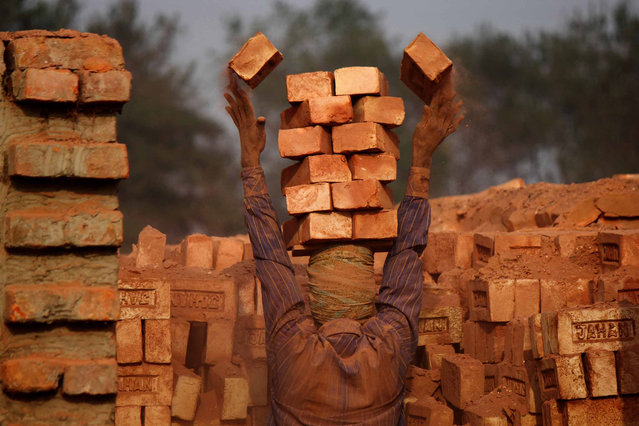
CGAP Photo Contest – South Asia Regional Winner: Bricks Worker, Bangladesh. A private enterprise worker is working at a brick field. These small businesses are creating new job opportunities for many poor people. (Photo by Moksumul Haque)

The shoemaker in Turkey, the potato seller in Vietnam, and the weaver in Bolivia are among the billions of low-income entrepreneurs who make the world go round. They are also the type of people who can benefit significantly from microfinance. Every year, the Consultative Group To Assist The Poor (or CGAP) hosts a photo contest asking entrants to submit photos based around the idea of microfinance.The purpose of the contest is to give amateur and professional photographers a chance to show the different ways that poor households manage their financial lives and make their lives better through financial inclusion. Photo: South Asia Regional Winner – “Bricks Worker”, Bangladesh. A private enterprise worker is working at a brick field. These small businesses are creating new job opportunities for many poor people. (Photo by Moksumul Haque)
Details
14 Aug 2014 10:58:00
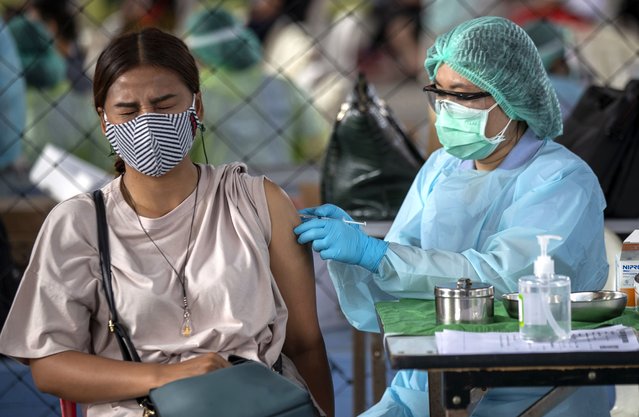
A health worker administers a dose of the Sinovac COVID-19 vaccine to a worker in a local entertainment venue area where a new cluster of COVID-19 infections were found in Bangkok, Thailand, Wednesday, April 7, 2021. Officials in Thailand’s capital have ordered a two-week closure of all entertainment venues in three districts to try to limit the spread of the coronavirus from nightspots there. (Photo by Sakchai Lalit/AP Photo)

A health worker administers a dose of the Sinovac COVID-19 vaccine to a worker in a local entertainment venue area where a new cluster of COVID-19 infections were found in Bangkok, Thailand, Wednesday, April 7, 2021. Officials in Thailand’s capital have ordered a two-week closure of all entertainment venues in three districts to try to limit the spread of the coronavirus from nightspots there. (Photo by Sakchai Lalit/AP Photo)
Details
08 Apr 2021 11:21:00
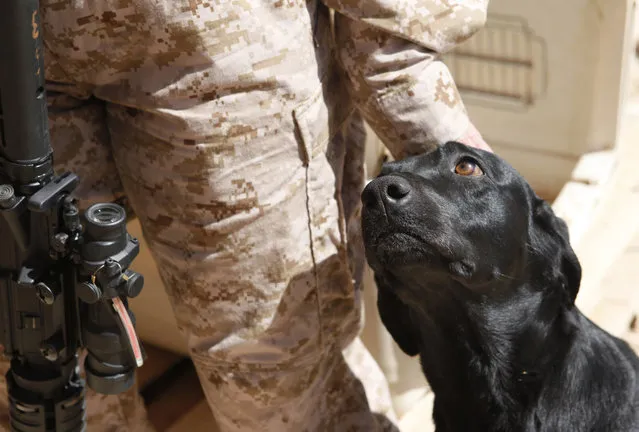
Afghanistan: Dogs of War Part 2

Throughout the course of the long war in Afghanistan, Coalition troops have relied on thousands of military working dogs to help keep them safe, and make their jobs easier. The dogs are trained to detect explosives, to find illegal drugs, to search for missing comrades, or target enemy combatants. Not only are they active on the front lines, but behind the lines they serve as therapy dogs, service dogs, and loyal companions. They also share the same risks as the ground troops, suffering injuries and sometimes death on the battlefields. Gathered here are images of these dogs and their handlers in Afghanistan and back home, from over the past several years, part of the ongoing series here on Afghanistan.
Details
05 Jun 2014 21:10:00
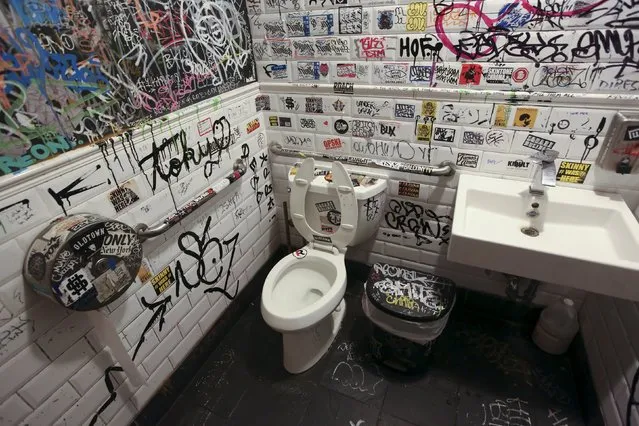
Graffiti is painted on the bathroom walls at a restaurant in the Williamsburg area of Brooklyn borough in New York, United States, October 1, 2015. (Photo by Shannon Stapleton/Reuters)

Graffiti is painted on the bathroom walls at a restaurant in the Williamsburg area of Brooklyn borough in New York, United States, October 1, 2015. Some 2.4 billion people around the world don't have access to decent sanitation and more than a billion are forced to defecate in the open, risking disease and other dangers, according to the United Nations. To mark World Toilet Day on November 19, Reuters photographers captured pictures of toilets in cities, towns and villages around the globe. (Photo by Shannon Stapleton/Reuters)
Details
18 Nov 2015 08:06:00
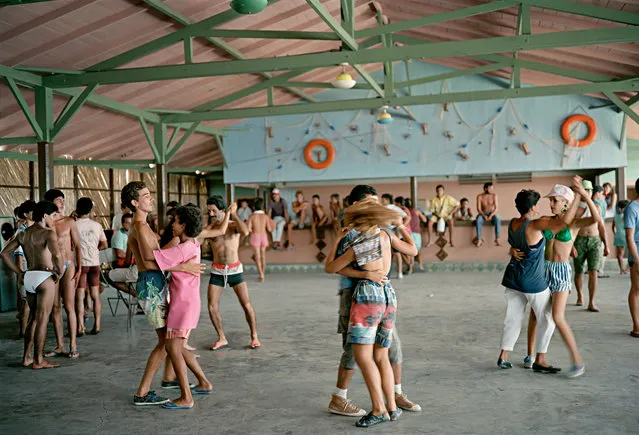
Giovan set out to capture the people’s resilience, during what Fidel Castro, with typical hyperbole, called the “special period”. (Photo by Tria Giovan/The Guardian)

As an American in 1990s Cuba, Tria Giovan risked being branded a traitor. But the photographer continued to visit and, from the dance hall to the hair salon, she captured the resilient spirit of the Cuban people. The 120 images in Tria Giovan’s “The Cuba Archive” are from the period in the 90s when, as an American, travel to Cuba could have seen her branded a traitor, as the country was subject to a US trade embargo. Her trip required lots of planning – and patience. (Photo by Tria Giovan/The Guardian)
Details
21 Sep 2017 09:04:00
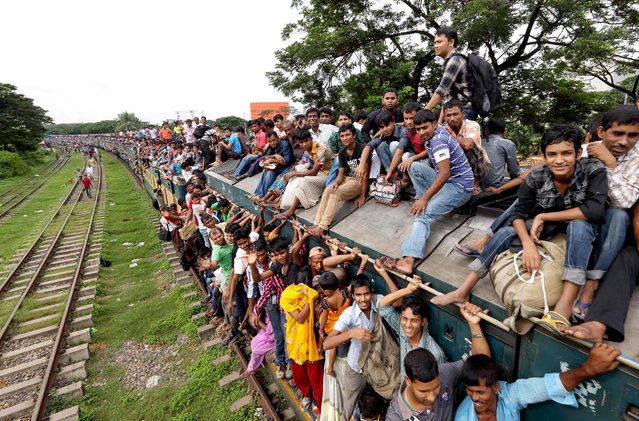
Due to the lack of available space inside, most passengers resort to sitting on top of the train. (Photo by Yousuf Tushar/Solent News & Photo Agency)

A busy rush hour sees thousands of commuters climbing on board a train – as well as holding onto its sides and sitting on the roof before it speeds off. Men, women and children climb and are pulled up onto the roof of the train, which is around 12ft (3.6m) high, as they try to find themselves a space. With no seats available inside, many commuters decide to take the risk and choose a rooftop view for their journey out of Dhaka city, in Bangladesh. (Photo by Yousuf Tushar/Solent News & Photo Agency)
Details
14 Mar 2017 00:03:00