Loading...
Done
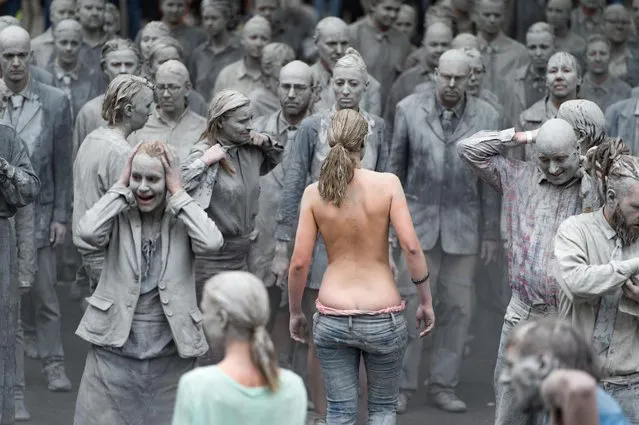
Activists in a clay outfits at the Rathausmarkt during the art protest campaign “1000 Gestalten” (lit 1000 figures), for more solidarity and political participation, in Hamburg, Germany, 17 June 2017. (Photo by Lukas Barth-Tuttas/DPA/Alamy Live News)

Activists in a clay outfits at the Rathausmarkt during the art protest campaign “1000 Gestalten” (lit 1000 figures), for more solidarity and political participation, in Hamburg, Germany, 17 June 2017. In a two-hour show hundreds of actors took part in a creative public appeal for more humanity and self-responsibility ahead of the upcoming G20 summit. The G20 economic summit takes place in Hamburg July 7-8. (Photo by Lukas Barth-Tuttas/DPA/Alamy Live News)
Details
06 Jul 2017 09:25:00
In this picture taken Friday, September 8, 2017, Brazilan Samba dancers perform on stage during the Harare International Carnival in the capital. (Photo by Tsvangirayi Mukwazhi/AP Photo)

In this picture taken Friday, September 8, 2017, Brazilan Samba dancers perform on stage during the Harare International Carnival in the capital. An international carnival aimed at boosting the local tourism industry has ended in economically troubled Zimbabwe. Some viewed the Harare festivities, which ended Sunday and featured artists and dancers from Brazil, Cuba, Egypt and elsewhere, as a relief from the struggle to get by in the southern African country. (Photo by Tsvangirayi Mukwazhi/AP Photo)
Details
14 Sep 2017 08:13:00
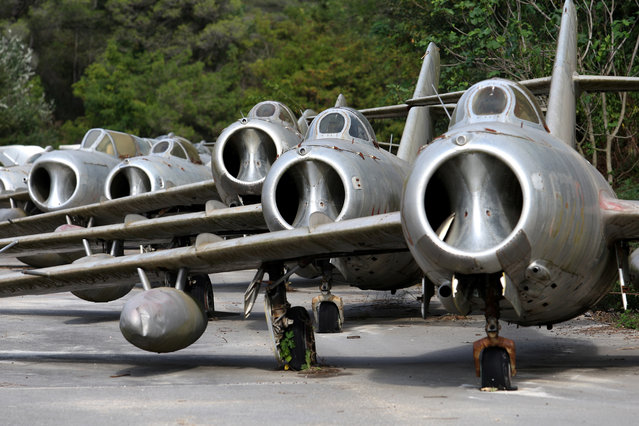
MiG-15 jet fighters are pictured in Kucova Air Base in Kucova, Albania on October 3, 2018. (Photo by Florion Goga/Reuters)

MiG-15 jet fighters are pictured in Kucova Air Base in Kucova, Albania on October 3, 2018. Albania retired its 224 Soviet- and Chinese-made MiGs in 2005, and since 2009 NATO neighbors Italy and Greece monitor its airspace. That led to economic decline in and around Kucova, which was called “Stalin City” during the era of Communist rule. (Photo by Florion Goga/Reuters)
Details
15 Oct 2018 00:01:00
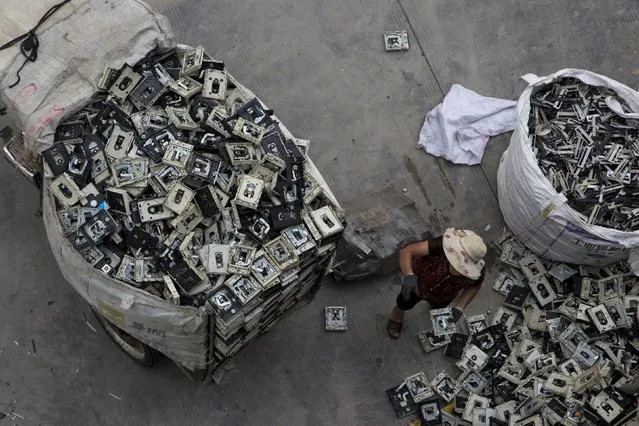
A worker distributes electronic waste at a government managed recycling centre at the township of Guiyu in China's southern Guangdong province June 10, 2015. (Photo by Tyrone Siu/Reuters)

A worker distributes electronic waste at a government managed recycling centre at the township of Guiyu in China's southern Guangdong province June 10, 2015. The town of Guiyu in the economic powerhouse of Guangdong province in China has long been known as one of the world’s largest electronic waste dump sites. At its peak, some 5,000 workshops in the village recycle 15,000 tonnes of waste daily including hard drives, mobile phones, computer screens and computers shipped in from across the world. (Photo by Tyrone Siu/Reuters)
Details
04 Jul 2015 10:28:00
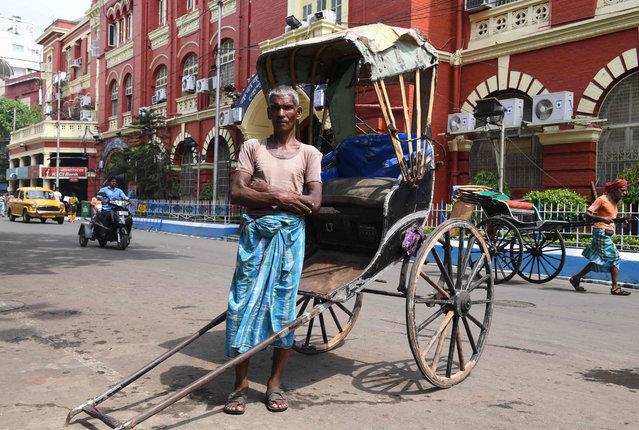
Mohammad Ashgar, 65, an Indian rickshaw puller, poses for a photograph next to his rickshaw in Kolkata on April 21, 2018. A mainstay of 19 th century transportation options, the hand- pulled rickshaw survives in India only in Kolkata after being outlawed elsewhere. The local puller's union puts the number of pullers in the city at 3,000. The union has resisted all previous attempts to ban their livelihood, previously organising mass protests of their members against moves to stamp out the practice. (Photo by Dibyangshu Sarkar/AFP Photo)

Ahead of May Day, AFP' s video and photo teams spoke to men and women around the globe whose jobs are becoming increasingly rare, particularly as technology transforms societies. Here: Mohammad Ashgar, 65, an Indian rickshaw puller, poses for a photograph next to his rickshaw in Kolkata on April 21, 2018. (Photo by Dibyangshu Sarkar/AFP Photo)
Details
02 May 2018 00:01:00
Two women enjoy drinks outside a pub in the soho area of central London on November 4, 2020, on the eve of a second novel coronavirus COVID-19 lockdown in an effort to combat soaring infections. English pubs call last orders at the bar for a month on Wednesday evening, as the country effectively shuts down from November 5, for the second time this year to try to cut coronavirus cases. Prime Minister Boris Johnson insisted that the lockdown for England would end “automatically” in four weeks, as he tried to placate party critics over the spiralling economic fallout. (Photo by Stephen Lock/i-Images)

Two women enjoy drinks outside a pub in the soho area of central London on November 4, 2020, on the eve of a second novel coronavirus COVID-19 lockdown in an effort to combat soaring infections. English pubs call last orders at the bar for a month on Wednesday evening, as the country effectively shuts down from November 5, for the second time this year to try to cut coronavirus cases. Prime Minister Boris Johnson insisted that the lockdown for England would end “automatically” in four weeks, as he tried to placate party critics over the spiralling economic fallout. (Photo by Stephen Lock/i-Images)
Details
06 Nov 2020 00:07:00
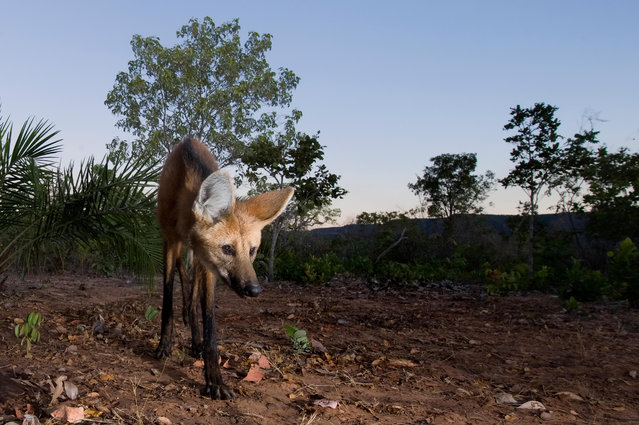
The maned wolf is among the large mammals in the Brazilian Cerrado that are threatened by the increasing conversion of grasslands into farmland for grazing and growing crops. (Photo by Ben Cranke/Nature Picture Library/Alamy Stock Photo)

Global wildlife populations will decline by 67% by 2020 unless urgent action is taken to reduce human impact on species and ecosystems, warns the biennial Living Planet Index report from WWF (World Wide Fund for Nature) and ZSL (Zoological Society of London). From elephants to eels, here are some of the wildlife populations most affected by human activity. Here: The maned wolf is among the large mammals in the Brazilian Cerrado that are threatened by the increasing conversion of grasslands into farmland for grazing and growing crops. (Photo by Ben Cranke/Nature Picture Library/Alamy Stock Photo)
Details
28 Oct 2016 10:47:00
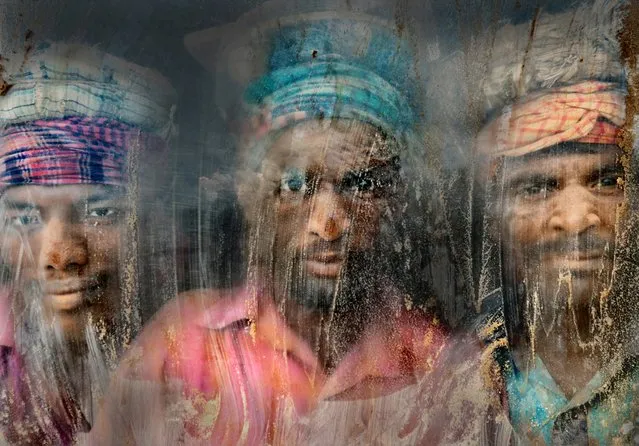
Gravel Workmen of Chittagong, Bangladesh, by Faisal Azim. Gravel workmen look through a glass window at a gravel-crushing yard in Chittagong. Full of dust and sand, it is an extremely unhealthy environment for working, but still hundreds of people work here for their livelihoods. (Photo by Faisal Azim/2016 Atkins CIWEM Environmental Photographer of the Year)

From Tibetan monks playing basket ball with ice thawing high up in the Himalayas, to the pollution that hides behind the Taj Mahal, here’s pick from 60 exceptional environmental photographs, by photographers and filmmakers from 70 countries, that will go on show at the Royal Geographical Society in London from 29 June to 21 August. The winners will be announced on 28 June. Here: Gravel Workmen of Chittagong, Bangladesh, by Faisal Azim. Gravel workmen look through a glass window at a gravel-crushing yard in Chittagong. Full of dust and sand, it is an extremely unhealthy environment for working, but still hundreds of people work here for their livelihoods. (Photo by Faisal Azim/2016 Atkins CIWEM Environmental Photographer of the Year)
Details
01 Jun 2016 12:25:00