Loading...
Done
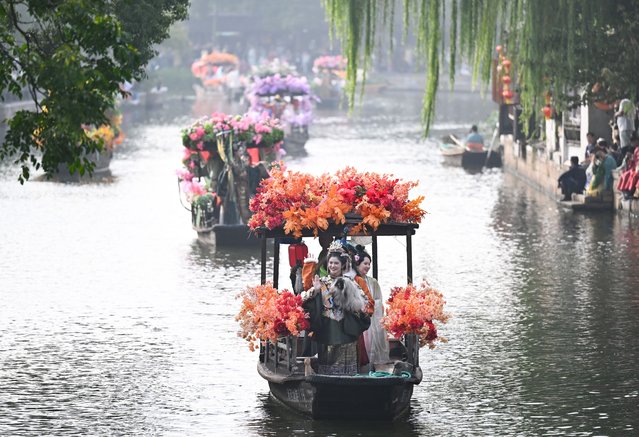
People dressed in Hanfu robes take a boat parade during the Xitang Hanfu Culture Week in the ancient town of Xitang on November 1, 2025 in Jiaixng, Zhejiang Province of China. (Photo by Wang Gang/China News Service/VCG via Getty Images)

People dressed in Hanfu robes take a boat parade during the Xitang Hanfu Culture Week in the ancient town of Xitang on November 1, 2025 in Jiaixng, Zhejiang Province of China. (Photo by Wang Gang/China News Service/VCG via Getty Images)
Details
22 Nov 2025 05:41:00
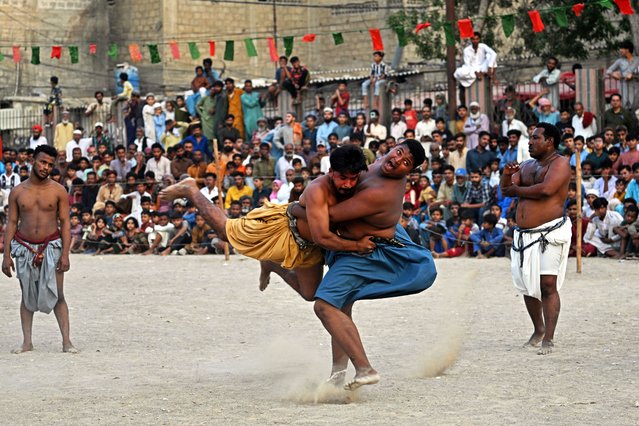
Wrestlers compete in a 'Sindhi Malakhra' wrestling match, an ancient form of wrestling that originated in Pakistan's Sindh region, during a local tournament in Karachi on October 21, 2025. (Photo by Asif Hassan/AFP Photo)

Wrestlers compete in a 'Sindhi Malakhra' wrestling match, an ancient form of wrestling that originated in Pakistan's Sindh region, during a local tournament in Karachi on October 21, 2025. (Photo by Asif Hassan/AFP Photo)
Details
24 Dec 2025 10:10:00
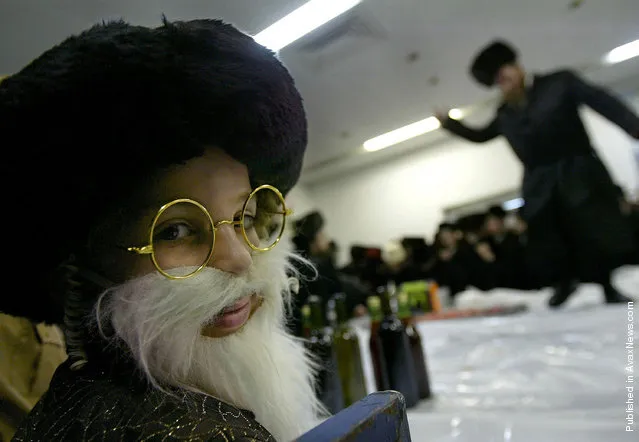
purim

An Israeli girl in costume, celebrates the Jewish festival of Purim on March 5, 2004, in Tel Aviv, Israel. The Festival commemorates the rescue of Jews from genocide in ancient Persia.
Details
18 Mar 2011 08:09:00
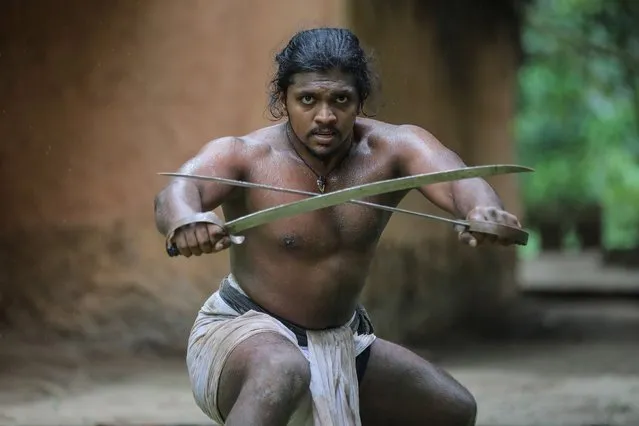
A student of the Sri Lankan ancient martial art “Angampora” performs during a practice session at the angam maduwa or fighting field, in Korathota, a suburb of Colombo, Sri Lanka, 07 September 2022. Sri Lanka's ancient martial art, Angampora, is thought to be thousands of years old. Anga translates to “body parts” and Angampora is a fighting art that uses body parts. Martial arts practitioners in Angampora were mostly in the king's service, and they were tasked with protecting the king and his kingdom. Angampora was practiced in secret for most centuries because the British, who colonized Sri Lanka, banned it in 1818 after seeing it as a threat. (Photo by Chamila Karunarathne/EPA/EFE)

A student of the Sri Lankan ancient martial art “Angampora” performs during a practice session at the angam maduwa or fighting field, in Korathota, a suburb of Colombo, Sri Lanka, 07 September 2022. Sri Lanka's ancient martial art, Angampora, is thought to be thousands of years old. Anga translates to “body parts” and Angampora is a fighting art that uses body parts. Martial arts practitioners in Angampora were mostly in the king's service, and they were tasked with protecting the king and his kingdom. Angampora was practiced in secret for most centuries because the British, who colonized Sri Lanka, banned it in 1818 after seeing it as a threat. (Photo by Chamila Karunarathne/EPA/EFE)
Details
14 Oct 2022 04:47:00
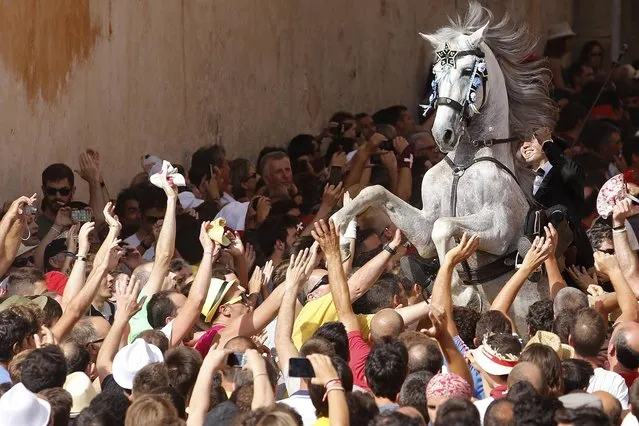
A rider rears up on his horse while surrounded by a cheering crowd during the traditional Fiesta of San Joan (Saint John) in downtown Ciutadella, on the Spanish Balearic Island of Menorca, June 23, 2014. The riders of the horses are representatives of ancient Ciutadella society – nobility, clergy, craftsmen and farmers. (Photo by Enrique Calvo/Reuters)

A rider rears up on his horse while surrounded by a cheering crowd during the traditional Fiesta of San Joan (Saint John) in downtown Ciutadella, on the Spanish Balearic Island of Menorca, June 23, 2014. The riders of the horses are representatives of ancient Ciutadella society – nobility, clergy, craftsmen and farmers. (Photo by Enrique Calvo/Reuters)
Details
25 Jun 2014 06:17:00
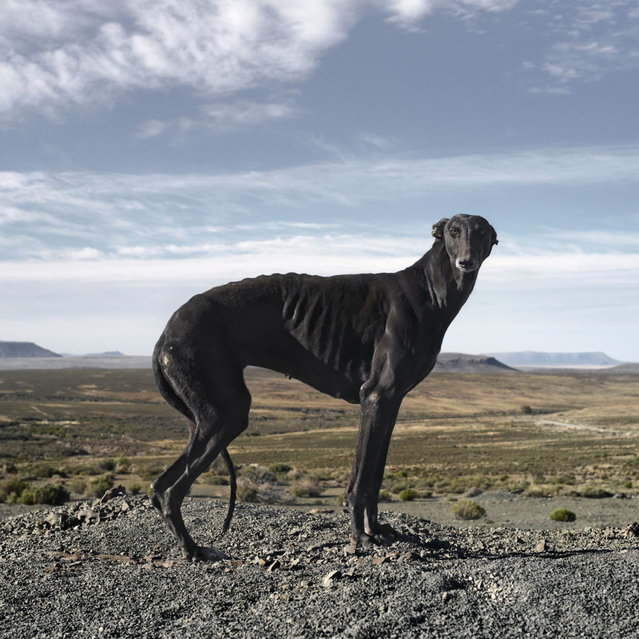
Africanis 18. Murraysburg, Western Cape, May 10, 2010. (Photo by Daniel Naudé)

“The Africanis is a landrace of South African dogs. It is believed to be of ancient origin, directly descended from hounds and pariah dogs of ancient Africa, introduced into the Nile Valley from the Levant. The Swahili name for the breed is umbwa wa ki-shenzi meaning common or mongrel or “traditional dog”. Africanis is also an umbrella name for all the aboriginal dogs in southern Africa”. – Wikipedia. Photo: Africanis 18. Murraysburg, Western Cape, May 10, 2010. (Photo by Daniel Naudé)
Details
19 May 2013 11:51:00
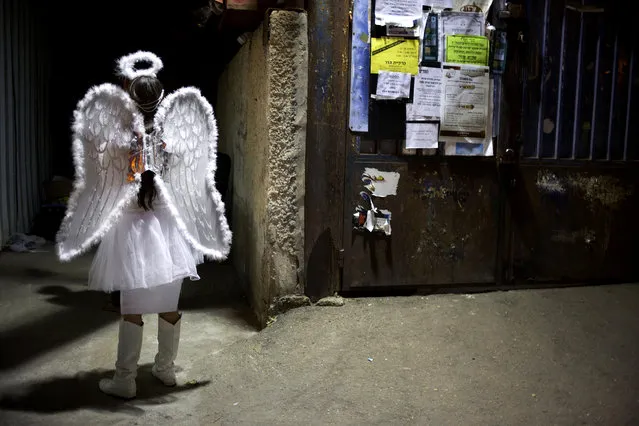
A girl walks to a synagogue of the Tzanz Hasidic dynasty community to read the Book of Esther, which tells the story of the Jewish festival of Purim, in Netanya, Israel, Wednesday, March 23, 2016. The Jewish holiday of Purim commemorates the Jews' salvation from genocide in ancient Persia, as recounted in the Book of Esther. (Photo by Ariel Schalit/AP Photo)

A girl walks to a synagogue of the Tzanz Hasidic dynasty community to read the Book of Esther, which tells the story of the Jewish festival of Purim, in Netanya, Israel, Wednesday, March 23, 2016. The Jewish holiday of Purim commemorates the Jews' salvation from genocide in ancient Persia, as recounted in the Book of Esther. (Photo by Ariel Schalit/AP Photo)
Details
25 Mar 2016 13:11:00
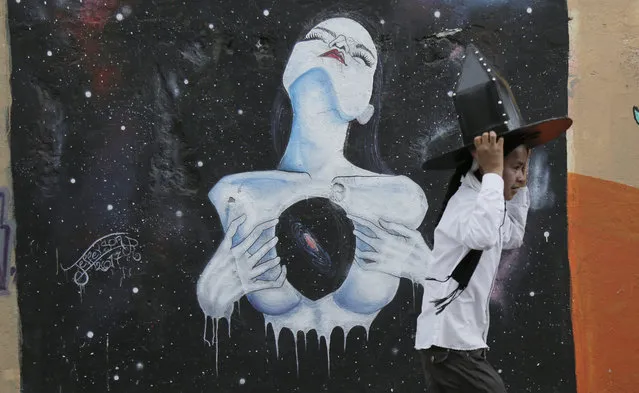
A youth in costume hurries past a mural after dancing at the Sun Festival in Cotacachi, Ecuador, Sunday, June 24, 2018. Across the Andes, from the tip of Argentina as far north as Colombia, indigenous communities are gathering for the southern hemisphere's winter solstice to honor the ancient sun god. (Photo by Dolores Ochoa/AP Photo)

A youth in costume hurries past a mural after dancing at the Sun Festival in Cotacachi, Ecuador, Sunday, June 24, 2018. Across the Andes, from the tip of Argentina as far north as Colombia, indigenous communities are gathering for the southern hemisphere's winter solstice to honor the ancient sun god. (Photo by Dolores Ochoa/AP Photo)
Details
26 Jun 2018 00:03:00