Loading...
Done
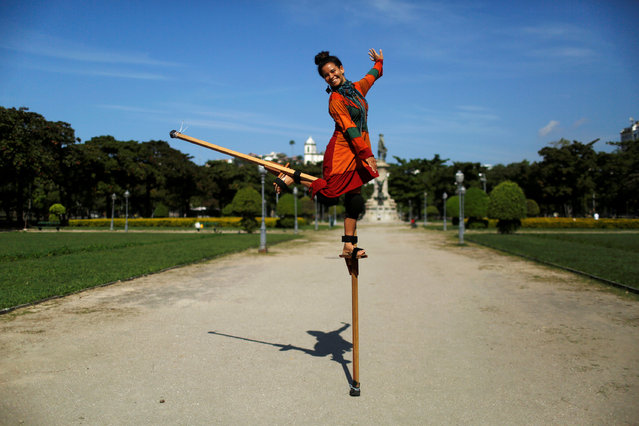
Raquel Poti, a 32-year-old street artist, poses at a park in Rio de Janeiro, Brazil, June 25, 2016. Raquel thinks the Olympics promotes a lifestyle that combines sports, culture and education. She is concerned about the large investment for the event while the population needs improvements in basic services. (Photo by Pilar Olivares/Reuters)

Just a week before Rio de Janeiro hosts South America's first Olympics, city residents expressed mixed feelings about the cost and security of the Games, while holding out hope they will bring joy to a nation facing economic and political crises. The conflicted thoughts mirror a recent survey by the Datafolha polling group showing that half of Brazilians were opposed to holding the Games, while 63 percent think the costs of hosting the event will outweigh benefits. (Photo by Pilar Olivares/Reuters)
Details
03 Aug 2016 11:51:00
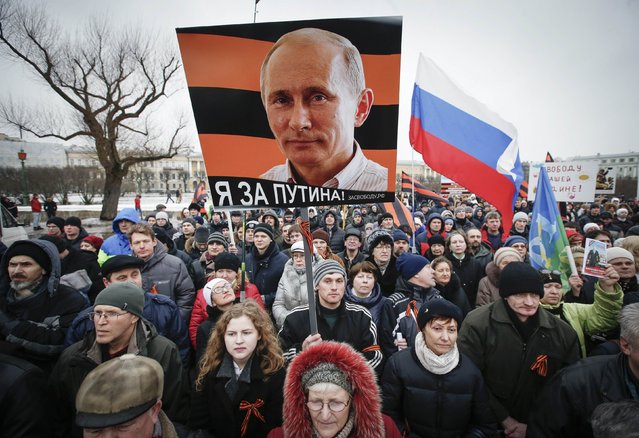
A photo of Russia's President Vladimir Putin is seen on a poster as people attend an "Anti-Maidan" rally to protest against the 2014 Kiev uprising, which ousted President Viktor Yanukovich, in St.Petersburg February 21, 2015. REUTERS/Maxim Zmeyev  (RUSSIA - Tags: POLITICS CIVIL UNREST)

A photo of Russia's President Vladimir Putin is seen on a poster as people attend an "Anti-Maidan" rally to protest against the 2014 Kiev uprising, which ousted President Viktor Yanukovich, in St.Petersburg February 21, 2015. Thousands of Russians marched on Saturday, carrying banners and signs disavowing the protests at Kiev's Independence Square, or Maidan, last year that ousted a Russian-backed president and created a rift between Ukraine and the West and Russia. The writing on the poster reads "I support Putin" REUTERS/Maxim Zmeyev
Details
03 Mar 2015 08:58:00
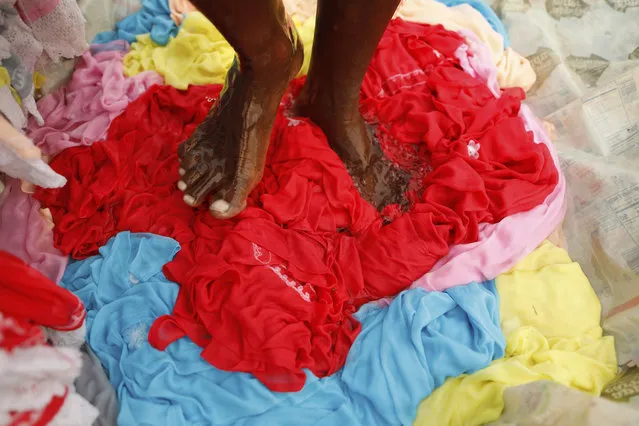
A dhobi, or a washerman washes cloths on the banks of the River Gomti in Lucknow, India, Saturday, September 12, 2020. Dhobis are traditional laundry workers who wash clothes by hand and dry them in the sun, an occupation which has been in existence for generations. Most cities in India have a Dhobi Ghat, or washermen's area, where the city's pile of clothes is laundered. This practice is still popular in India, despite of modern technology. Around 1,000 families work in Lucknow's Dhobi Ghat. However, in light of the novel coronavirus, their wages have decreased drastically. With each family earning around US$100-200 per month. (Photo by Rajesh Kumar Singh/AP Photo)

A dhobi, or a washerman washes cloths on the banks of the River Gomti in Lucknow, India, Saturday, September 12, 2020. Dhobis are traditional laundry workers who wash clothes by hand and dry them in the sun, an occupation which has been in existence for generations. Most cities in India have a Dhobi Ghat, or washermen's area, where the city's pile of clothes is laundered. This practice is still popular in India, despite of modern technology. Around 1,000 families work in Lucknow's Dhobi Ghat. However, in light of the novel coronavirus, their wages have decreased drastically. With each family earning around US$100-200 per month. (Photo by Rajesh Kumar Singh/AP Photo)
Details
25 Sep 2020 00:03:00
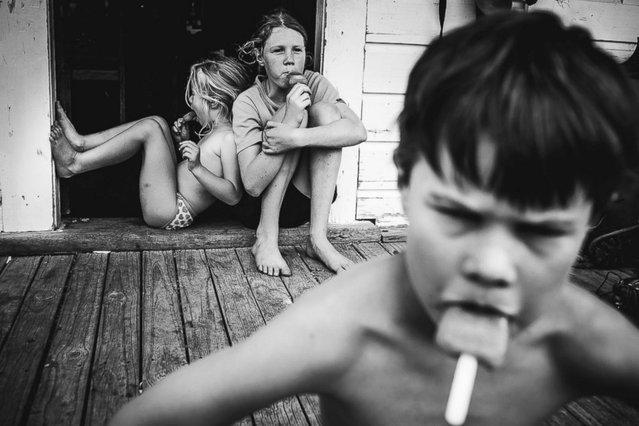
New Zealand photographer Niki Boon captured her children, who are growing up with limited electronics, in the photo series “Childhood in the Raw Photos”. Niki Boon began taking photos as a hobby while she was working as a physiotherapist in Scotland. However, the New Zealand native found her interest in the art waning while she travelled, and it wasn’t until she had returned home and started raising a family that her passion was rekindled. “Childhood in the Raw”, an ongoing photo series of her four children’s technology-free life on her 10-acre property in New Zealand, is the perennial fruit of this passion. (Photo by Niki Boon)

New Zealand photographer Niki Boon captured her children, who are growing up with limited electronics, in the photo series “Childhood in the Raw Photos”. Niki Boon began taking photos as a hobby while she was working as a physiotherapist in Scotland. However, the New Zealand native found her interest in the art waning while she travelled, and it wasn’t until she had returned home and started raising a family that her passion was rekindled. “Childhood in the Raw”, an ongoing photo series of her four children’s technology-free life on her 10-acre property in New Zealand, is the perennial fruit of this passion. (Photo by Niki Boon)
Details
20 Apr 2016 12:01:00
When he started using a camera there were very few documentary photographers working outside the government. Sutkus instead looked to writers and film-makers, and says he drew inspiration from the works of Franz Kafka, Jean-Paul Sartre, Ernest Hemingway and Vladimir Nabokov. Here: The first Lithuanian bikers, 1974. (Photo by Antanas Sutkus)

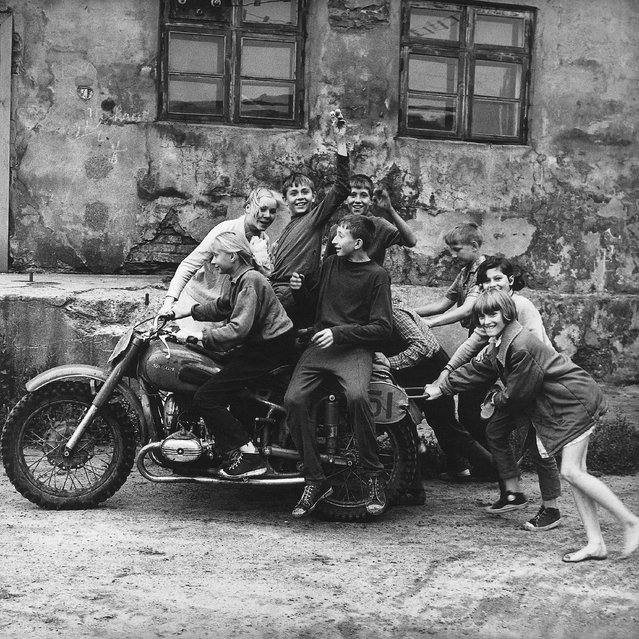
Rebelling against political propaganda, acclaimed photographer Antanas Sutkus embarked on a life-long journey to capture the everyday scenes around him. Antanas Sutkus, born in 1939, studied journalism at Vilnius University in the late 1950s before becoming disillusioned by the confines of the Soviet-controlled press. He began taking photographs instead, and soon co-founded the Lithuanian Association of Art Photographers. Here: The first Lithuanian bikers, 1974. (Photo by Antanas Sutkus)
Details
11 Apr 2016 10:54:00
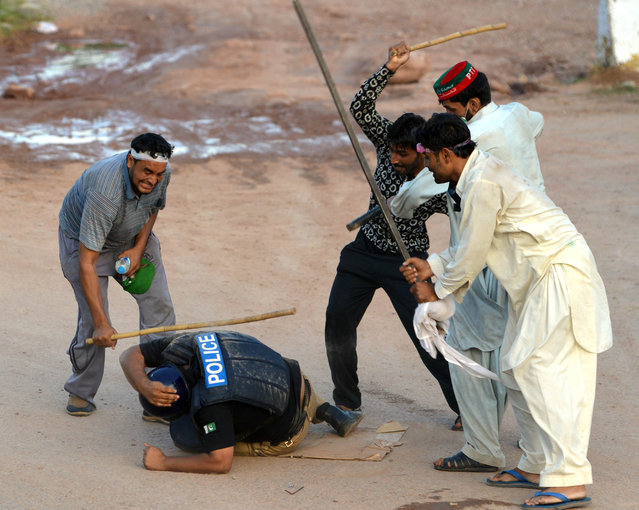
Pakistani supporters of cricketer-turned politician Imran Khan and Canadian cleric Tahir ul Qadri beat a riot policeman during an anti-government protest in Islamabad on September 1, 2014. (Photo by Aamir Qureshi/AFP Photo)

Pakistani supporters of cricketer-turned politician Imran Khan and Canadian cleric Tahir ul Qadri beat a riot policeman during an anti-government protest in Islamabad on September 1, 2014. Hundreds of protesters trying to topple Pakistan's government briefly seized the state broadcaster on September 1, intensifying the political crisis gripping the nuclear-armed nation. Deadly clashes since the weekend have raised the spectre of military intervention which gained ground after one disillusioned opposition leader said the protesters were acting according to a plan devised by the army. (Photo by Aamir Qureshi/AFP Photo)
Details
03 Sep 2014 09:38:00
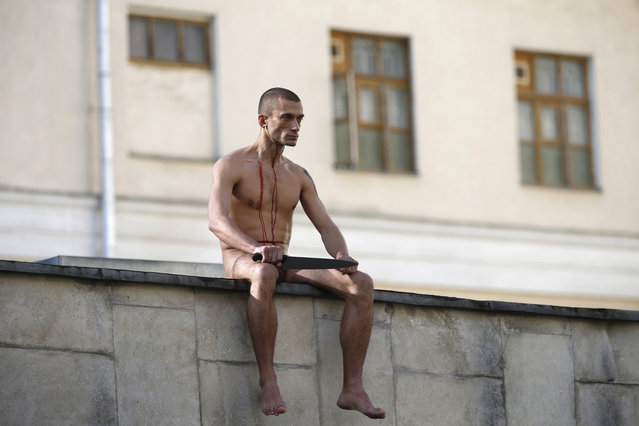
Artist Pyotr Pavlensky sits on the wall enclosing the Serbsky State Scientific Center for Social and Forensic Psychiatry after he cut off a part of his earlobe during his protest action titled “Segregation” in Moscow October 19, 2014. (Photo by Maxim Zmeyev/Reuters)

Artist Pyotr Pavlensky sits on the wall enclosing the Serbsky State Scientific Center for Social and Forensic Psychiatry after he cut off a part of his earlobe during his protest action titled “Segregation” in Moscow October 19, 2014. Pavlensky protested against the usage of forensic psychiatry for politically motivated purposes. He cut off his earlobe to demonstrate how authorities could “cut off” an unwanted individual from society by using psychiatric and medical diagnosis to forcefully send a person to a penitentiary hospital, according to Pavlensky. (Photo by Maxim Zmeyev/Reuters)
Details
21 Oct 2014 12:10:00


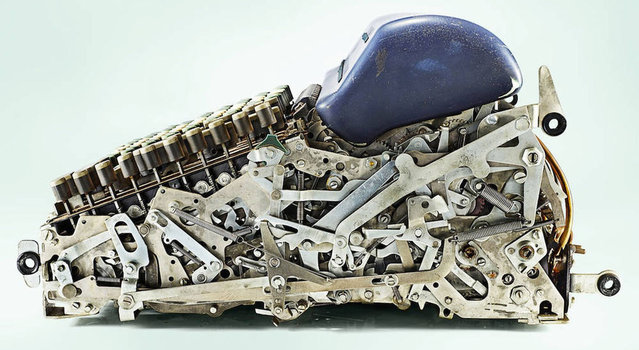
In his newest series of photos called Low Tech, Kevin Twomey artfully captures the complexity of old-style typewriters and similar machines. Despite being completely outdated, you cannot help being amazed at how complicated those “simple” devises really are. Hundreds of little parts were meticulously put together to form a machine that would perform such “basic” functions by today’s standards. Similarly, very few modern people actually think about how complicated the current technology really is. We take for granted streaming videos, GPS, and countless devises that we use every day, while in reality, these things would seem like magic to even the most prominent scientists from only half a century ago. (Photo by Kevin Twomey)
Details
21 Nov 2014 12:42:00