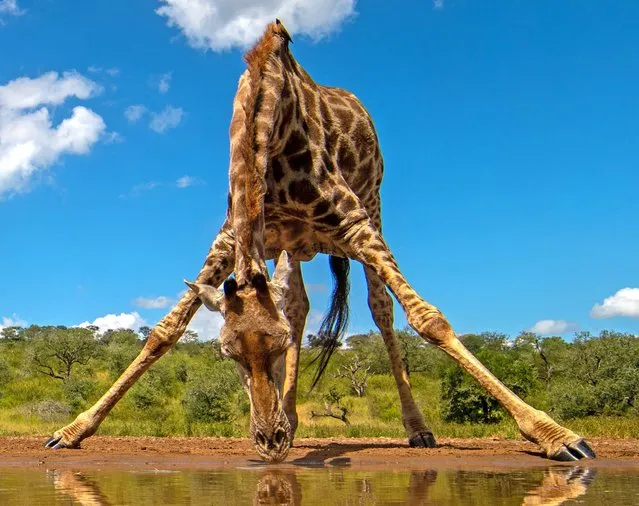
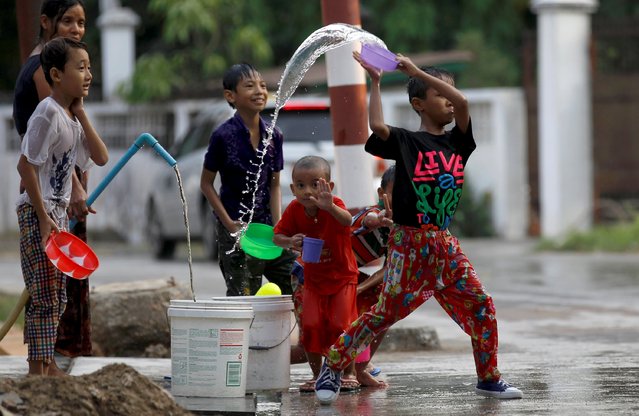
Giraffes doing the splits to get a drink of water from the watering hole at the Zimanga Private Game Reserve in South Africa on March 31, 2022. (Photo by Hendri Venter/Animal News Agency)
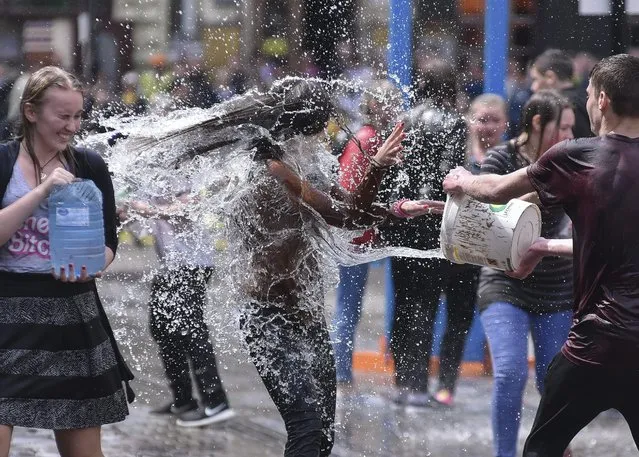
Ukrainians pour water on each other on a street in Lviv, Ukraine, 02 May 2016. The tradition of pouring water was an ancient spring ritual of cleansing on first Monday after Orthodox Easter. (Photo by Mykola Tys/EPA)
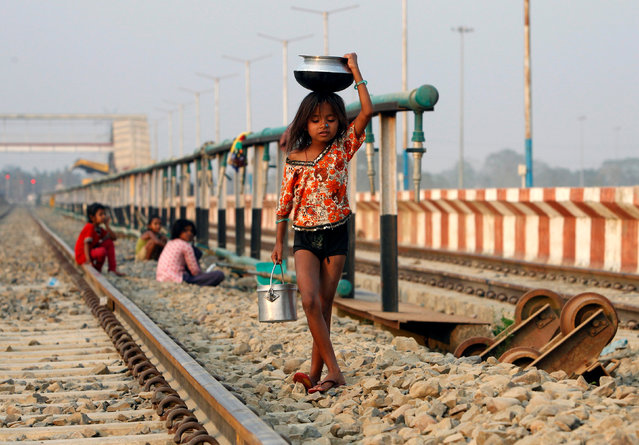
A girl carries utensils after filling them with water from a pipe that supplies water to trains at a railway station on the outskirts of Agartala, India, February 28, 2017. (Photo by Jayanta Dey/Reuters)
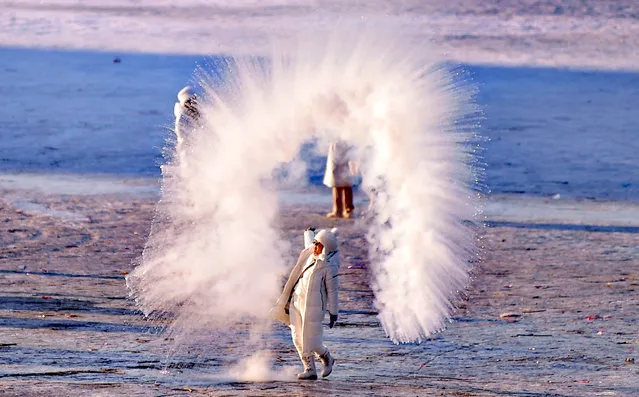
A tourist splashes water on the frozen Songhua River on December 18, 2023 in Harbin, Heilongjiang Province of China. The water immediately freezes into ice in the frigid air. (Photo by VCG/VCG via Getty Images)
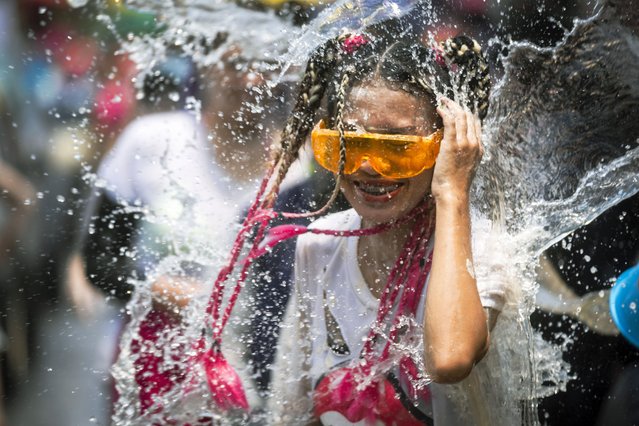
A bucket of water is splashed on a woman during the Songkran water festival to celebrate the Thai New Year, in Prachinburi Province, Thailand, April 13, 2024. (Photo by Wason Wanichakorn/AP Photo)
Smithfield meat porters march on the Home Office, bearing a petition which calls for an end to all immigration into Britain, 25th August 1972. (Photo by Keystone/Hulton Archive/Getty Images)
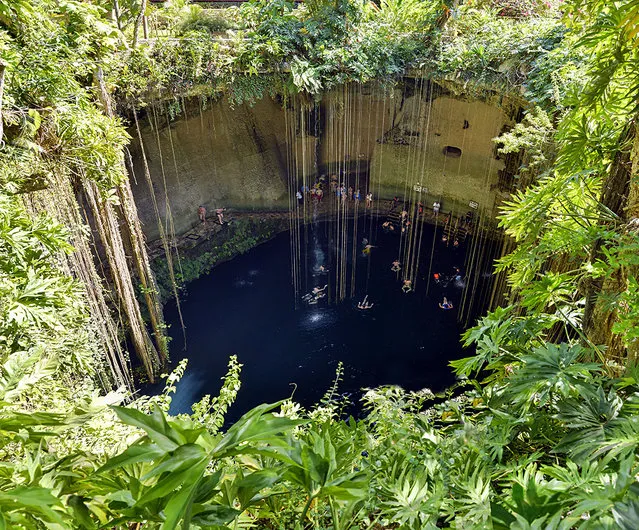
A cenote is a natural phenomenon, a sinkhole in the Earth’s surface. The Yucatan Peninsula in Mexico has an estimated 7,000 cenotes because it is primarily made up of porous limestone. For millions of years, rainfall slowly ate away at the limestone and a huge system of underground caves and caverns was formed. Many filled with water from rain or from the underground water table. When the roof of a water filled cave collapses, a cenote is born. The water found in a cenote may be fresh water, salt water, or both. Structurally it may be completely open, like a lake, almost completely closed with just a small opening at the top, or somewhere in between.